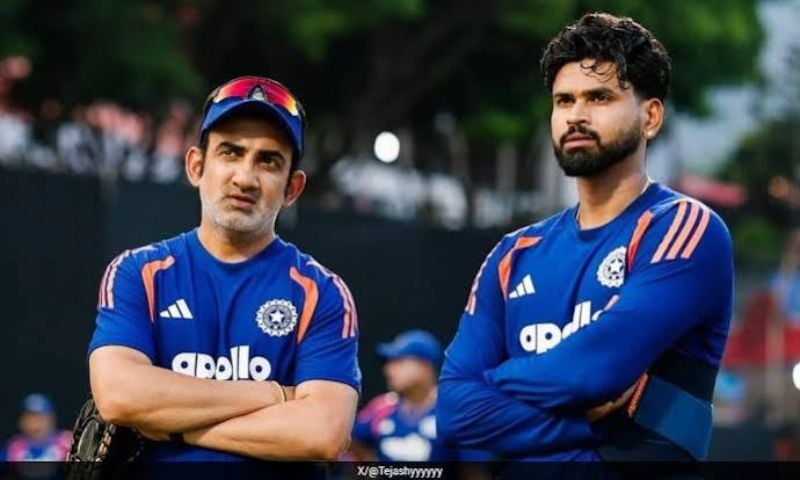
ISLAMABAD: Since Shreyas Iyer assumed the T20I captaincy, India’s fortunes have taken a dramatic downturn. Following a humiliating defeat against Ireland in Belfast, the visitors suffered a 0-4 series whitewash at the hands of England. This latest debacle extends their losing streak to six defeats in their last seven completed T20I matches, a record that has alarm bells ringing in the Indian cricket establishment.
The consequences have been immediate and embarrassing: England have dethroned India from the top of the ICC T20I Men’s rankings, a position India had proudly occupied for four consecutive years.
🔴 The ACCIDENTAL CAPTAIN 🔴
The post-World Cup transition has devolved into an absolute tactical nightmare, plunging India from the top of the T20I rankings straight into a historic, winless crisis. Shreyas Iyer’s run at the helm has exposed a staggering lack of leadership… pic.twitter.com/X2DlOvabHj
— Sunil Gavaskar (@virender_swag) July 12, 2026
From rain-affected opening encounters to a crushing 125-run defeat in the third T20I, India’s campaign unravelled with alarming predictability. Despite multiple changes to the playing XI, the visitors failed to find a winning combination, while England’s bowlers, led by the fiery Jofra Archer, executed their plans with precision and ruthless efficiency.
Selection Chaos: A case study in indecision
Perhaps the most glaring issue was India’s bewildering approach to team selection, particularly at the top of the order. The management’s handling of Sanju Samson and debutant Vaibhav Sooryavanshi epitomised the lack of a coherent strategy.
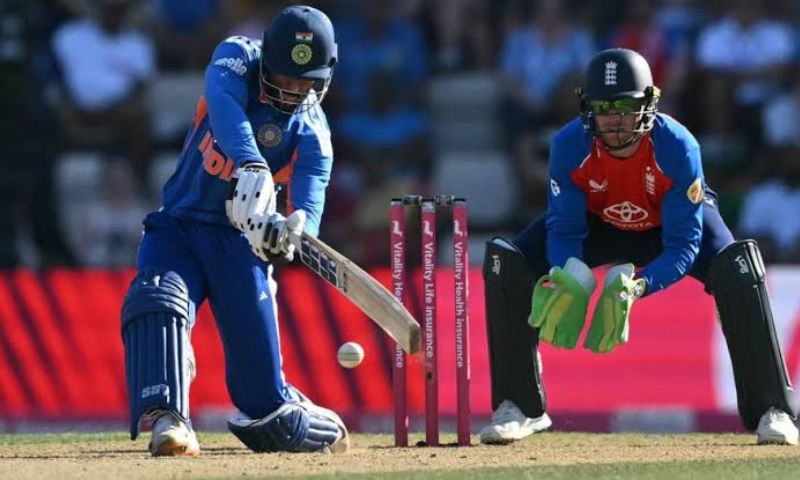
Samson, after three failures at the top, was dropped for Sooryavanshi, the youngest player ever to represent India. The teenager showed flashes of brilliance, including a fearless first-ball six off Archer, but managed only 42 runs across three innings. Rather than backing him through the challenge, the management dropped him for the final T20I to recall Samson, a decision that defied logical explanation.
Read Also: England Whitewash India
The selectors appeared trapped between two philosophies. On one hand, they wanted to inject youthful aggression into the lineup, a strategy that had underpinned India’s two T20 World Cup triumphs.
On the other hand, they lacked the patience to allow young players to learn from failure. By dropping Sooryavanshi after just three innings, immediately after England had identified his weakness against the short ball, India denied him the opportunity to adapt and grow. The fourth innings, in many ways, would have been more valuable than the first three.
Even more confusing was the fact that Sooryavanshi had already been retained for the upcoming Zimbabwe tour, while Samson was omitted. If the management viewed Sooryavanshi as the long-term opener, why drop him for a dead rubber? The final T20I, with the series already lost, was the perfect platform to let him work through his technical challenges. Instead, India sent a message of uncertainty and short-termism.
🏮 WHY INDIA LOST T20I SERIES AGAINST ENGLAND ? 🤯
– worst team selection by Ajit Agarkar
– so much excitement by gautam gambhir
– some poor emotional decisions by management
– experiment with Openers like abhishek sharma vaibhav sooryavanshi & sanju samson
– unnecessary… pic.twitter.com/tr7GSxURKK— VK (@Aur_vicky) July 12, 2026
Middle-order muddle: A tactical minefield
India’s handling of the middle order was equally baffling. The batting positions of Tilak Varma and Shivam Dube were shuffled repeatedly, undermining their effectiveness. Tilak, who struggles against spin in the middle overs (strike rate of 116 in 2026, compared to 257 at the death), was often placed in positions that did not suit his strengths. Dube, a superior player of spin, was at times pushed down to number eight – a position that rendered his attacking abilities largely redundant.
Read Also: Historic Collapse Raises Alarm in India
The team management appeared overly obsessed with right-left combinations, often prioritising symmetry over substance. In the third T20I, Harshit Rana was sent ahead of Dube simply to maintain a right-left pairing, while Axar Patel was promoted to five. This tactical rigidity reflected a fundamental misunderstanding of player roles.
Dube, a left-hander with proven ability against spin, should have been the automatic choice to counter England’s leg-spinner Adil Rashid. Instead, India’s decision-makers outthought themselves, leaving their most dangerous spin-hitter underutilised.
The broader issue here is that India’s think tank failed to establish clear roles and responsibilities. Players were shuffled like chess pieces without any apparent logic, creating uncertainty and undermining their confidence. In a format where clarity of role is paramount, this confusion was disastrous.
Indian Cricket Is Under a Big Threat: The Situation Has Become Just Like MI’s Situation Under Hardik 😭
No player feels secure in the team anymore. Nobody knows when they will be kicked out, no matter how much they have contributed.
– T20 World Cup Player of the Tournament… pic.twitter.com/3sb7gSThl3
— Jara (@JARA_Memer) July 6, 2026
Adaptability deficit: Unpacking the suitcase
India’s top-order batters, many of whom were among the best performers in IPL 2026, struggled to replicate their form in English conditions. The explanation lies in the stark contrast between the two environments. IPL pitches, particularly in 2026, were batting-friendly, offering little assistance to bowlers. In England, however, the pitches were livelier, with more bounce and carry, favouring bowlers who could generate pace and extract movement.
Jofra Archer and Josh Tongue exploited these conditions brilliantly, repeatedly targeting Indian batters with short deliveries. Both Sooryavanshi and Ishan Kishan fell to the short ball multiple times, unable to cope with the extra pace and bounce.
India’s lack of adaptability has become a recurring theme. Assistant coach Ryan ten Doeschate’s admission that the team needed to “unpack the suitcase” of adaptability was telling, and damning. The problem is not just technical but psychological. Indian batters appear to lack the flexibility to adjust their game plans according to conditions, relying instead on the muscle memory developed on flat subcontinental tracks.
Lack of preparation,team didn’t adapt properly, poor fielding disastrous bowling and poor batting, planning and strategy by GG and Shreyas questionable too https://t.co/I0A2gbxe1v
— Amey Bapat 🇮🇳🇬🇧 (@AmeyaBapat) July 11, 2026
What is particularly concerning is the similarity in dismissals. Rather than learning from their mistakes and developing counter-strategies, batters fell into the same traps repeatedly. This suggests a deeper failure in preparation, video analysis, and in-match tactical awareness. When the ball came quicker and bounced higher than expected, India’s batters had no Plan B.
Furthermore, the coaching staff must bear significant responsibility. If adaptability is a known weakness, why has it not been systematically addressed? The team’s inability to learn from previous overseas tours suggests that the current support staff may lack the expertise or authority to instil the required mindset.
Bowling breakdown: Lack of firepower and tactical naivety
The bowling statistics paint a grim picture. England struck a wicket every 16 balls, while India managed one every 29 deliveries. England’s economy rate of 8.83 was vastly superior to India’s 10.91. Simply put, India’s bowlers were neither penetrative nor economical.
Several factors contributed to India’s bowling collapse. First, the lack of depth in the bowling attack was exposed, particularly after injuries disrupted the lineup. The bowlers consistently bowled inconsistent lengths, failing to exploit the hard lengths that England used to such devastating effect.
Second, the absence of experienced campaigners like Jasprit Bumrah left a leadership void. The young bowlers lacked direction and tactical nous, often reverting to defensive lines rather than attacking the stumps. England’s batters, in contrast, were given no respite, facing a relentless assault from Archer and his fellow seamers.
Third, India’s fielding was sub-standard, which compounded the bowlers’ problems. Dropped catches, misfields, and sloppy ground fielding not only cost runs but also demoralised the bowling unit. In a format where every run matters, such lapses are unforgivable.
Perhaps most worryingly, India’s bowling strategy appeared to lack any coherent plan. There was no attempt to vary pace or use slower balls effectively, nor was there any tactical field placements to build pressure. England’s bowlers, by contrast, executed their plans with clinical precision, suggesting superior preparation and in-game leadership.
🚨YOU WILL KNOW THE WORTH OF VIRAT KOHLI NOW – KRIS SRIKKANTH🤯
Kris Srikkanth said :🗣️
“Team management & coaching staff will now understand the real worth of Virat Kohli. When you are on a high, you can talk or say anything about a certain individual, you think of yourself as… pic.twitter.com/yTi6hvSDt6
— Akshat (@Cricketmythos) July 13, 2026
The Samson-Sooryavanshi conundrum: A symbol of deeper malaise
The handling of Sanju Samson and Vaibhav Sooryavanshi is not merely a selection issue; it symbolises a broader lack of strategic vision. Samson, a proven match-winner with a century in the T20 World Cup final and two IPL hundreds, was inexplicably dropped despite his credentials. His brief recall for the final T20I, followed by being “rested” for the Zimbabwe tour, suggests the management is either unsure of his role or unwilling to commit to him.
If Samson is indeed being rested, why bring him back for a single T20I? If he is being phased out, why not communicate this clearly and allow him to pursue other opportunities? The lack of transparency and consistency in player management reflects a culture of indecision that cannot be conducive to high performance.
Similarly, the Sooryavanshi experiment, while exciting, was mismanaged. Selecting a teenager for his fearless approach, then dropping him at the first sign of struggle, betrays a fundamental misunderstanding of how to develop young talent. India’s T20 success has been built on backing aggressive players through their failures. The management’s refusal to extend the same patience to Sooryavanshi suggests a departure from the philosophy that served India so well.
🚨 ERA OVER. DOMINANCE SHATTERED. 🚨
Losing to Ireland was embarrassing. Getting crushed by England is the final nail. After 1,605 days at the top, India is officially NO MORE NO. 1 in T20Is. 📉
A shameful, spineless performance from the world champions. The collapse is real.… pic.twitter.com/9kCBxkVMYD
— Sunil Gavaskar (@virender_swag) July 11, 2026
Leadership vacuum: Gambhir and Iyer under the microscope
Questions over the team’s direction under Gautam Gambhir have resurfaced with renewed intensity. While the head coach cannot be blamed for every failure, his influence on selection, tactics, and team culture is undeniable. The confused messaging, lack of clear roles, and apparent disconnect between management decisions suggest a leadership that is either unsure of its vision or unable to communicate it effectively.
Gambhir’s appointment was seen as a fresh start, bringing a no-nonsense approach and tactical acumen. However, the results so far have been underwhelming. The question must be asked: is the coaching staff imposing a system that players are struggling to adapt to, or are they failing to adapt to the players’ strengths? Great coaches build systems around their players, not the other way around.
Read Also: Cricket: Ireland Clinch First Ever T20 Series Win Over India
Furthermore, the transition period after Rohit Sharma’s departure was always going to be challenging. But the speed and severity of India’s decline suggests deeper structural issues within the T20I setup. The over-reliance on IPL form, the reluctance to invest in young players, and the absence of a clear succession plan have all contributed to the current crisis.
Six matches ,six defeats and Iyer is yet to open his account after taking over the captaincy.
In my opinion india was undone by big boundaries and pace . They were used to play on flat tracks with 60 m boundaries.
That big boundaries made a huge difference 😳.@BCCI… pic.twitter.com/S9977TIMrj— RJ Speaks🎙️🍁 (@Mir_Ikhlaq786) July 11, 2026
The road ahead: Can India recover in ODIs?
India now face England in a three-match ODI series, starting July 14 in Birmingham, with the return of Rohit Sharma, Virat Kohli, Jasprit Bumrah, and Shubman Gill. This experienced core offers a potential reset after the T20I disaster. However, the problems that undermined the T20I campaign, tactical rigidity, selection confusion, and lack of adaptability, could easily resurface in the 50-over format.
While the return of senior players is a welcome boost, it also raises uncomfortable questions. Why were these experienced campaigners rested for the T20Is, leaving a young side to flounder? If the objective was to blood youngsters, why wasn’t the transition managed more carefully? The lack of continuity between the T20I and ODI squads suggests that India’s planning remains reactive rather than proactive.
Moreover, the challenge of adaptability remains. While Indian conditions are familiar, England offers different challenges, swing, seam movement, and varying bounce. If India’s batters cannot adapt their game, even the presence of Kohli and Rohit may not be enough to salvage the series.
Read Also: Did India Drop Experience Too Soon?
A wake-up call for Indian cricket
India’s T20I slump is not a temporary blip but a symptom of deeper issues: selection chaos, tactical confusion, bowling deficiencies, and a lack of adaptability. The handling of young players like Sooryavanshi and established performers like Samson reflects a management that is reactive, indecisive, and unsure of its vision.
As India head into the ODI series, the pressure on Gambhir and Iyer to deliver results has never been greater. The team must move beyond empty rhetoric about “adaptability” and begin implementing concrete strategies to address the weaknesses that have been exposed so brutally.
For a nation with the richest cricketing infrastructure and the most lucrative domestic T20 league in the world, India’s recent performances are simply unacceptable. The decline is not just about losing matches; it is about losing the identity that made India the most feared T20I side in the world. Unless urgent corrective measures are taken, the slide may continue, and the top spot in world cricket may remain a distant dream.