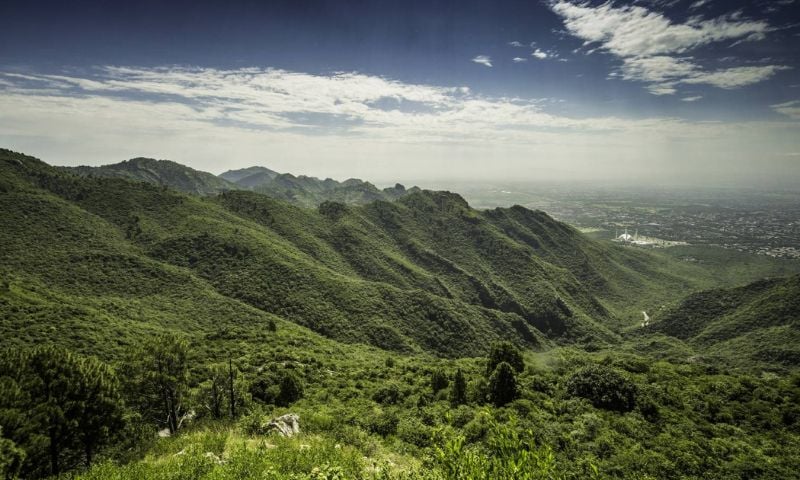
ISLAMABAD: Rashid Malik, 44, a government employee from Islamabad, has been walking Trail-5 in the Margalla Hills for years, often before the city around him has fully woken up.
He remembers the COVID-19 lockdown most vividly — when the trails fell silent and the hills, freed briefly from human noise, seemed to exhale.
“When reduced human activity allowed nature to recover, wildlife in the national park began reclaiming protected areas with a nocturnal leopard even venturing out during daylight hours,” he says.
That brief, accidental glimpse of recovery is, in many ways, the story of Margalla Hills National Park itself: a place that rebounds when given room to breathe, and retreats under the steady pressure of a growing capital.
To understand why those fleeting moments of recovery matter, it is important to understand what makes the Margalla one of Pakistan’ most valuable protected landscapes.
The green heart
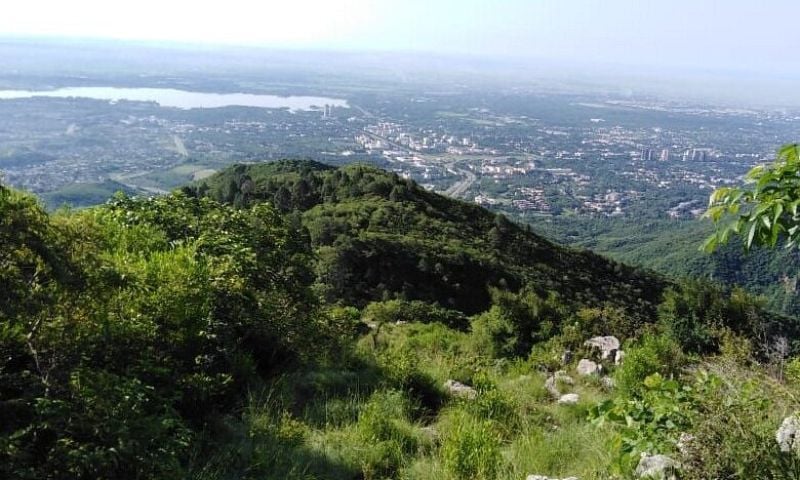
Rising along Islamabad’s northern edge, Margalla Hills National Park is a vital wildlife and biodiversity corridor and the ecological backbone of the capital city.
Spanning over 17,000 hectares, it links the Himalayan foothills with the Punjab plains and shelters species such as leopards and the endangered Himalayan goral. Today, shrinking tree cover, urban expansion and human pressure threaten its fragile ecological balance.
The winding road through Margalla Hills National Park — leading to Daman-e-Koh, Pir Sohawa and onward to Haripur in Khyber Pakhtunkhwa — has long been a source of quiet delight for travellers. For residents of the twin cities and visitors from across the country, the park’s small rest points offer a welcome escape from urban routines, allowing people to reconnect with nature without travelling to Pakistan’s northern mountain regions.
Its beauty, however, is only one part of the story; its ecological richness is what makes the park nationally significant.
A biodiversity haven
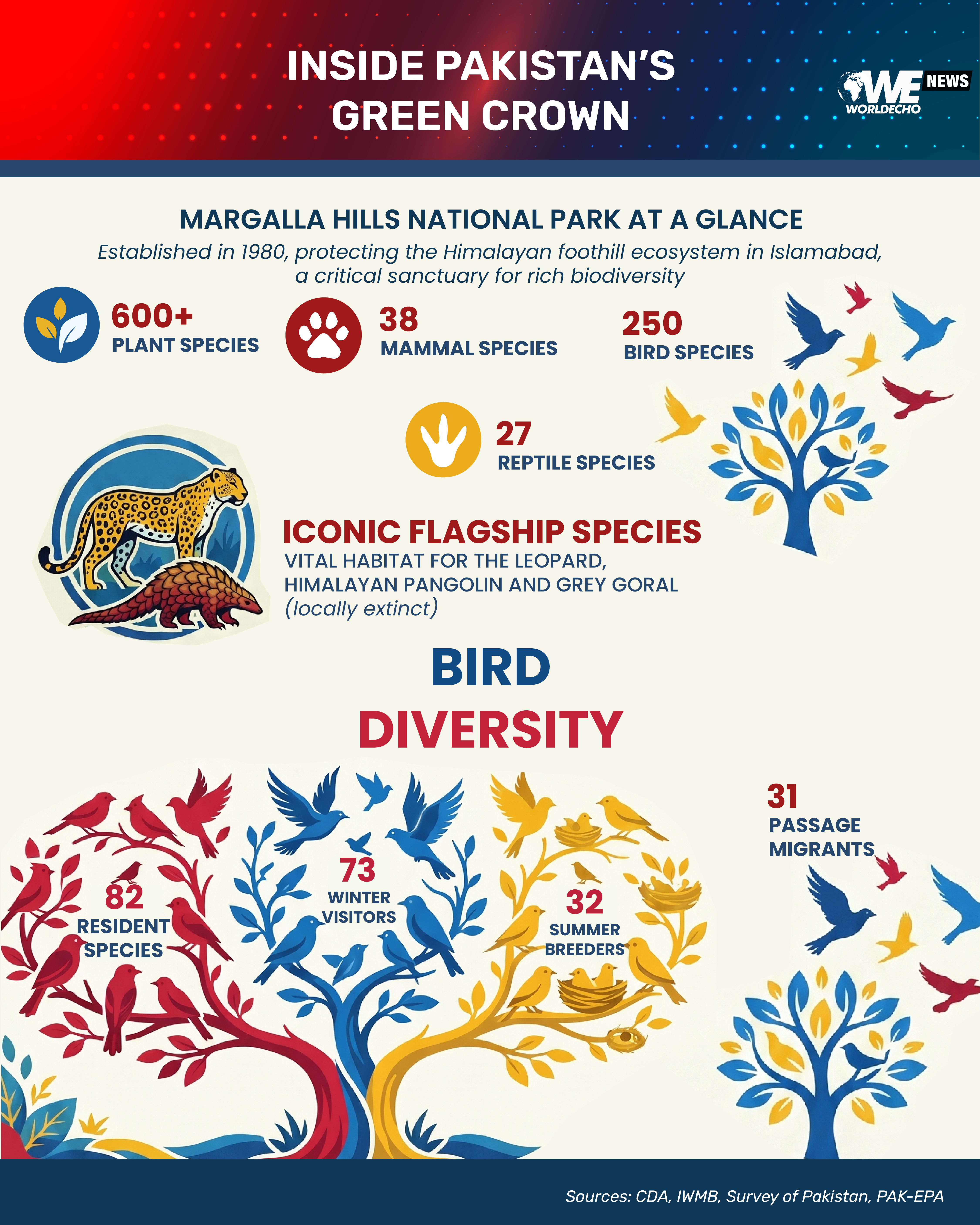
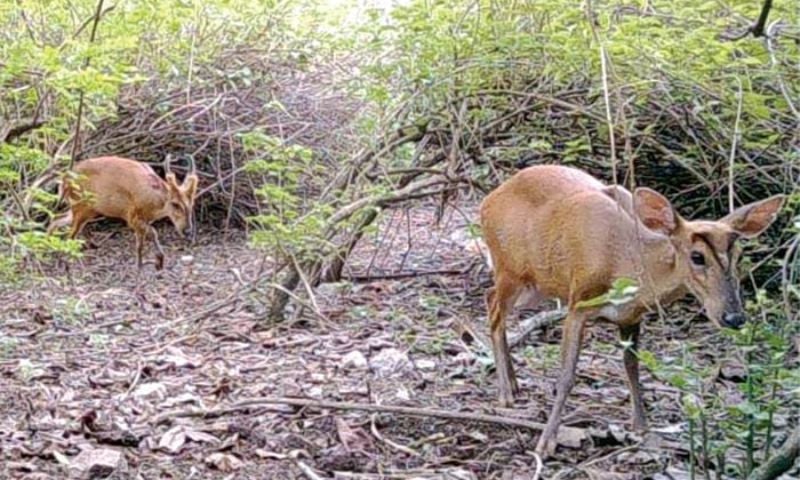
According to the Islamabad Wildlife Management Board, it is home to over 600 plant species, 250 bird species, 38 mammals and 27 reptiles. Among its most iconic inhabitants are the elusive leopard, grey goral and the endangered Himalayan pangolin.
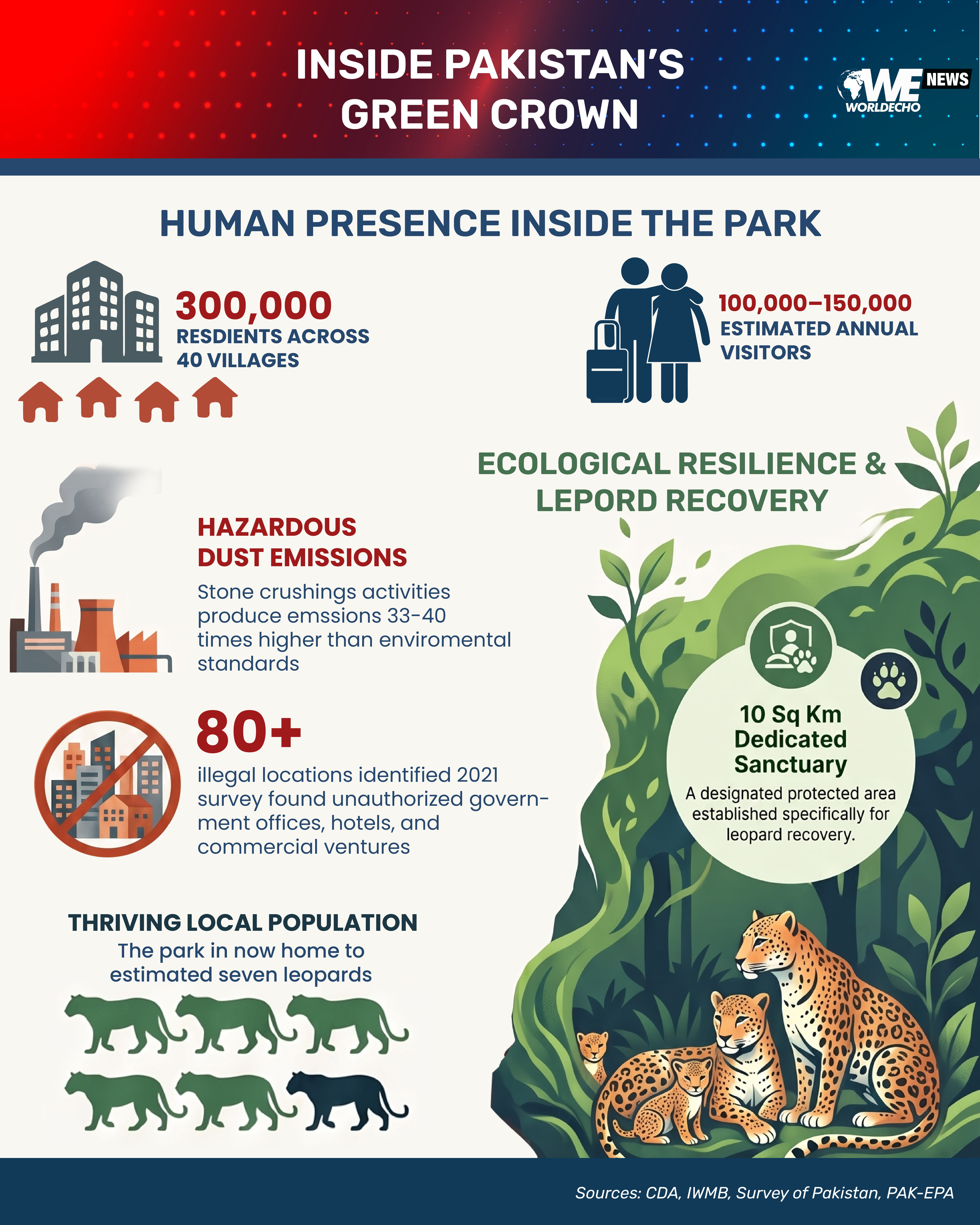
Earlier estimates from 2020–2021 identified two leopard families comprising about seven leopards, but subsequent camera-trap surveys detected a third leopard family, indicating that the population has grown. Wildlife authorities have not released an official estimate of the park’s pangolin population, since the nocturnal and spend burrow-dwelling animals are difficult to count accurately.
The Grey Goral, meanwhile, is the only species that has been officially reported as locally extinct within the national park.
The Margalla Hills Society pointed out that despite its protected status, the park faced mounting threats, including construction, deforestation, littering and an ever-growing tourist footprint.
According to available studies and tourism estimates, the park attracts an estimated 100,000 to 150,000 visitors annually, though the actual figure is likely higher given the park’s growing popularity and the absence of an official visitor count.
Later, the IWMB took the lead in conservation through trail monitoring, anti-poaching patrols and public awareness campaigns. It began this work after its establishment in 2015, but the federal government has since officially dissolved the IWMB and reconstituted it under bureaucratic control.
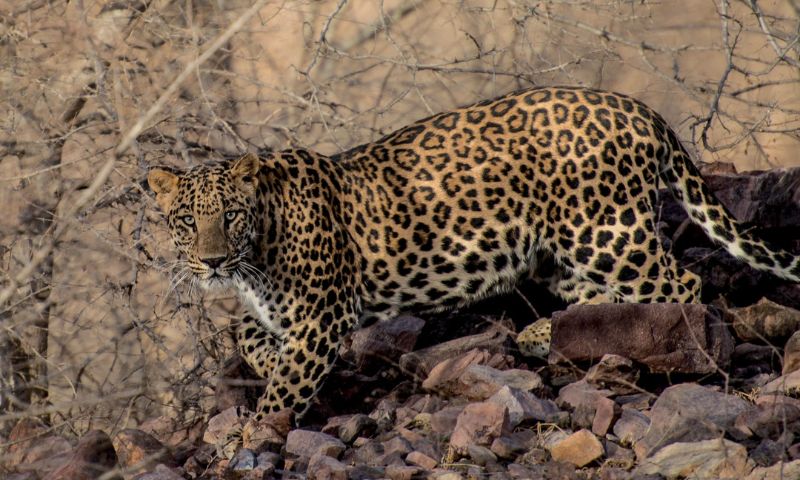
It conducted a study which identified a nearly 10-square-kilometres area used by leopards as a sanctuary. With signs of habitat recovery and an increase in wildlife sightings — including pheasants performing courtship displays, porcupines ambling and foxes trotting — the board had planned another study.
The footage from camera traps installed in the sanctuary showed the apex predator moving confidently through areas usually frequented by trekkers and hikers.
The short videos and drone footage taken by the visitors and online content creators showed that ecosystem restoration was progressing across the sanctuary, stretching from Kalinjar behind the Pakistan Air Force cantonment to Trail-6 near Faisal Mosque. While Trail-5 and areas near Quaid-i-Azam University remain the densest parts of the national park.
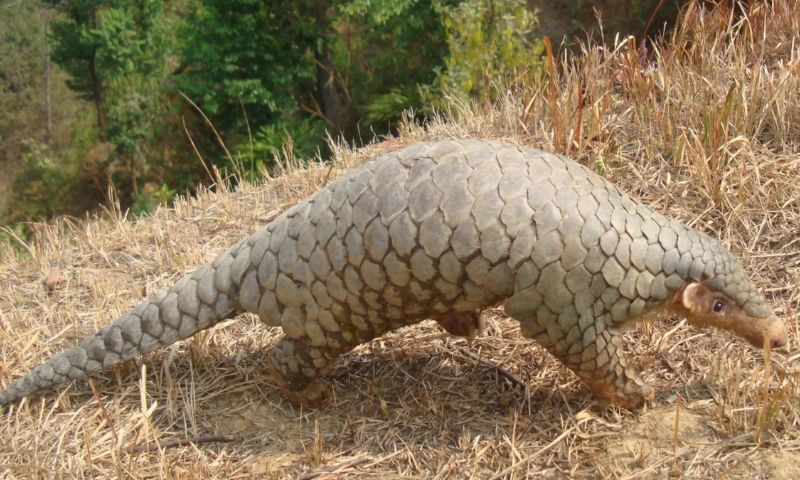
A 2021 study by researcher Raheela Yasmin titled Study of Vertebrate Diversity at Margalla Hills National Park documented rich avian, amphibian, reptile and mammal diversity, while noting increased sightings of common leopard and pangolins, suggesting improvements in part management.
Despite these conservation gains, protecting the park remains challenging because people and wildlife continue to share the same landscape.
The human footprint
The Margalla Hills Society maintains that although the national park is a legally protected area, dozens of villages — an estimated 40 villages, home to roughly 300,000 people according to a Capital Development Authority estimate — with thousands of residents lie within its boundaries, many of them settled long before the park was established.
These communities rely on the hills’ natural resources for daily needs — particularly wood for cooking and heating in winter — which leads to tree cutting, habitat loss and disturbance to wildlife.
Local wood extraction and grazing pressure contribute to soil erosion and fragmentation of animal habitats, exacerbating human‑wildlife conflict and forcing some species to retreat deeper into the hills.
According to Capital Development Authority documents, authorities proposed supplying subsidised LPG cylinders to reduce dependence on firewood, but logistical and mobility challenges meant the programme was never implemented, leaving the threat unresolved.
Human settlements are only one dimension of the pressure facing the national park. Official surveys have also uncovered extensive encroachments within its protected boundaries.
A troubling survey
A 2021 survey on encroachments in the Margalla Hills National Park, conducted by the climate change ministry with the help of Survey of Pakistan, revealed widespread and systematic violations of environmental and land-use laws. Owing to the sensitive locations identified in the survey, only limited portions of it were made available to the media.
The survey identified more than 80 locations where government offices, hotels, restaurants, golf courses, commercial ventures and residential settlements were illegally constructed over several decades inside the protected area.
Often described as the “lungs” of Islamabad and Rawalpindi, the national park is legally meant to enjoy complete protection. However, the survey — supported by Google Maps imagery, satellite data, on-site inspections and field surveys — painted a starkly different picture.
The report was submitted to the Islamabad High Court (IHC) on December 8, 2021 in a case concerning illegal encroachments within the park.
Despite these mounting pressures, the Margalla Hills continue to serve as an important refuge for wildlife, particularly migratory birds.
Where birds gather
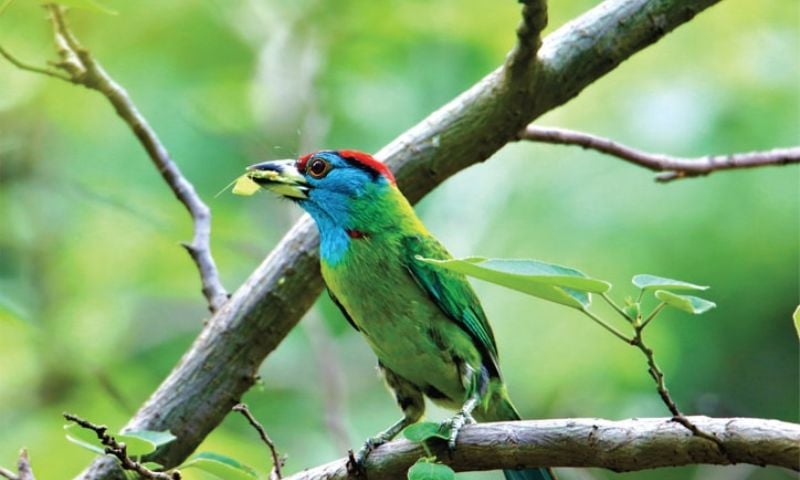
Each fall, the Margalla hills transform into a temporary haven for birds arriving from northern highlands and along major migratory flyways. Over a hundred travelling species join the 82 local species that live in these hills permanently. When winter approaches, about 31 of these arrivals push onward to warmer southern areas, while more than 150 species settle in the Margallas for the colder season.
According to data compiled by the Environment Wing of the Capital Development Authority, dropping temperatures in northern zones initiate this annual flight towards the south. The hills host a diverse array of avian life, ranging from raptors soaring above to tiny songbirds like warblers flitting through the foliage.
Overall, sightings have documented 218 distinct bird species within the Margalla Hills Range. This tally includes 82 year-round residents, 32 summer breeders, 73 winter visitors, and 31 passage migrants that pause briefly during their Himalayan journeys.
For decades, however, the habitats supporting this rich biodiversity were threatened by another major environmental challenge: large-scale quarrying and stone crushing.
The cost of quarrying
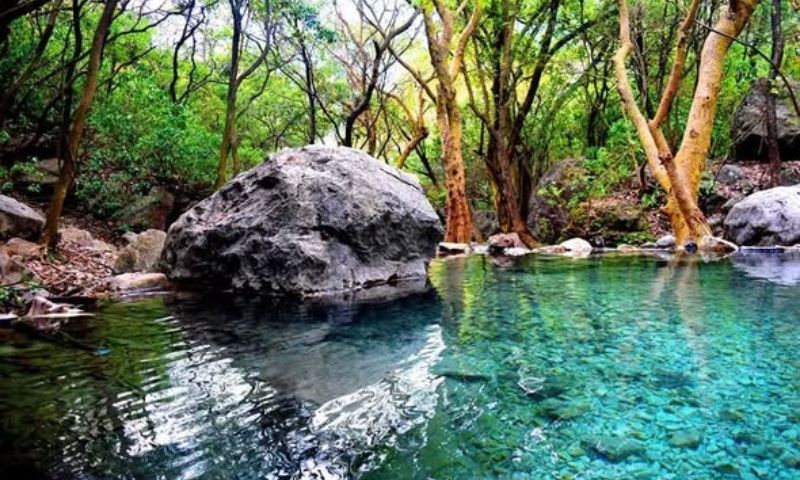
For over four decades, stone crushing and limestone mining posed a severe threat to the Margalla hills, one of the most ecologically sensitive areas. The hills’ high-quality limestone, widely used for roads, cement production, and infrastructure projects fuelled widespread quarrying, leaving stretches of the hills bare and causing deforestation, soil erosion, and disruption to wildlife.
According to the Capital Development Authority, dozens of stone crushers operated illegally within the park and its buffer zones, releasing massive dust emissions at every stage of crushing.
Studies by the Punjab and Pakistan Environmental Protection agencies since 2010 found particulate emissions from these operations 33 to 40 times higher than environmental standards, threatening human health and the natural habitat of 38 mammal species and over 600 plant species.
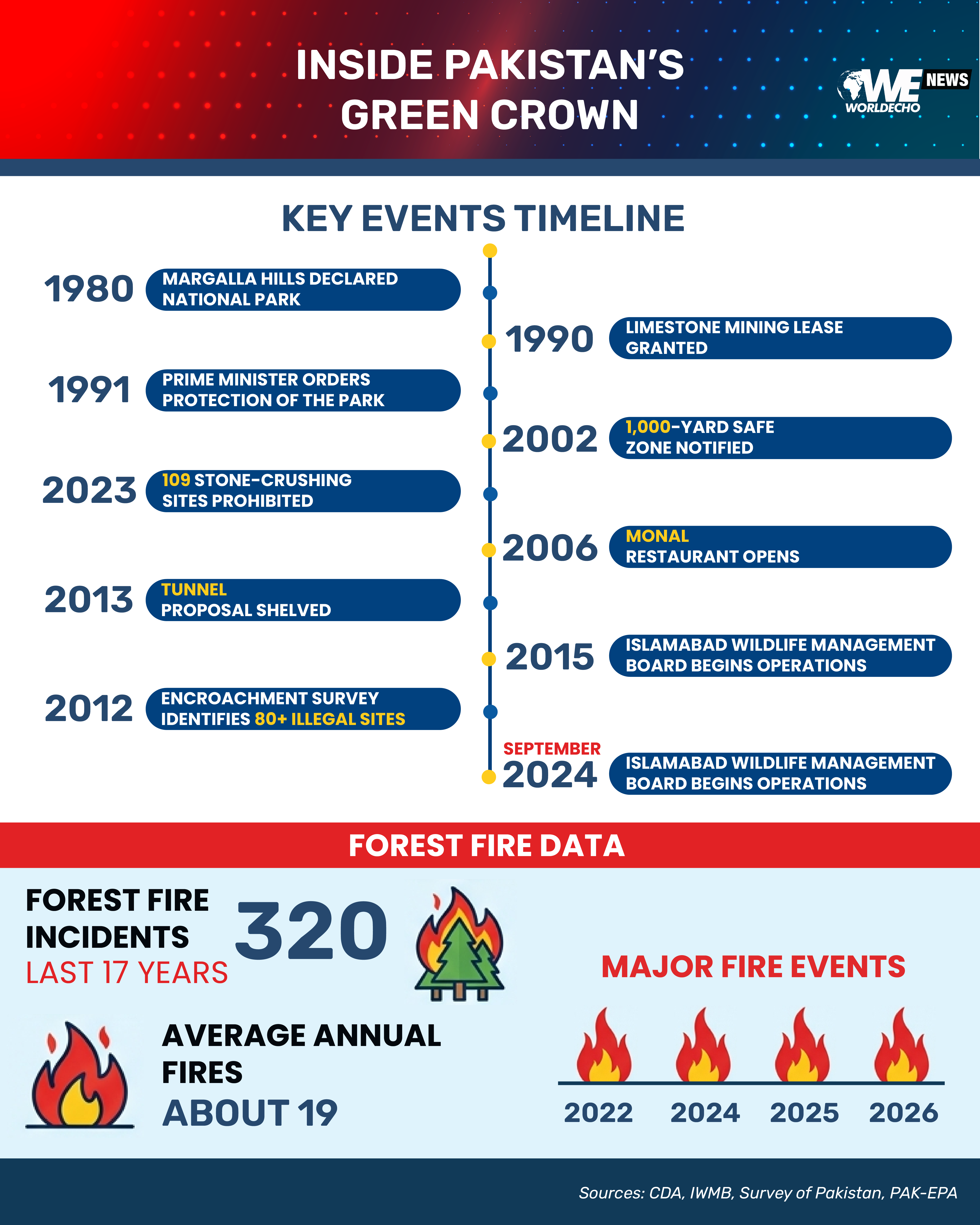
Historically, legal and administrative failures compounded the problem. Despite the national park being declared in 1980 under the Wildlife Ordinance, a cement factory was allowed to mine limestone in 1990. Official records made public by the Capital Development Authority show that the authorities granted a private cement factory a lease that year to extract limestone from within the park’s designated boundaries.
The official record shows that even after then-Prime Minister Nawaz Sharif ordered protection of the park in 1991, it took the Punjab authorities 11 years to notify a 1,000-yard safe zone — a buffer zone that was eventually set up in Taxila and adjoining areas, which fall within Punjab’s territorial jurisdiction.
The Punjab government had separately allowed stone crushing to continue in areas falling within its boundaries.
By 2003, as many as 109 stone-crushing sites were prohibited, but illegal mining persisted. The exact total area of the park destroyed by stone crushing has not been officially quantified in a single government metric.
However, environmental authorities, the Supreme Court and conservationists have noted that quarrying and blasting ate away extensive stretches of the hills, particularly in the Taxila and Margalla foothills regions near the GT Road and the Khyber Pakhtunkhwa-Punjab border.
Ultimately, the threat from stone crushing was brought to an end when the government removed all stone-crushing units from the national park. Owners of stone-crushing units challenged the government’s closure decision in the courts, but after rulings repeatedly went against them, the government proceeded to shut the units down.
Even as one environmental threat was addressed, another controversial proposal soon emerged.
The tunnel debate
In early 2000s, authorities proposed the construction of a tunnel through the Margalla hills to directly connect Islamabad with Haripur. The initial proposal was floated by then-Information Minister Sheikh Rashid Ahmed and Minister of State for Finance Omar Ayub Khan. Originally conceived in the early 2000s, the idea resurfaced in 2013, sparking widespread controversy and becoming one of the most hotly debated infrastructure proposals in the recent history.
A proposed Project-Concept (PC-I), presented to the Capital Development Authority in 2013 and largely processed by the National Highway Authority (NHA) for the Planning Commission, was aimed at cutting a tunnel under the national park to shorten the journey between Islamabad and Haripur — and, proponents argued, to provide a quicker route for commuters, including traffic between Gilgit‑Baltistan, Mansehra and Abbottabad. The project was officially shelved that same year following strong objections from environmentalists and a suo motu notice by the Supreme Court.
Restoring protected habitat
Monal Restaurant, built in 2006 atop the national park, became a popular attraction for Islamabad residents and tourists due to its panoramic views. Its location inside a protected national park, however, made it a symbol of the conflict between tourism and conservation.
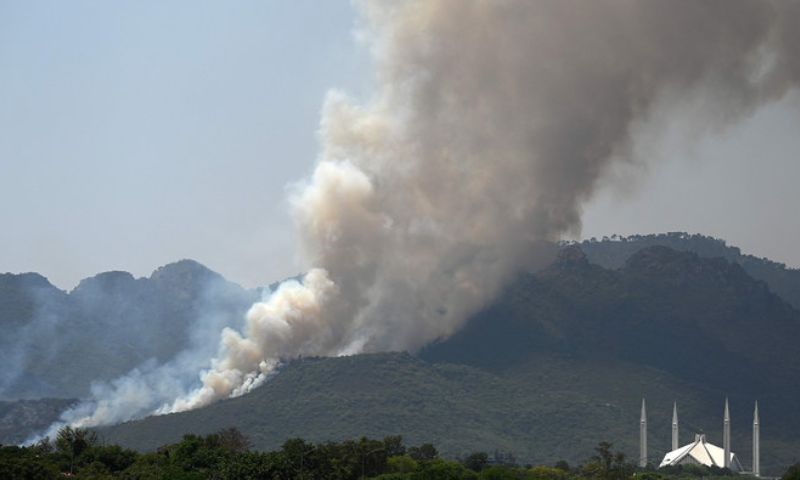
The influx of visitors led to heavy traffic, noise and light pollution, littering, and habitat disruption, prompting many wildlife species to move deeper into the hills.
After years of public outcry and legal challenges, the Supreme Court of Pakistan ordered the closure and removal of Monal Restaurant and other eateries from the national park. In September 2024, Monal Restaurant was closed permanently, and demolition began to restore the area.
Despite such conservation victories, environmentalists warn that the park continues to face a range of persistent and emerging threats.
Margalla’s burning issue
Adnan Kiyani, a young environmentalist actively involved in initiatives aimed at protecting the natural environment, says that repeated study tours to the Margalla hills have revealed an increasing level of human intrusion, particularly the expansion of residential settlements deep inside the national park.
He notes that although many families have lived there for decades, their continued presence has heightened human–wildlife conflict and placed significant strain on the fragile ecosystem. The felling of trees for fuel and the growing use of natural resources, he says, are gradually disturbing the park’s ecological balance.
No official data is available on the extent of deforestation or forest growth over the years; only environmentalists have carried out surveys in limited areas.
He stressed that the government must develop a practical and humane policy that addresses the concerns of local communities while preserving the natural character of this protected area.
Other conservationists echo that concern, arguing that stronger institutional support is essential if the park is to withstand increasing human pressure.
Waleed Butt, a conservationist based in Rawalpindi, emphasises that preserving the national park’s natural integrity demands firm action against illegal construction, poaching, and encroachments, along with sustained ecological restoration.
He stresses the need to eliminate invasive species such as Paper Mulberry, enforce a ban on single-use plastics, strengthen forest fire management, and equip relevant authorities with greater powers to effectively regulate tourism activities.
Major wildfire incidents have been reported in nearly every year since 2022, including significant incidents in 2022, 2024, 2025, and 2026. The data prepared by the Capital Development Authority show 320 forest fire incidents in the last 17 years, averaging about 19 fires annually. The number varies considerably from year to year.