Key Points
- Pakistan clears 477-kilometre strategic fuel pipeline project
- Pipeline will connect supply hubs from Punjab to Khyber Pakhtunkhwa
- Project expected to reduce tanker traffic, freight and supply-chain risks
ISLAMABAD: Pakistan has cleared the launch of the 477-kilometre strategic White Oil Pipeline, a major energy infrastructure project designed to strengthen the country’s fuel supply network, improve energy security and support long-term economic growth.
The Machike-Thallian-Tarru Jabba pipeline would connect storage installations in central Punjab to Khyber Pakhtunkhwa, running along the Lahore-Peshawar motorway.
The project has gained momentum after the Special Investment Facilitation Council coordinated approvals from multiple ministries and government departments.
The council was instrumental in removing key administrative hurdles that had delayed progress.
Officials said the project remains a priority under the council’s investment facilitation framework.
Such facilitation reflects Islamabad’s efforts to accelerate development of critical infrastructure and attract foreign participation in strategic sectors.
A memorandum of understanding for the project was signed under the council’s platform.
It brought together domestic and international stakeholders and laid the foundation for investment in one of Pakistan’s most significant energy transportation projects in recent years.
The Machike–Thallian–Tarru Jabba White Oil Pipeline is designed to extend Pakistan’s existing refined petroleum products pipeline network from Machike, near Lahore, to Tarru Jabba, near Peshawar.
The project will create a continuous fuel transportation corridor stretching from the country’s southern energy gateway in Karachi to major consumption centres in northern Pakistan.
The 477-kilometre pipeline will primarily transport refined petroleum products, including motor gasoline and high-speed diesel.
Energy experts regard the project as strategically important because it addresses several longstanding vulnerabilities in Pakistan’s fuel supply chain.
Transporting petroleum products by road is not only more expensive but also exposes supplies to disruptions caused by accidents, adverse weather conditions, traffic bottlenecks and security concerns.
Tanker transportation has historically been associated with fuel losses, environmental risks and occasional fatal accidents.
The project’s technical significance extends beyond fuel transportation.
The pipeline will run largely along Pakistan’s motorway network and is being designed with future connectivity options to major refining and storage facilities, including the Attock refinery, Chakpirana and Faqirabad.
From an energy-security perspective, the pipeline represents an important step towards modernising Pakistan’s hydrocarbon logistics infrastructure.
By extending the pipeline network deeper into northern Pakistan, policymakers aim to create a more resilient national energy system capable of supporting industrial activity, transportation and economic expansion.
The Frontier Works Organisation is spearheading the project through a dedicated project company named Frontier Oil Company.
The pipeline consortium
The Frontier Oil Company is backed by a consortium, which includes Pakistan State Oil, the country’s largest fuel marketing company, and Inter-State Gas Systems, a state-owned energy infrastructure enterprise.
ALSO READ: Agreement Signed for Machike-Thallian-Tarujabba White Oil Pipeline
The parties signed a consortium agreement a couple of years back.
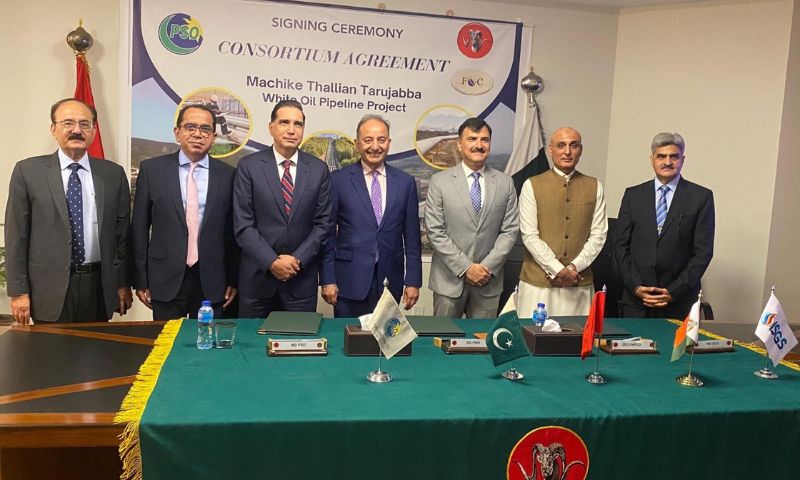
The involvement of Azerbaijan adds an international dimension to the project.
Azerbaijan’s state-owned energy company, SOCAR, holds a 25 per cent stake in Frontier Oil Company.
The partnership highlights growing energy cooperation between Pakistan and Azerbaijan and reflects the need for foreign investment into strategically important infrastructure sectors.
Officials said the successful facilitation of the project demonstrates the government’s intention to streamline investment processes and accelerate execution of large-scale projects with national significance.
The Special Investment Facilitation Council noted that the pipeline aligns with broader objectives of improving the business environment, unlocking investment opportunities and supporting sustainable economic development.
Once completed, the Machike–Thallian–Tarru Jabba White Oil Pipeline is expected to become a critical component of Pakistan’s energy infrastructure.
By creating a modern, efficient and secure route for transporting refined petroleum products from south to north, the project is likely to enhance supply chain resilience. It would also put an end to occasional fuel shortages, mainly in the upper parts of the country. It would also improve fuel availability and support the country’s long-term energy and economic ambitions.