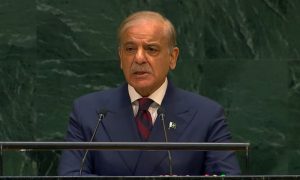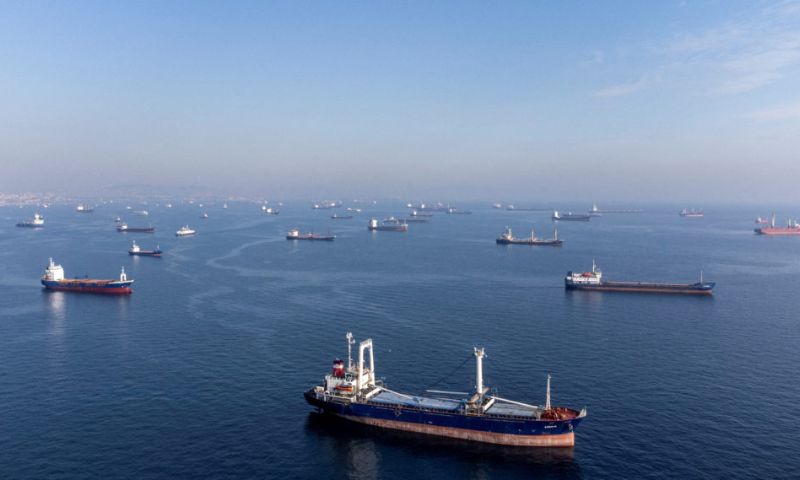
ISTANBUL, Turkiye: Turkish Foreign Minister Hakan Fidan on Saturday called for a “moratorium” on attacks by Russia and Ukraine in the Black Sea after a series of attacks on civilian ships in the strategic waterway.
Fidan, in an interview with Turkiye’s state news agency Anadolu, called for “the setting up of a mechanism allowing a moratorium to be declared”.
“The conflict has spread across the whole Black Sea,” he said.
“To begin with, they targeted the ports and the military ships. Now, they are attacking all commercial shipping without distinction,” Fidan added.
He said ships belonging to Turkiye or flying the Turkish flag were among those targeted.
Turkiye had already condemned Black Sea drone attacks on two Turkish civilian vessels on Tuesday. The attacks took place the previous day and injured some crew members.
Black Sea attacks threaten grain shipments
The increasing attacks on ports, grain terminals and commercial vessels in the Black Sea and Sea of Azov are disrupting Russian and Ukrainian grain shipments and raising concerns over global food security.
Russia is the world’s largest wheat exporter, while Ukraine is a major agricultural producer often described as Europe’s breadbasket.
The United Nations has said global agricultural markets are beginning to feel the effects of the attacks and called for efforts to prevent tensions from escalating.
The UN World Food Programme has warned that continued attacks on Ukrainian shipping routes could further disrupt grain exports and deepen global food insecurity.
Black Sea shipping disrupted
Ukraine’s Infrastructure Ministry reported that 35 attacks were carried out against ships in ports, 22 against ships at sea and 67 against port facilities last month. Ships in Ukrainian ports were targeted 14 times last year, according to the ministry.
Ukrainian Agriculture Policy and Food Minister Taras Vysotskyi said shipowners had temporarily stopped sending vessels to Ukrainian Black Sea ports to load agricultural products as of July 22.
He said alternative export routes would not reach full capacity until the end of August.
Vysotskyi said land and river routes operating at full capacity would still be unable to handle half the volume normally carried through the Black Sea ports.
Danish shipping company Maersk has temporarily suspended its feeder service through Chornomorsk. It has begun rerouting cargo to the Romanian port of Constanta, although existing bookings could be cancelled or their loading port changed to Constanta.
Russia and Ukraine trade accusations
Russia and Ukraine have both denied accusations that they are deliberately targeting civilian shipping and port infrastructure.
The Russian Defence Ministry has said facilities and vessels struck by its forces in Ukrainian ports were being used for military purposes.
Kyiv said a significant share of the targeted facilities and vessels were used for civilian trade and agricultural exports.
Ukraine has also stepped up drone attacks on Russian ports, grain terminals and commercial vessels along the Black Sea and Sea of Azov coasts.
Russia’s major grain export terminals at the port of Taman have reportedly come under attack. Some terminals along the Black Sea coast have also limited grain intake by land transport because of security concerns.
Operations at Taman were affected by restrictions on ship movements in the Sea of Azov introduced on July 10.
Grain shipments are continuing from the ports of Novorossiysk and Tuapse, but loading operations have slowed because of heightened security measures and movement restrictions.
The Rusgrain Union, a non-profit industry organisation, has warned that attacks on commercial vessels and port infrastructure threaten Black Sea shipping. It said export corridors could close if the attacks continue.
Turkiye seeks maritime restraint
Fidan’s call for a moratorium comes as Turkiye seeks to prevent further deterioration of security in a waterway that is critical to regional trade and global food supplies.
Turkiye played a central role in previous efforts to protect grain exports from the region.
The Black Sea Grain Initiative was signed in Istanbul in July 2022 by Turkiye, Russia, Ukraine and the United Nations. The agreement was designed to prevent a global food crisis by keeping Ukrainian grain moving through the Black Sea.
More than 1,000 ships transported around 33 million metric tonnes of grain to global markets and for humanitarian purposes while the corridor was operating.
The initiative helped Ukrainian agricultural exports reach international markets and eased pressure on global food prices.