
Key Points
- Pakistan sets $600m seafood export target for FY 2025–26 after $465m in 2024–25.
- Mud crabs and lobsters lead growth, with China as main buyer.
- Exporters eye joint ventures with Chinese firms in aquaculture and frozen foods.
- Freeze-dried foods seen as untapped export opportunity.
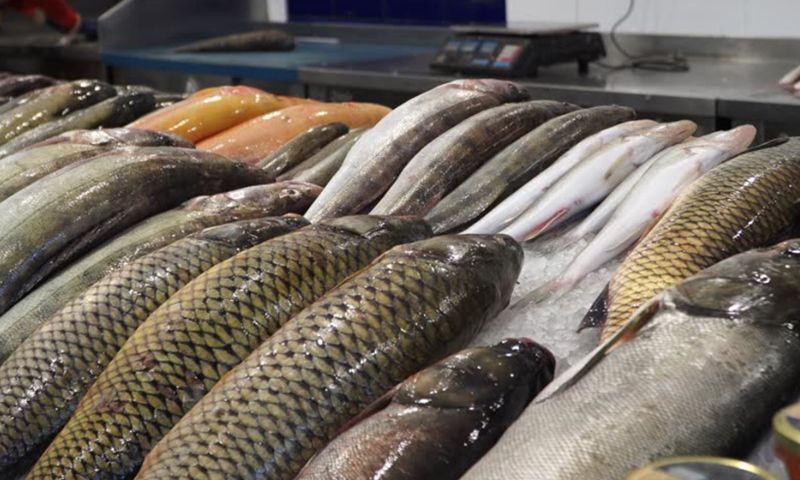
ISLAMABAD: Pakistan has set an ambitious target of $600 million in seafood exports for the financial year 2025–26, banking on stronger aquaculture collaboration, technology transfer, and growing demand in China and other overseas markets.
Federal Minister for Maritime Affairs Muhammad Junaid Anwar Chaudhry said Pakistan’s seafood export sector had already shown “positive growth,” crossing USD 465 million in FY 2024–25, with live mud crabs and lobsters emerging as key drivers. “Pakistan ranks as the third-largest global exporter of mud crabs, shipping over 3,000 tons to China, our biggest importer,” he noted.
Industry leaders echoed the minister’s optimism during a meeting with him in Beijing, where they updated him on talks with Chinese counterparts. The discussions focused on business-to-business agreements and joint ventures aimed at scaling up seafood exports and expanding into high-value product categories.
Tariq Memon, International Sales Manager at Arabian Sea Products, said his company was working with Chinese firms to develop advanced aquaculture and holding systems to preserve live mud crabs and lobsters for up to three weeks—opening doors to distant markets such as China and beyond. “The success of this initiative depends on technology transfer, investment, and expertise from our Chinese partners,” he added.
Saeed Ahmed Fareed, CEO of Legend International (Pvt) Ltd, proposed a joint venture in Karachi for value-added frozen seafood and poultry products, including chicken feet, citing cost efficiencies and market expansion into the US, Europe, and regional destinations. His facility, spanning 65,000 square feet with a daily processing capacity of 40 tonnes, already holds approval from China’s General Administration of Customs (GACC).
Other exporters also outlined growth plans: Ali Reimoo of Karim Impex emphasised expansion into China and regional markets, while Asif Muhammad Ali Shah of Perfect Food Industries highlighted the untapped potential of freeze-dried foods. Shah said global demand for freeze-dried products like mango, okra, bitter melon, falsa, and guava remained strong, but Pakistan lacked such facilities due to high equipment costs and long processing cycles.
Shah stressed that international buyers were willing to lock in annual contracts if Pakistan established local production capacity, particularly to serve diaspora communities and niche markets abroad.
Minister Chaudhry observed that investments in cold chain logistics and advanced freezing technologies were already strengthening Pakistan’s frozen food market and could pave the way for seafood-specific freeze-drying plants. He added that market trends pointed to “promising potential for growth” in the sector in the near future.