Key Points
- Tehran disputes several US claims on talks
- Diplomatic efforts continue despite sporadic clashes
ISLAMABAD: US President Donald Trump has claimed that Iran has agreed to guarantee it will not develop nuclear weapons, describing the commitment as the central requirement for any future agreement between Washington and Tehran.
“We are close to a very good deal,” the President said despite continued indications from Iranian officials that major differences remain unresolved.
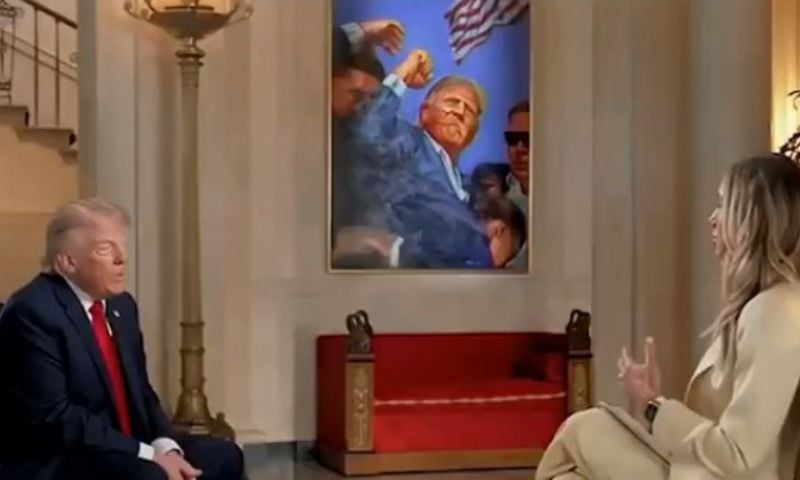
“The one guarantee that I have to have is that there will be no nuclear weapons. They’ve agreed to that, and it was very interesting,” Trump said during an interview with his daughter-in-law Lara Trump on a Fox News talk show.
"The one guarantee that I have to have is that there will be no nuclear weapons, they've agreed to that."
President Donald J. Trump talks Iran, ballroom construction and more in a wide ranging interview with Lara Trump. 🇺🇸 pic.twitter.com/MPpXsbf5ej
— The White House (@WhiteHouse) May 31, 2026
The remarks mark Trump’s latest assessment of negotiations with Tehran, which have continued since a temporary ceasefire was reached in April after months of hostilities and diplomatic efforts mainly led by Pakistan and backed by regional and international actors.
However, Iran’s top negotiator Mohammad Baqer Ghalibaf said on Sunday that Tehran will not accept any agreement ending its conflict with the US unless there is certainty that the Iranian people’s rights are secured, Iran’s state media reported.
“There is no trust in the enemy’s words and promises. Our only criterion is to achieve tangible results before we fulfill our commitments in return,” he added.
Iranian officials quoted by the Iranian state media have repeatedly suggested that significant gaps remain between the two sides on issues including sanctions relief, Iran’s nuclear rights and regional security arrangements.
According to Iranian media reports, Tehran has demanded the release of about $12 billion in frozen assets before entering substantive negotiations on matters such as its nuclear programme.
Iranian officials have also rejected previous Trump assertions that the country’s enriched uranium stockpile would be destroyed under any future agreement, describing those claims as baseless.
Trump adopted a less urgent tone regarding the negotiations during the interview, indicating that Washington was prepared to continue pursuing diplomacy but retained other options if talks failed.
“I’m in no hurry,” he said. “Slowly but surely we’re getting, I think, what we want and if we don’t get what we want, we’re going to end, in a different way.”
The comments appeared to leave open the possibility of renewed military action if diplomatic efforts do not produce the desired outcome.
Although large-scale hostilities have largely subsided since the April ceasefire, intermittent clashes have continued.
Iran’s state broadcaster IRIB reported that the Revolutionary Guards had shot down a US military drone that was allegedly approaching Iranian territorial waters to conduct hostile operations.
The incident has not been confirmed by the United States.
Earlier this week, tensions escalated when US forces reportedly carried out strikes on Iran’s southern port city of Bandar Abbas, followed by retaliatory Iranian fire, marking the most serious confrontation since the ceasefire took effect.
Despite those incidents, diplomatic engagement has continued amid growing international concern over disruptions to shipping and energy supplies through the Strait of Hormuz, one of the world’s most important oil transit routes.
The waterway has emerged as a central issue in the negotiations as competing restrictions imposed by Washington and Tehran have contributed to uncertainty in global energy markets and raised concerns about supply disruptions.
Trump recently stated on social media that Iran would impose “no tolls” on ships passing through the strait once restrictions were lifted under any future agreement. Iranian news agency Fars, citing unnamed sources, disputed the claim, saying no such provision appeared in the negotiating text.
Meanwhile, Iran’s ISNA news agency quoted lawmaker Alireza Salimi as saying legislation aimed at strengthening Iran’s management and sovereignty over the Strait of Hormuz would soon be presented for parliamentary approval.
Analysts say Trump’s latest assertion regarding Iran’s nuclear intentions could indicate progress on one of the most contentious issues in the negotiations.
However, conflicting statements from Washington and Tehran continue to highlight the challenges facing efforts to transform the fragile diplomatic opening into a comprehensive and lasting agreement.