
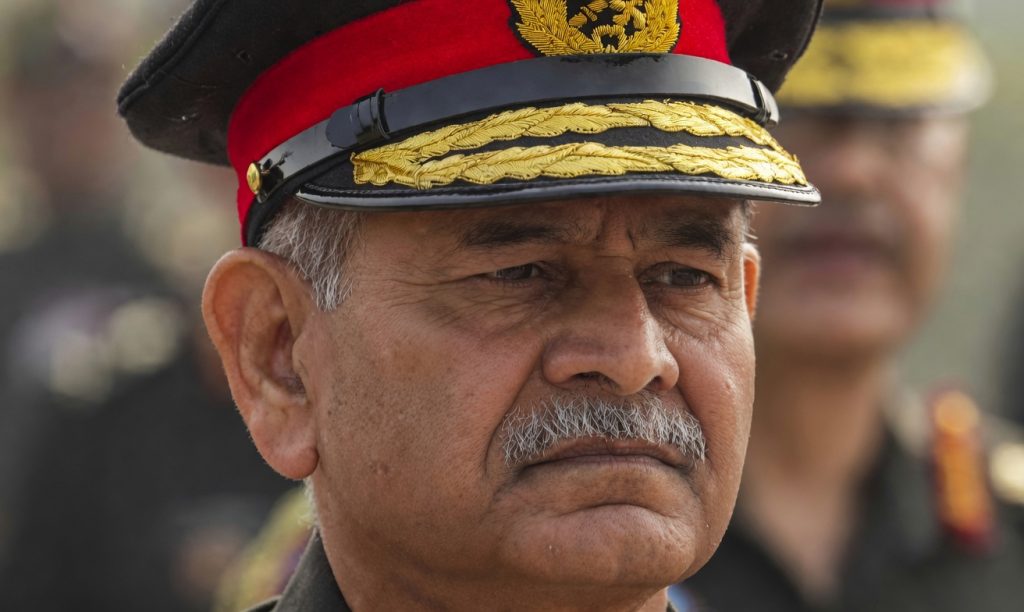
ISLAMABAD: Senior Pakistani security analyst Syed Muhammad Ali said that Indian Army Chief “General Upendra Dwivedi’s remarks made on May 30, 2026, about preparing for “Operation Sindoor 2.0” were irresponsible but understandable for a Military Chief who is deeply frustrated after the shocking debacle of Indian military Operation Sindoor last year.”
On Saturday, Indian Army Chief General Upendra Dwivedi told ANI news agency that New Delhi is preparing for ‘Operation Sindoor 2.0’, The Times of India reported.
“Indian military Chief, through such irrational bravado, is desperately trying to keep the hopes of his disappointed political leadership and declining morale of the world’s fourth largest military force alive,” Ali said.
“Today the whole world knows that India is the principal source of instability and state sponsored terrorism in South Asia by militarily occupying Jammu and Kashmir, oppressing Indian minorities, supporting several terrorist outfits in the region, sending intelligence operatives to assassinate political critics in the United States, Canada and other countries and repeatedly attempting erratic military adventures against a nuclear armed Pakistan,” the senior security analyst further added.
“Even US President Donald Trump has frequently reminded New Delhi that the Indian military was humbled in May 2025 and only saved by the US President through his timely intervention. Indian political leadership is very angry with its military high command because the BJP government provides it an all-time high and almost nine times bigger defence budget than its neighbouring Pakistan,” the security analyst said.
“Pakistan showed strategic restraint last year at President Trump’s request, which may not be the case next time,” Ali warned.
“Such bravado indicates that Indian military leadership is increasingly preoccupied by their declining public support, loss of military morale and anger of their political leadership due to their disappointing performance against Pakistan last year,” the senior security analyst said.
“Lasting peace in South Asia depends upon rational and responsible strategic behaviour, result-oriented dialogue on all outstanding disputes, particularly Jammu and Kashmir, as well as fair water sharing with Islamabad,” Ali added.
“Pakistan desires peace through regional stability and conflict resolution through diplomacy, but remains willing, capable and ready to defend its national interests, sovereignty and territorial integrity,” Ali said.
Pakistan-India conflict in May 2025
The escalation between the nuclear-armed neighbours comes in the wake of an April 22 attack in the Pahalgam area of Indian illegally occupied Kashmir in which 26 people were killed.
India blamed Pakistan for the attack.
Pakistan condemned the attack and demanded an independent international enquiry to find the reality behind the attack.
India has not yet allowed any international organisation in the past one year to visit the alleged attack site or investigate the Indian claims and allegations.
On May 7, 2025, the Indian military launched unprovoked attacks on various Pakistani cities targeting the civilian population.
Pakistan swiftly responded to Indian military aggression and launched “Operation Bunyan-un-Marsoos,” targeting various Indian military installations, causing severe military losses to India.
During the four-day conflict, Pakistan Air Force (PAF) had downed eight Indian fighter jets, including French-made Rafale, during the brief military conflict between the two sides in May last year.
After Pakistan’s intense retaliation to Indian aggression, New Delhi requested US intervention, which led to a ceasefire on the afternoon of May 10, 2025.