Key Points
• 26 people already affected, identities not disclosed
• Measures extend to family members and cover economic and security activities
• Policy reflects geopolitical contest in the Western Hemisphere
• Immigration tools increasingly used as instruments of foreign policy
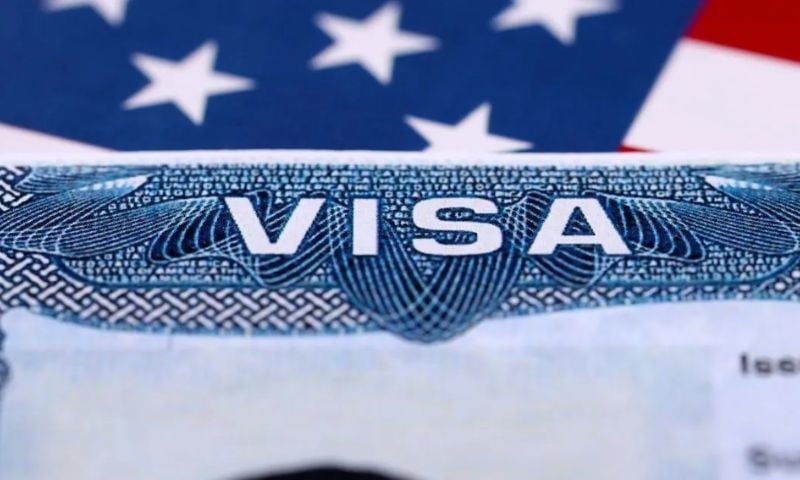
ISLAMABAD: The United States has announced a significant expansion of its visa restrictions, targeting individuals it accuses of working on behalf of rival states, using immigration controls as a foreign policy tool.
The US Department of State said it has already imposed restrictions on 26 individuals under the expanded policy, though it did not disclose their identities or the specific allegations against them.
The restrictions generally make the individuals and their immediate family members ineligible to enter the United States.
According to the official statement, activities that could trigger such measures include facilitating foreign control over strategic assets, influencing political or economic systems, and actions seen as weakening regional stability or national sovereignty.
The scope of the criteria has raised concerns among observers about transparency and due process.
The move comes amid intensifying geopolitical competition in the Western Hemisphere, a term used to describe North, Central and South America along with the Caribbean.
Washington has increasingly expressed concern over the growing presence of rival powers, particularly China, in infrastructure, trade and investment projects across the region.
The policy is also linked to a strategic outlook promoted by Donald Trump, who has revived a doctrine inspired by the 19th-century foreign policy of James Monroe, according to TIME.
The original doctrine, announced in 1823, opposed external interference in the Americas. Its modern reinterpretation stresses maintaining US influence in the region amid new global rivalries.
Washington has recently taken more assertive actions in the region. Earlier this year, it conducted a controversial military operation aimed at removing Nicolás Maduro from power in Venezuela.
It has also continued maritime operations targeting suspected drug trafficking routes, describing them as part of efforts against organised transnational crime, though independent verification of some claims remains limited.
The visa restrictions are being implemented under the Immigration and Nationality Act, a US law allowing authorities to deny entry to foreign nationals if their presence is considered potentially harmful to the country’s foreign policy interests.
Analysts note that such provisions, once used sparingly, are now being applied more broadly and strictly.
In recent months, similar measures have targeted individuals from multiple countries.
The US revoked visas of judicial officials in Brazil, including Alexandre de Moraes, accusing them of politically motivated actions.
It has also taken steps against figures linked to the government of Iran, amid ongoing tensions.
In another high-profile case, visa action was announced against Gustavo Petro of Colombia following disagreements over US foreign policy. However, the status of those measures has shifted amid diplomatic engagement.
Beyond targeted restrictions, the administration has introduced broader entry limitations affecting nationals from dozens of countries, citing security and migration concerns.
Visa processing has also been paused or tightened for several countries, particularly those assessed to pose a higher risk of irregular migration or misuse of public services.
Critics argue that the increasing use of visa policies to address political, economic and security concerns risks blurring the line between immigration management and foreign policy enforcement.
Supporters, however, say such tools provide a non-military means of countering perceived external influence and protecting national interests.
The latest expansion underscores how mobility and access to the United States are becoming central elements in its global strategy, particularly in regions where major powers are competing for influence.