
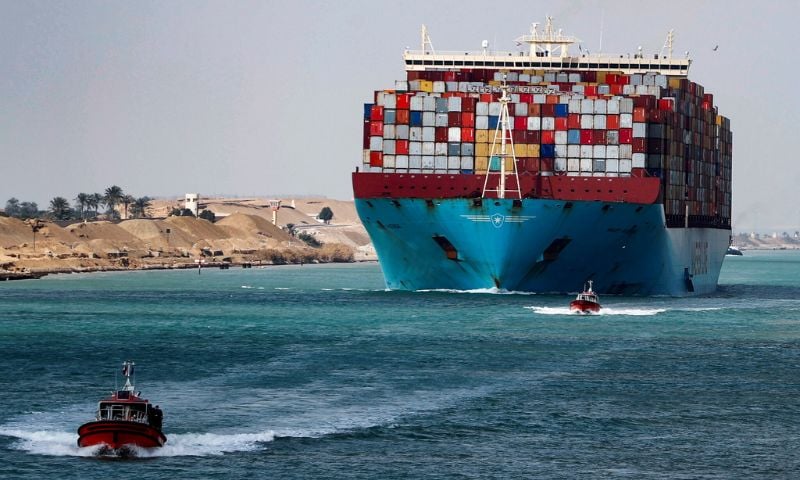
Key Points
- Disruption could affect global shipping and oil supplies
- Tensions linked to broader regional conflicts
- International concern grows over maritime security
ISLAMABAD: Yemen’s Houthis have threatened to close the strategically vital Bab al-Mandeb, a narrow maritime passage that serves as a key artery for global trade between the Red Sea and the Gulf of Aden.
The group, formally known as Ansar Allah, signalled that it could target shipping lanes in response to escalating regional tensions.
The warning has raised fears of disruption along one of the world’s busiest sea routes, through which a significant share of global oil shipments and commercial goods pass.
The Bab al-Mandeb Strait lies between Yemen on the Arabian Peninsula and the Horn of Africa states of Djibouti and Eritrea.
At roughly 30 kilometres wide at its narrowest point, it is one of the world’s most important maritime chokepoints, linking shipping routes between Europe and Asia via the Suez Canal.
Any sustained disruption could force vessels to take a longer route around the southern tip of Africa, significantly increasing transit times and costs, with likely knock-on effects on global supply chains and energy markets.
The Houthis have previously carried out attacks on commercial vessels and naval assets in the region, presenting such actions as part of their response to wider Middle East conflicts.
Analysts say even limited interference in this corridor can have disproportionate global economic consequences due to the high volume of trade passing through it.
Governments and international organisations have expressed concern, calling for restraint and the safeguarding of freedom of navigation, a principle of international law that allows ships to move through key waterways without undue interference.
The latest threat highlights the fragile security environment around one of the world’s most critical trade routes, where regional tensions increasingly carry global economic implications.