ISLAMABAD: Pakistan has positioned itself as a key diplomatic mediator in the ongoing tensions between the United States and Iran, with global leaders and international media acknowledging its role in promoting regional peace.
According to The New York Times, Pakistan’s senior leadership played a crucial role in maintaining the ceasefire between the US and Iran and enabling peace talks between Washington and Tehran.
White House Press Secretary Karoline Leavitt said Pakistan had conducted “incredibly effective mediation”.
Former Pakistani ambassador to Iran Asif Ali Khan Durrani said Tehran does not trust many countries, making Pakistan “the only viable channel” for mediation.
Singapore-based broadcaster Channel News Asia described Pakistan’s role as significant, calling it a “wake-up call” for India.
Islamabad Talks and regional diplomacy
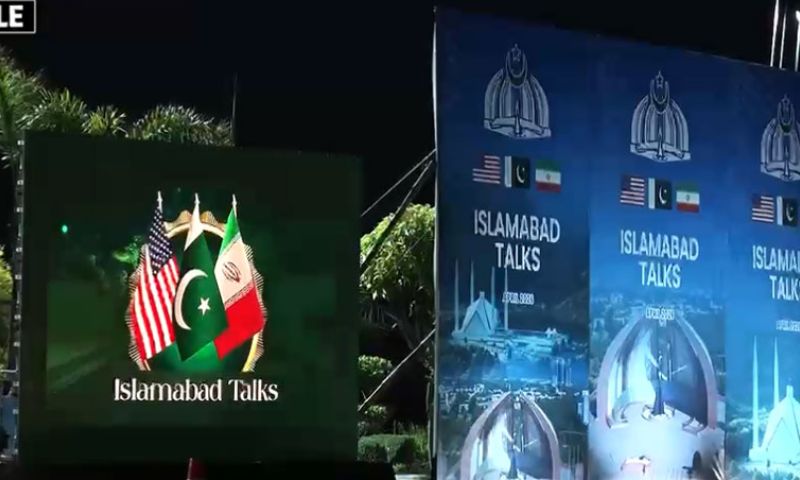
Pakistan’s diplomatic efforts led to historic direct talks between high-level US and Iranian delegations in Islamabad, marking the highest-level engagement between the two sides in decades.
The negotiations, though not resulting in an immediate agreement, were described as a diplomatic breakthrough, with both Washington and Tehran expressing appreciation for Pakistan’s facilitation.
As part of diplomatic efforts, Islamabad convened a ministerial meeting involving the foreign ministers of Saudi Arabia, Turkiye and Egypt to discuss the Iran conflict, its regional spillover and pathways to de-escalation.
The discussions included key proposals aimed at finding a mutually acceptable peace framework.
Pakistan also engaged China following the talks, with senior leadership conveying outcomes to Beijing and advancing a joint diplomatic agenda, reflecting efforts to broaden international support for mediation.
Strategy and diplomatic positioning
Analysts say Islamabad adopted a neutral and principled position, maintaining engagement with all sides and continued calling for de-escalation and diplomacy to resolve the conflict.
Pakistan leveraged its historical ties with Iran, including religious and cultural links, alongside its strengthening relations with the Trump administration in Washington.
This engagement was seen as critical in building trust with both sides. Both Washington and Tehran welcomed Pakistan’s mediation.
Pakistan also worked with regional partners affected by the conflict, including Gulf states, to coordinate diplomatic efforts for de-escalation.
Pakistan urged all sides to exercise restraint to avoid escalation.
Global recognition of Pakistan’s role
International media outlets have widely acknowledged Pakistan’s diplomatic efforts.
Reuters described Pakistan as a “powerful intermediary” between Washington and Tehran.
BBC News said Pakistan’s sustained engagement contributed to a diplomatic breakthrough between the US and Iran.
According to Fox News, US President Donald Trump said he decided to halt hostilities following discussions with Pakistan’s Prime Minister Shehbaz Sharif and Chief of Defence Forces Field Marshal Syed Asim Munir.
Al Jazeera reported that Pakistan played a crucial role in achieving the ceasefire between the US, its allies, and Iran.
Gulf News highlighted Islamabad’s close ties with both Iran and the United States as key to its mediation success.
TRT World described Pakistan’s role as “historic”, and The Hindu lauded the sustained diplomatic efforts of the Pakistani leadership to end the conflict through diplomacy and dialogue.
Pakistan’s diplomatic engagement offers an opportunity to position itself globally as a credible peacemaker.