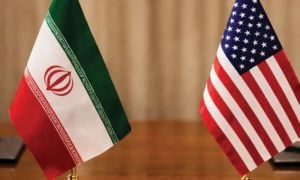
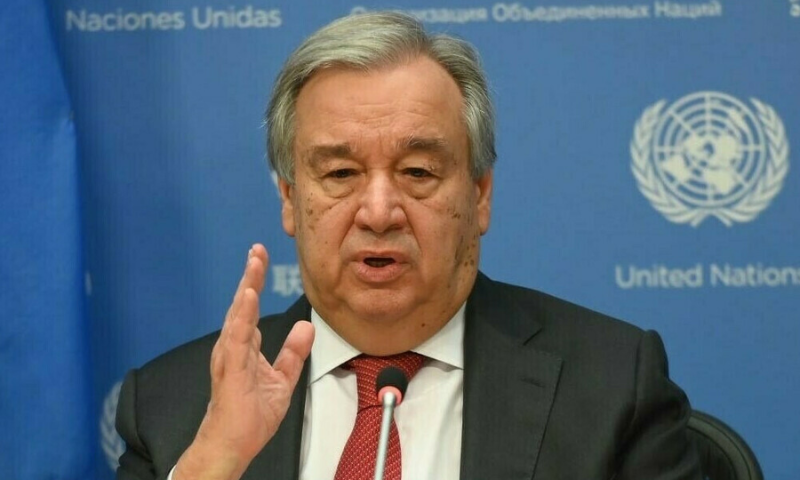



UNITED NATIONS: UN Secretary-General Antonio Guterres on Sunday urged the United States and Iran to urgently resume negotiations and resolve their differences through diplomacy, as he voiced deep concern over the escalating military confrontation in the Gulf.
Guterres specifically mentioned US attacks on Iran and Iran’s strikes on ships in the Strait of Hormuz and attacks on Gulf countries. “These attacks must stop,” Guterres spokesman Stephane Dujarric said in a statement.
“The Secretary-General is deeply concerned by the serious escalation and renewed military confrontations in the Gulf, including the Iranian attacks on ships in the Strait of Hormuz, the attacks by the United States on Iran, and the attacks by Iran on targets in the neighbouring countries,” the UN chief said.
Guterres called on all parties to exercise maximum restraint, avoid further escalatory action and take immediate steps to de-escalate.
The UN Chief reiterated that a return to full-scale hostilities would have catastrophic consequences—for the peoples of the region, for international peace and security, and for the global economy.
Guterres further reaffirmed the need for the restoration of full freedom of navigation in the Strait of Hormuz.
.@antonioguterres is deeply concerned by the serious escalation and renewed military confrontations in the Gulf.
He calls on all parties to exercise maximum restraint, avoid further escalatory action and take immediate steps to de-escalate.https://t.co/94Px33LMqG
— UN Spokesperson (@UN_Spokesperson) July 12, 2026
The UN Chief urged Iran and the United States to urgently resume negotiations and to address outstanding issues through diplomacy.
Pakistan urges adherence to Islamabad MoU
Mediator Pakistan on Sunday urged the US and Iran to take immediate steps towards de-escalation, calling on all sides to exercise restraint and uphold their respective commitments under the Islamabad Memorandum of Understanding (MoU).
Pakistan’s call for de-escalation comes after a fresh exchange of military strikes between Washington and Tehran following an Iranian missile attack on commercial vessels in the Strait of Hormuz.
The Islamabad MoU was signed on June 18 by US President Donald Trump, Iranian President Masoud Pezeshkian and Prime Minister Shehbaz Sharif after Pakistan brokered a ceasefire between Washington and Tehran.
Under the Islamabad MoU, the US and Iran committed to halt military operations, reopen the Strait of Hormuz to commercial shipping and negotiate a comprehensive agreement covering Iran’s nuclear programme, US sanctions and a permanent ceasefire within 60 days.
In a statement, the Foreign Office said Pakistan was following the recent incidents with deep concern and reiterated its strong support for the sovereignty and territorial integrity of all brotherly countries in the region.
🔈 PR No. 1️⃣7️⃣0️⃣/2️⃣0️⃣2️⃣6️⃣
Pakistan expresses deep concern at escalation in regional tensions
🔗⬇️ pic.twitter.com/yr27qSYQ9E
— Ministry of Foreign Affairs – Pakistan (@ForeignOfficePk) July 12, 2026
Pakistan, which has been mediating between Washington and Tehran, said it remained committed to providing all support towards achieving lasting peace and stability in the region through dialogue and diplomacy.
Pakistan stresses dialogue for lasting peace
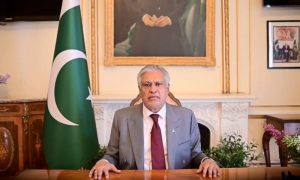
Earlier, Pakistan’s Deputy Prime Minister and Foreign Minister Ishaq Dar reaffirmed Pakistan’s commitment to diplomacy as the primary means of resolving regional disputes, telling his Iranian counterpart Abbas Araghchi that dialogue remains the only viable route to lasting peace and stability.
According to a statement issued by the Foreign Office on Sunday, Dar held a telephone conversation with the Iranian foreign minister to discuss the rapidly evolving security situation in the region amid escalating tensions involving Iran, the United States and Israel.
Deputy Prime Minister/Foreign Minister Senator Mohammad Ishaq Dar @MIshaqDar50 held a telephone conversation today with His Excellency Seyyed Abbas Araghchi, Foreign Minister of the Islamic Republic of Iran. @araghchi
Both leaders exchanged views on the evolving regional… pic.twitter.com/WuRxnROwwp
— Ministry of Foreign Affairs – Pakistan (@ForeignOfficePk) July 12, 2026
During the exchange, the two leaders reviewed recent developments and emphasised the importance of preventing further escalation.
Dar urged all parties to exercise maximum restraint and pursue de-escalation in accordance with the Islamabad MoU reached in June.
The deputy prime minister stressed that peaceful engagement and diplomatic efforts offered the only sustainable solution to regional disputes.
Dar also reiterated Pakistan’s readiness to continue playing a constructive role in supporting initiatives aimed at promoting regional peace and long-term stability.
The conversation came against the backdrop of a deterioration in regional security. Iran and the United States exchanged heavy missile and drone strikes after Tehran launched attacks on US military facilities in Gulf states.
US President Donald Trump said the United States hit Iran hard in response to its latest attacks on shipping in the Strait of Hormuz. “We hit them very hard last night,” Trump told CNN by telephone in an interview.
Trump has said the United States and Iran had been close to “a deal” on Saturday. “They were giving up everything, and then all of a sudden two hours after that they hit a ship with a drone. These people, there is something wrong with them,” he has said.
US launches third round of strikes
The latest developments came after the United States launched another round of military strikes against Iran, accusing the Islamic Revolutionary Guard Corps (IRGC) of attacking a commercial container ship transiting the Strait of Hormuz.
According to CENTCOM, the operation began at 7:15 p.m. Eastern Time on Saturday and marked the third round of US military action against Iran during the week.
At 7:15 p.m. ET today, U.S. Central Command forces began launching the third round of strikes this week against Iran after Islamic Revolutionary Guard Corps forces blatantly attacked M/V GFS Galaxy, a Cyprus-flagged container ship transiting the Strait of Hormuz. A civilian crew…
— U.S. Central Command (@CENTCOM) July 11, 2026
The US military said that Iranian forces attacked the Cyprus-flagged container vessel M/V GFS Galaxy while it was transiting the strategically important waterway.
CENTCOM said the attack caused a major fire onboard, severely damaged the vessel’s engine room and left one civilian crew member missing, rendering the ship incapable of continuing its voyage.
“The strikes are being carried out at the direction of the Commander in Chief,” CENTCOM said, referring to President Donald Trump.
The US military further accused Tehran of failing to honour previous commitments intended to safeguard commercial navigation in the Gulf.
“Iran was provided yet another opportunity to demonstrate adherence to the Memorandum of Understanding after being held accountable for earlier attacks on commercial vessels, but has again failed,” the statement said.
Washington said the military action was intended to further reduce Iran’s ability to threaten international shipping and civilian mariners operating in one of the world’s busiest maritime corridors.
“In response, the United States is imposing a heavy cost by continuing to degrade Iran’s ability to attack civilian mariners and commercial ships freely transiting the strait,” CENTCOM added.
Islamabad MoU framework
The Islamabad MoU was signed on June 18 by US President Donald Trump, Iranian President Masoud Pezeshkian and Prime Minister Shehbaz Sharif after Pakistan brokered a ceasefire between Washington and Tehran.
Under the Islamabad MoU, the US and Iran committed to halt military operations, reopen the Strait of Hormuz to commercial shipping and negotiate a comprehensive agreement covering Iran’s nuclear programme, US sanctions and a permanent ceasefire within 60 days.
Pakistan and Qatar subsequently co-mediated the first round of high-level negotiations in Lucerne, Switzerland, on June 21.
The talks were attended by US Vice President JD Vance and Iranian Parliament Speaker Mohammad Bagher Ghalibaf.
The next round of negotiations is intended to advance the Islamabad MoU framework. The technical talks were delayed because of the state funeral ceremonies for Iran’s late Supreme Leader, Ayatollah Ali Khamenei.
The planned meeting follows indirect technical discussions held in Doha earlier this week.
Pakistan’s diplomatic efforts
Pakistan is the principal mediator between the US and Iran after it secured a ceasefire on April 08 and hosted the highest level of talks between the two nations on April 12 and 13 in Islamabad.
Pakistan, which brokered the ceasefire and has continued to mediate between Washington and Tehran, has urged all parties to honour the agreement.
Pakistan’s Deputy Prime Minister and Foreign Minister Ishaq Dar last week stressed the need for all parties to the Middle East conflict to uphold the ceasefire agreement.
On June 18, Prime Minister Shehbaz Sharif, President Donald Trump and Iranian President Masoud Pezeshkian signed the Islamabad Memorandum of Understanding to end hostilities and launch further negotiations.
On June 21, Pakistan and Qatar mediated the high-level US-Iran talks in Switzerland.
The first round of Pakistan and Qatar mediated US-Iran talks, led by US Vice President JD Vance and Iran’s Parliament Speaker Mohammad Baqer Ghalibaf, was held in Switzerland a week ago, and Washington waived sanctions on Tehran.
After the talks, Pakistan and Qatar announced significant progress in diplomatic efforts between the US and Iran following the conclusion of the first round of high-level talks in Switzerland.