ISLAMABAD: The United States has extended its ceasefire with Iran hours before its expiry, with President Donald J. Trump citing a request from Pakistan’s civilian and military leadership as a key factor behind the decision.
Trump indefinitely pushed back the end of the two-week truce, crediting a request from mediator Pakistan and stressing the need to give Iran’s “fractured” leadership time to form a proposal. But he said the US blockade of Iran’s ports — a sticking point for Tehran — would continue.
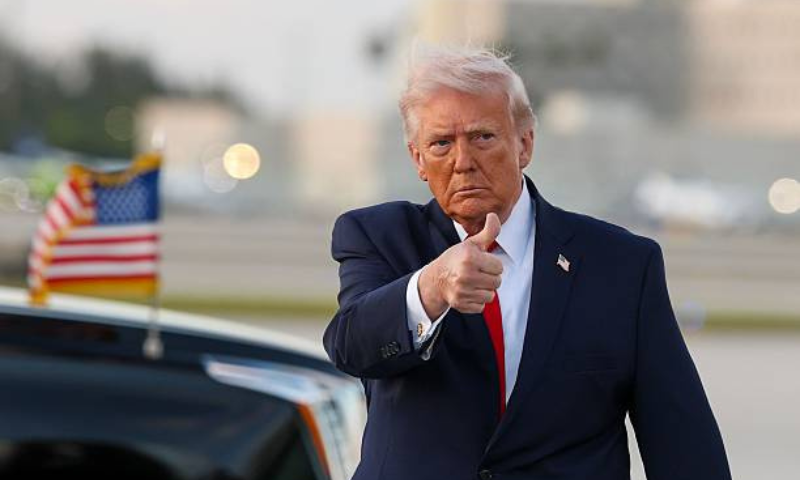
US President said he has ordered an extension of the ceasefire with Iran following a request from Pakistan’s Chief of Defence Forces Field Marshal Syed Asim Munir and Prime Minister Shehbaz Sharif.
“Based on the fact that the Government of Iran is seriously fractured, not unexpectedly so and, upon the request of Field Marshal Asim Munir, and Prime Minister Shehbaz Sharif, of Pakistan, we have been asked to hold our Attack on the Country of Iran until such time as their leaders and representatives can come up with a unified proposal,” Trump stated.
He said that the ceasefire would remain in place only until Iran’s leadership presents a “unified proposal”.
STATEMENT BY PRESIDENT DONALD J. TRUMP: pic.twitter.com/ATdRyY1qqK
— The White House (@WhiteHouse) April 21, 2026
“I have therefore directed our Military to continue the Blockade and, in all other respects, remain ready and able, and will therefore extend the Ceasefire until their proposal is submitted, and discussions are concluded, one way or the other,” the US President posted on his Truth Social platform.
The US president accused Iran of wanting to keep the Strait of Hormuz open “so they can make $500 Million Dollars a day,” which he said the Gulf nation would risk losing if it remains closed.
Trump insisted in the post that keeping a US blockade of the strait, a critical waterway for about a fifth of the world’s oil and natural gas exports, is vital for forging a deal with Iran.
Trump’s statement came as the Pakistan-brokered ceasefire neared its deadline.
Ahead of Trump’s eleventh-hour intervention, it had been unclear when the original ceasefire would expire, with Pakistan indicating it would end at 2350 GMT Tuesday.
This moment came and went with no reports of new military activity by Iran, which had said the ceasefire would end at 0000 GMT.
The developments took place as the world anticipated a second round of talks between Washington and Tehran in Islamabad to end the conflict.
However, uncertainty prevailed over the possibility of talks amid mixed signals from Tehran and reports of a delay in the departure of US Vice President JD Vance, who was expected to lead the American delegation, to Islamabad.
A White House official confirmed that Vice President JD Vance would not travel to Pakistan for talks Tuesday as previously planned, pending the submission of an Iranian proposal.
On Tuesday, Iran’s foreign ministry spokesperson Esmaeil Baghaei told Iranian state TV that Tehran had not yet decided whether to attend talks with the United States in Pakistan.
Pakistan Welcomes Decision
Pakistani Prime Minister Shehbaz Sharif thanked Trump for extending the ceasefire., with UN Secretary General Antonio Guterres also welcoming it.
On my personal behalf and on behalf of Field Marshal Syed Asim Munir, I sincerely thank President Trump for graciously accepting our request to extend the ceasefire to allow ongoing diplomatic efforts to take their course.
With the trust and confidence reposed in, Pakistan…
— Shehbaz Sharif (@CMShehbaz) April 21, 2026
In a statement posted on social media, Sharif thanked US President Donald J. Trump for “graciously accepting” Pakistan’s request to prolong the ceasefire, describing the decision as an opportunity for diplomacy to take its course.
He said the message was conveyed on his own behalf and on behalf of Pakistan’s army chief Asim Munir, underscoring a unified civil-military approach in ongoing diplomatic mediation efforts.
“On my personal behalf and on behalf of Field Marshal Syed Asim Munir, I sincerely thank President Trump for graciously accepting our request to extend the ceasefire to allow ongoing diplomatic efforts to take their course,” the Prime Minister wrote on his X handle.
Pause Comes At Critical Juncture
The extension comes at a critical moment in the ongoing US-Iran confrontation, where the initial ceasefire window was set to expire within hours, raising fears of imminent escalation across the region.
Trump said the decision to delay military action was linked to internal divisions within Iran and the need to allow its leadership time to present what he described as a “unified proposal.”
“I have therefore directed our Military to continue the Blockade and, in all other respects, remain ready and able,” Trump said, indicating that the pause remains conditional and reversible.
Since the first round of talks in Islamabad, Trump announced a blockade of Iranian ports, which US Treasury Secretary Scott Bessent said would remain in place.
“In a matter of days, Kharg Island storage will be full, and the fragile Iranian oil wells will be shut in,” Bessent said in an X post Tuesday, adding that constraining Iran’s maritime trade will target its “primary revenue lifelines.”
He warned: “Any person or vessel facilitating these flows—through covert trade and finance—risks exposure to U.S. sanctions.”
The US Defense Department said Tuesday that its forces intercepted and boarded a “stateless sanctioned” vessel as part of Washington’s efforts. AFP has identified the vessel as one affiliated with Iranian activity.
Both sides have accused the other of ceasefire breaches.
Pakistan’s Diplomatic Intervention
The explicit reference to Pakistan in the US president’s statement places Islamabad at the centre of a sensitive diplomatic effort to prevent escalation in the Middle East.
Trump said the request to delay action came from Pakistan’s Chief of Army Staff Asim Munir and Prime Minister Shehbaz Sharif, suggesting coordinated outreach at a time of heightened tensions.
Officials and analysts say Pakistan’s longstanding ties with both Western powers and regional actors, including Iran, enable it to play a bridging role during crises.
Pakistan has already completed foolproof security and other arrangements in its capital for the second round of the high-stakes post-ceasefire talks between the US and Iran. The talks were initially planned for last weekend, but are now expected this week.
Officials privy to the developments claim that technical-level talks are already underway in follow-up to the first round, which was held between the senior-level leadership from both sides.
Israel, Lebanon Ceasefire Strained
On another front in the war, Israel and Lebanon, which have no diplomatic relations, will hold fresh talks in Washington on Thursday, a State Department official told AFP.
A separate 10-day ceasefire was agreed between the two nations on Friday and included Hezbollah, whose rocket fire in support of Iran drew Lebanon into the wider Mideast conflict.
Sporadic violence has continued, and Israel’s military warned civilians against returning to dozens of villages in southern Lebanon.
The Israeli army said on Tuesday the “Hezbollah —– launched several rockets” at its troops in Lebanon, adding it had “struck the launcher from which the rockets were launched.”
Israeli attacks on Lebanon have killed at least 2,454 people since the start of the war, a Lebanese government body said in its latest toll.
Hezbollah said it launched an attack on northern Israel on Tuesday in retaliation for what it said were Israeli violations of the ceasefire, the first such claim since the truce began.