
Key Points
- WhatsApp, email and mobile-based processes reportedly affected.
- Panjshir province announces immediate enforcement across government offices.
- Rights activists fear further restrictions on information access.
- Smartphones seen as vital for education and private communication.
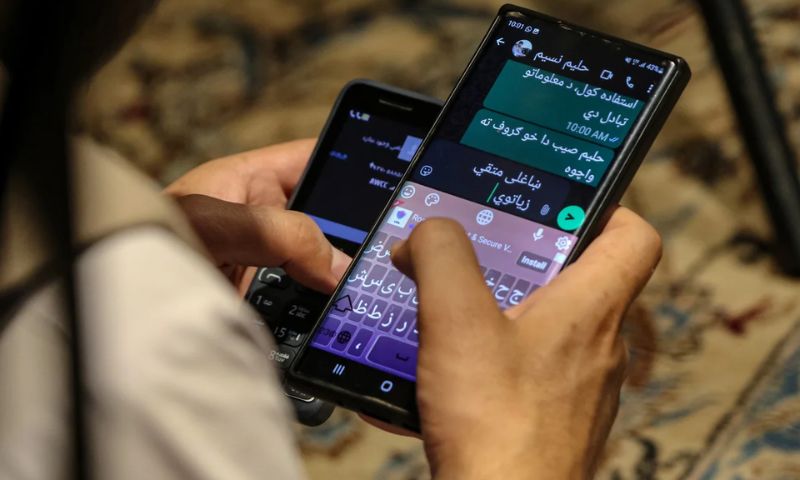
ISLAMABAD: Afghanistan’s Taliban-led government has imposed a nationwide ban on the use of smartphones by civil servants, a move that rights activists warn could further limit access to information across the country.
According to Reuters, the court order states that smartphone use by “all officials of the military and civilian institutions, including judges” has been prohibited from June 16.
Reuters reported that officials who violate the directive will have their mobile phones confiscated and smashed, and may also face legal punishment under the applicable laws.
The Taliban administration did not immediately respond to Reuters’ request for comment on the decision.
Government employees told Reuters that the restriction had already affected routine official work, while at least one provincial administration has moved to enforce the order without delay.
“The impact has been so significant that many administrative processes have effectively come to a halt, because most official work was previously carried out through mobile phones, WhatsApp, and email,” a government employee told Reuters.
Meanwhile, Reuters reported that the governor of Panjshir province announced in an official statement that the smartphone ban would be enforced across all government offices in the province.
Rights advocates cited by Reuters said smartphones remain one of the few means through which Afghans can access educational resources, document alleged abuses, communicate privately and obtain information beyond official channels.
They argue that the latest measure could signal a further tightening of restrictions by the Taliban authorities since they returned to power in August 2021.
Since then, the Taliban have introduced wide-ranging restrictions on women and girls, media organisations and civil society groups. Girls continue to be barred from secondary schools and universities, many women have been excluded from employment, and activists and journalists have reported intimidation, detention and censorship.
“Today, a smartphone is no longer just a source of entertainment,” Sanam Kabiri, an Australia-based women’s rights activist, told Reuters.
“When its use is prohibited in government offices, it raises concerns that the objective may extend beyond maintaining administrative order to also restricting access to information and communication.”
Reuters reported that rights groups view access to smartphones as increasingly important in Afghanistan, where restrictions on education, media and public freedoms have drawn international concern in recent years.
Rights activists have expressed concern that the measure could further restrict the flow of information in Afghanistan, where access to independent sources of information has already come under scrutiny since the Taliban returned to power.