MANAMA: Oman said on Thursday that ships transiting the Strait of Hormuz would not be charged any transit fees under proposed arrangements for managing the vital maritime route.
Foreign Minister Badr Al-Busaidi’s remarks followed comments from Oman and Iran earlier this week that the two countries were exploring “costs” associated with maritime services in the strait.
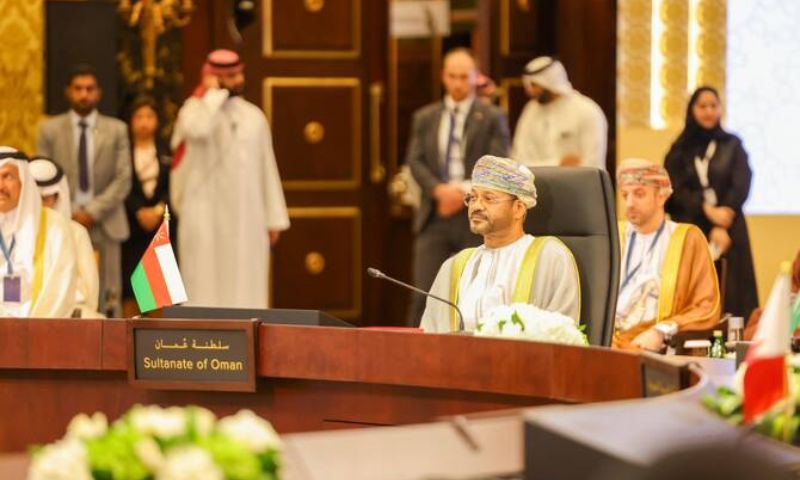
“Future arrangements regarding the Strait do not entail the imposition of any transit fees,” Al-Busaidi told a meeting of Gulf foreign ministers in Bahrain.
Oman’s Foreign Minister Badr Al-Busaidi stressed the importance of restoring freedom of navigation through the Strait of Hormuz and ensuring the safe and uninterrupted movement of vessels through the strategic waterway.
He said Oman, as a country bordering the strait, “has a special responsibility to support international efforts to secure maritime navigation.”
The remarks came during a Gulf Cooperation Council (GCC) meeting attended by US Secretary of State Marco Rubio, who has repeatedly stated during his regional visit that Washington opposes the imposition of any tolls on ships using the waterway.
Oman and Iran lie on either side of the Strait of Hormuz, a key global energy route through which around one-fifth of the world’s crude oil and liquefied natural gas supplies were transported before Israel and the United States launched military action against Iran at the end of February.
In response, Tehran closed the waterway to shipping, triggering significant economic disruption worldwide.
Iran and the United States signed an initial agreement last week, brokered by Pakistan, aimed at ending the conflict. The memorandum of understanding allows commercial vessels to transit the strait without charges for a 60-day period while negotiations continue toward a final peace agreement.
Following the GCC meeting, Rubio said there was “zero support” among Gulf countries for imposing tolls on vessels using the Strait of Hormuz.
“Ultimately there’s not going to be any fees or tolls,” he said. “They (Oman) were there in the meeting today and they said that they are not in favor of the tolling system.”
A day before the meeting, Oman announced the establishment of new temporary, toll-free shipping routes through the Strait of Hormuz, located to the north and south of the Traffic Separation Scheme corridor that was used before the conflict.
Meanwhile, fifty-seven ships carrying an estimated 1,100 seafarers have passed through the Strait of Hormuz since June 23 under a United Nations evacuation plan launched this week, according to data released by the UN’s shipping agency, according to the International Maritime Organisation (IMO).
The figures are the first released by the IMO for the initiative, which aims to help hundreds of vessels carrying around 11,000 seafarers safely exit the strategic waterway.
The latest IMO data shows that 12 ships transited the Strait on the morning of June 25, following 32 vessels on June 24 and 13 on June 23.