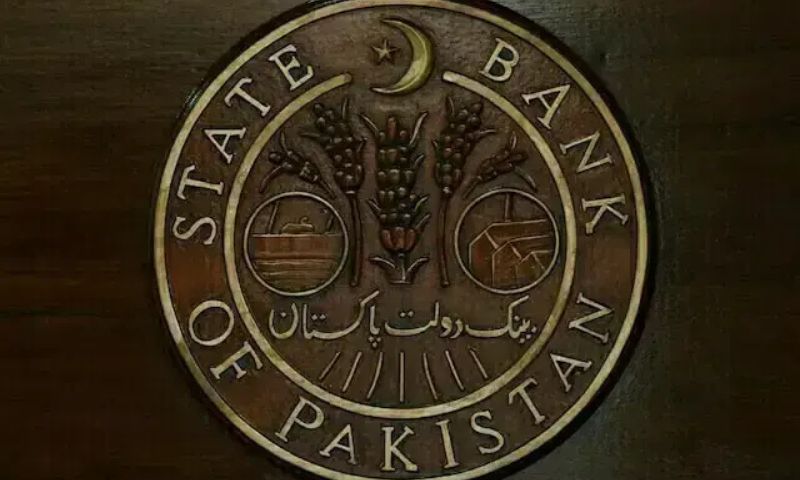
KARACHI: State Bank of Pakistan kept its benchmark policy rate unchanged at 11.5 percent on Monday, opting for a wait-and-see approach as the prolonged Middle East conflict finally caught up with the country’s inflation numbers.
Monetary Policy Committee (MPC) noted that while global oil prices have eased following recent geopolitical developments, they remain elevated compared to pre-conflict levels. The impact is now unmistakable: headline inflation jumped to double digits in April and May, with core inflation also edging upward. Against this backdrop, the MPC judged that the current stance remains appropriate to guide inflation toward the target range of 5–7 percent over the medium term.
The Monetary Policy Committee decided to keep the policy rate unchanged at 11.5 percent in its meeting held on June 15, 2026.
For details: https://t.co/QmtBOmlMuF pic.twitter.com/QJaQwcOxo8— SBP (@StateBank_Pak) June 15, 2026
“Proactive macroeconomic management, underpinned by forward-looking monetary policy and consistent fiscal consolidation, has helped sustain ongoing macroeconomic stability despite the prolonged Middle East conflict,” the MPC observed.
The committee highlighted several key developments since its last meeting. Real GDP growth for FY26 was provisionally estimated at 3.7 percent by the Pakistan Bureau of Statistics, up from 3.2 percent in FY25, though the MPC noted that pre-conflict momentum was notably higher. Consumer and business confidence recovered marginally, while inflation expectations eased somewhat. Most significantly, the successful completion of IMF reviews under the Extended Fund Facility (EFF) and Resilience and Sustainability Facility (RSF), coupled with ongoing purchases, pushed the SBP’s foreign exchange reserves to $17.2 billion as of June 5, 2026.
On the fiscal front, the government has estimated a primary balance surplus of 2.5 percent of GDP for FY26 and is targeting 2.0 percent for FY27. The FBR has revised its revenue target downward to around Rs13 trillion for FY26, but expenditure restraint is expected to keep consolidation on track.
Inflation emerged as the central concern. Headline inflation rose sharply from 7.3 percent in March to 10.9 percent in April and 11.7 percent in May. Apart from a low base effect, the Middle East conflict fueled price pressures directly through higher domestic energy prices and indirectly through rising transport and production costs. Core inflation climbed to 8.7 percent in May. An unanticipated surge in wheat and product prices also pushed food inflation significantly higher.
State Bank Keeps Interest Rate Unchanged at 11.5% in New Monetary Policy
The State Bank of Pakistan has announced its latest monetary policy, keeping the policy interest rate unchanged at 11.5%.
The decision was taken by the Monetary Policy Committee after reviewing the… pic.twitter.com/ODgOxcpPyS— LAFZ DIGITAL (@LafzDigital) June 15, 2026
“The MPC assessed that inflation may remain in double digits for the next few months, before gradually easing subsequently,” the statement read. Risks include geopolitical developments, pass-through of global prices to domestic fuel costs, adjustments in power and gas tariffs, potential fiscal slippages, and uncertain food prices amid weather-related challenges.
On the external front, the current account turned into a deficit of $0.3 billion in April, bringing the cumulative July-April deficit to $0.2 billion. However, resilient workers’ remittances in May are expected to contain the FY26 deficit to the lower end of projections. SBP’s FX reserves are projected to reach $18 billion by end-June 2026.
Private sector credit grew by around 13 percent, driven by working capital, fixed investment, and consumer financing. Meanwhile, broad money (M2) growth moderated slightly to 14.3 percent.
The MPC reiterated the importance of accelerating structural reforms, particularly broadening the tax base and reforming public sector enterprises, to strengthen the economy’s resilience to supply shocks and create conditions for higher, more sustainable growth.