Key Points
- Strong endorsement of the Islamabad MoU between the United States and Iran
- Pakistan’s mediation efforts and Qatar’s facilitation praised
- Call for swift follow-up phase toward durable regional settlement
- Reaffirmation of Palestinian cause as central to regional peace
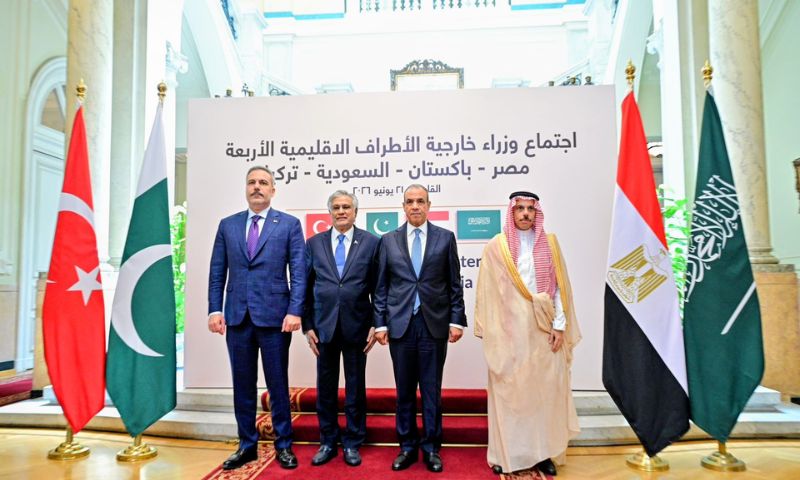
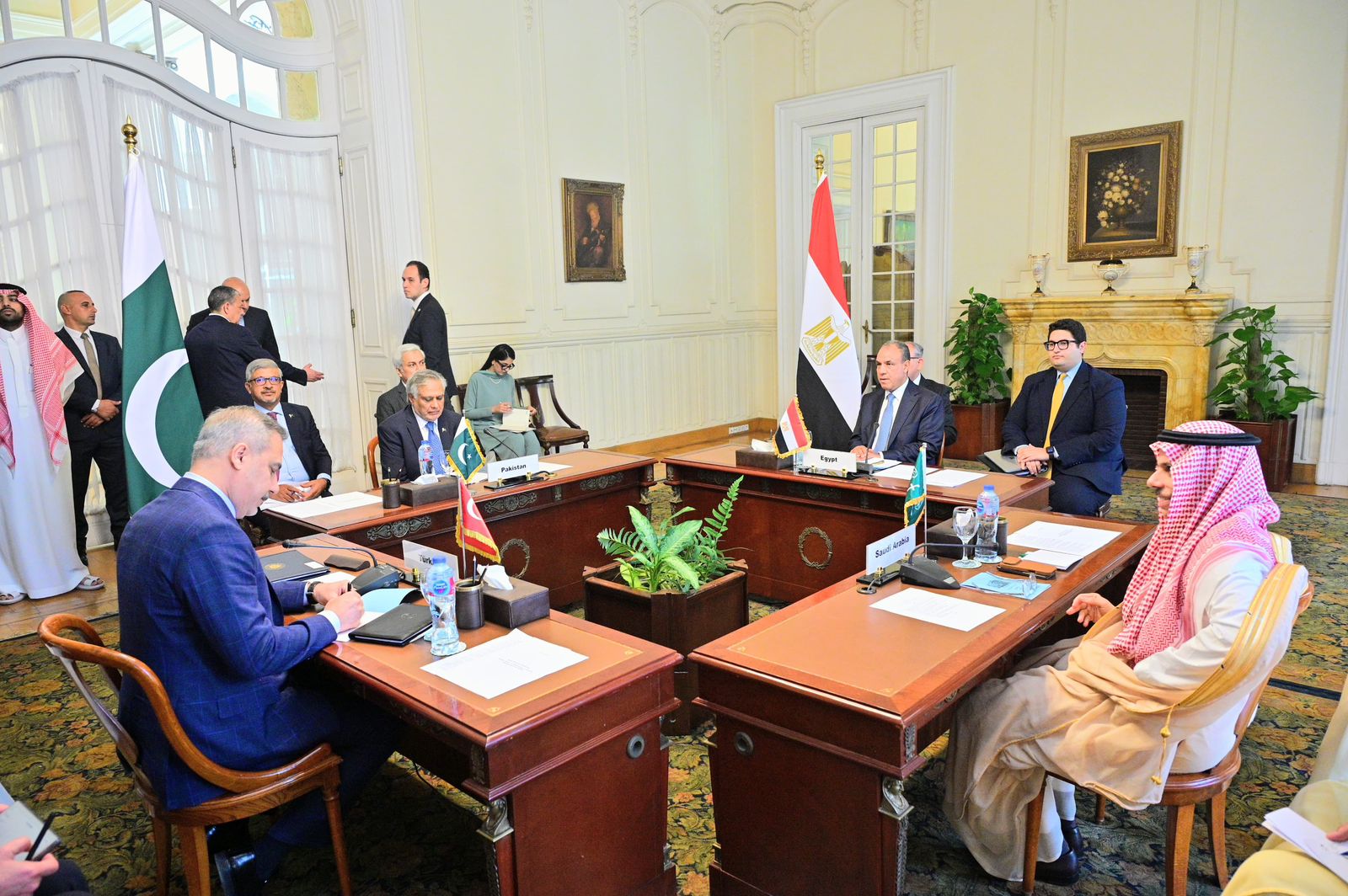
ISLAMABAD: The Foreign Ministers of Egypt, Pakistan, Saudi Arabia and Türkiye met in Cairo on Sunday at the Fourth Consultative Meeting, expressing alignment on regional de-escalation, collective security, and long-term stability across the Middle East.
Welcoming the Islamabad Memorandum of Understanding (MoU) signed last week by the presidents of the US and Iran, the four foreign ministers backed the next round of talks scheduled to begin later today in Switzerland.
According to the joint statement issued after the meeting, “At the invitation of Egypt, the Foreign Ministers convened in Cairo on 21 June 2026.”
They expressed their deep appreciation to President Abdel Fattah El-Sisi for sharing his vision of the region’s future as guidance to the group’s efforts aiming at bringing stability to the Middle East, it added.
The statement said the discussions offered “a thorough exchange of views on regional and international developments,” adding that the four countries “reaffirmed the importance of continued consultation and coordination… in support of peace, security, stability, and prosperity in the Middle East.”
A key focus of the meeting was the recent diplomatic breakthrough between the United States and the Islamic Republic of Iran.
The ministers “welcomed in particular the signing of the Islamabad Memorandum of Understanding (MoU) between the United States of America and the Islamic Republic of Iran on 18 June 2026,”
The statement described it as “a constructive step towards de-escalation and towards ending a conflict which posed significant risks to regional security and stability, as well as to energy markets, international maritime routes, global supply chains, and international trade.”
The ministers “commended the efforts undertaken by regional and international actors that contributed to facilitating the understanding” and “emphasised the importance of the faithful implementation of the commitments undertaken by the parties concerned.”
In a notable reference, the four foreign ministers “lauded the instrumental efforts of the Islamic Republic of Pakistan in reaching this historic outcome, along with the support extended by the State of Qatar to bring about a successful conclusion to the negotiations on the MoU.”
Pakistan’s role appreciated
They also “commended the continued and close coordination of Pakistan with them on this important issue.”
Looking ahead, the ministers stressed that “particular emphasis was placed on the importance of achieving a swift and successful conclusion to the subsequent phase of negotiations to reach a lasting, verifiable, and mutually acceptable solution to the remaining issues.”
They added that such efforts must “take into account the concerns of countries of the region, particularly about the security and stability of the Gulf Arab States, as well as the Levant region, with a view to strengthening collective security and promoting long-term regional stability.”
On the Palestinian issue, the ministers reaffirmed its centrality to regional peace. They “reaffirmed the centrality of the Palestinian cause to the achievement of peace, security, and stability in the Middle East.”
Palestine “remains at the heart of efforts to achieve a just, comprehensive, and lasting peace in the region,” according to the statement.
They expressed concern over conditions in occupied territories, noting “particular attention was devoted to the humanitarian and political situation in the Gaza Strip, the West Bank, and East Jerusalem under occupation.”
The ministers “reiterated their support for the legitimate rights of the Palestinian people, including their right to self-determination and the establishment of an independent Palestinian State based on the 4 June 1967 lines, with East Jerusalem as its capital.”
The ministers called it “an indispensable foundation for achieving a just, comprehensive, and lasting peace in the region in accordance with the relevant United Nations Security Council Resolutions.”