ISLAMABAD: Pakistan has intensified its diplomatic engagement with key regional and international stakeholders to facilitate the implementation of the Islamabad Memorandum of Understanding signed between the US and Iran on June 18.
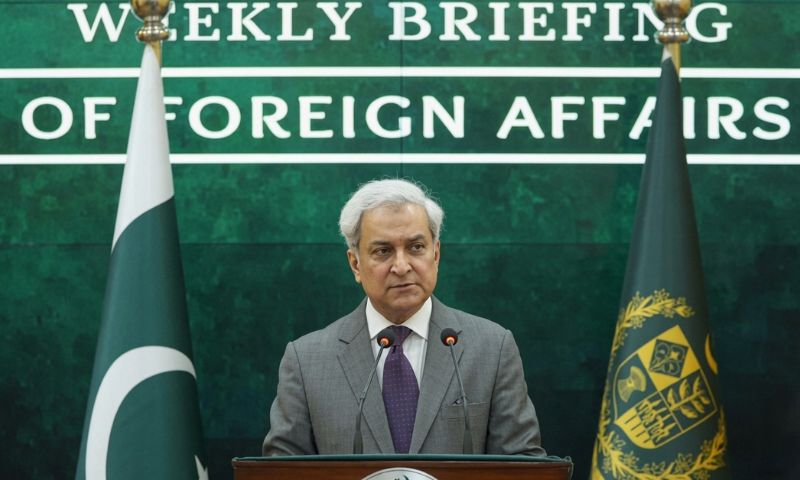
Addressing a weekly briefing on Thursday, Foreign Office (FO) spokesperson Tahir Andrabi said Pakistan and Qatar engaged with the relevant parties in Doha yesterday and held separate meetings with the US and Iran negotiators in Doha.
“I would like to highlight three specific points about these Doha talks. One, there was positive progress made on issues related to the different aspects of the Islamabad MOU, building on the Lake Lucerne summit. Two parties agreed to continue discussion over the coming period,” he said.
He added Pakistan will continue to play a facilitative and mediatory role in the negotiation process, along with our Qatari partners.
Andrabi further said Deputy Prime Minister and Foreign Minister Ishakq Dar remained engaged with the foreign ministers and senior leaders of Saudi Arabia, China, Bahrain, Iran, the United Kingdom and the European Union.
🔴LIVE: Spokesperson’s Weekly Press Briefing 02-07-2026 at Ministry of Foreign Affairs, Islamabad https://t.co/YoQQWlF2lw
— Ministry of Foreign Affairs – Pakistan (@ForeignOfficePk) July 2, 2026
The Islamabad Memorandum of Understanding, brokered by Pakistan and Qatar and endorsed at last month’s Lake Lucerne Summit in Switzerland, established a 60-day ceasefire, called for the reopening of the Strait of Hormuz and set out a roadmap toward a comprehensive agreement covering Iran’s nuclear programme, sanctions relief and regional security.
The diplomatic process suffered an early setback after clashes in and around the Strait of Hormuz, but Wednesday’s talks suggested both sides remain committed to implementing the agreement through continued mediation.
Pakistan PM Shehbaz to visit Iran, Turkiye
Tahir Andrabi announced that Prime Minister Shehbaz Sharif will visit Iran and Turkiye from July 3 to July 5 to strengthen bilateral ties.
“Prime Minister Mohammad Shahbaz Sharif will travel to Iran first to participate in the ceremony of the late Supreme Leader, Ayatollah Ali Khamenei,” he added.
PM Shehbaz will then visit Istanbul at the invitation of Turkiye’s President Recep Tayyip Erdogan, Andrabi said.
Also Read: Pakistan PM Shehbaz to Attend Iran Supreme Leader’s Funeral
He added that the premier will “hold discussions on the entire gamut of bilateral relations with a special focus on giving impetus to bilateral trade and investment cooperation between the two brotherly countries”.
“The leadership meeting will also reflect on issues concerning regional peace and security.”
The prime minister will also address a business conference hosted by Pakistan to “spotlight Pakistan’s trade and investment potential in priority areas, including SEZs (special economic zones), energy, trade, IT and privatisation sectors”, Andrabi said.
He noted that the conference would bring together leading Turkish businessmen and investors alongside senior officials, dignitaries and other distinguished participants from the business community.
Water is not a tool of coercion
During the briefing, the Foreign Office spokesperson criticised India’s attempt to portray the Indus river system as a “strategic asset” subject to unilateral control.
Andrabi reiterated that Pakistan rejects India’s use of what it described as baseless terrorism allegations to justify suspending the Indus Waters Treaty (IWT) and impeding the lawful flow of Pakistan’s share of the river waters.
“Let this be very clear: the real issue is not terrorism. The real issue is the growing disposition within the Indian leadership to treat a shared international river system as a strategic asset that can be controlled, withheld or diverted at will,” he asserted.
Also Read: Pakistan Warns India Against Weaponising Water
“This mindset of unilateral appropriation is fundamentally incompatible with the letter and spirit of not just the international law but also the Indus Waters Treaty,” Andrabi said.
Maintaining that water was “not a tool of coercion or political pressure”, he warned that any attempt to deny Pakistan its legitimate share of the Indus waters constituted a clear violation of the international legal obligations undertaken by India and “undermined India’s credibility of its commitment to a treaty-based relationship”.
He noted that a summit, titled “International Seminar on Indus Waters Treaty: An Instrument of Peace and Regional Stability”, was held in Islamabad on Tuesday, where participants called for upholding the IWT and “rejected weaponisation of water”.
Speakers, including Deputy Prime Minister Ishaq Dar and international scholars, urged settling disputes through legal and diplomatic mechanisms rather than unilateral actions, Andrabi said.
“They warned that any attempt to deprive the country of its shared water would have profound consequences for regional peace and security,” he added.
The FO official noted that the sixty years old treaty could not be suspended or terminated under any pretext and that the abeyance was “illegal, unilateral and without any basis”.
“No country can do that. Not India, not any other country has the power to do that.”
Afghanistan’s envoy summoned over Rangers camp attack
Separately, Andrabi said that Afghanistan’s charge d’affaires was summoned to lodge a strong protest over the recent terrorist attack in Karachi, while Pakistan’s ambassador in Kabul delivered a formal protest note to the Afghan Foreign Ministry.
Three Pakistan Rangers personnel embraced martyrdom, and four others were injured when terrorists belonging to an Indian proxy, Jamaat ul Ahrar, launched a coordinated attack on a Pakistan Rangers (Sindh) camp in Karachi on Saturday, according to the Inter-Services Public Relations. Three terrorists were killed, and an Afghan national was arrested in an injured condition.
Andarabi said that evidence showed Afghan nationals had been involved in terrorist activities in Pakistan, terming the use of Afghan territory and citizens for such attacks as a matter of serious concern.
He further said action would be taken against Afghan nationals residing in Pakistan without valid visas or legal documentation.