Key Points
- Islamabad reaffirms full solidarity with the UAE and Saudi Arabia, stressing respect for sovereignty and territorial integrity.
- UN statement warns targeting nuclear facilities violates international law, UN Charter, and IAEA safety principles.
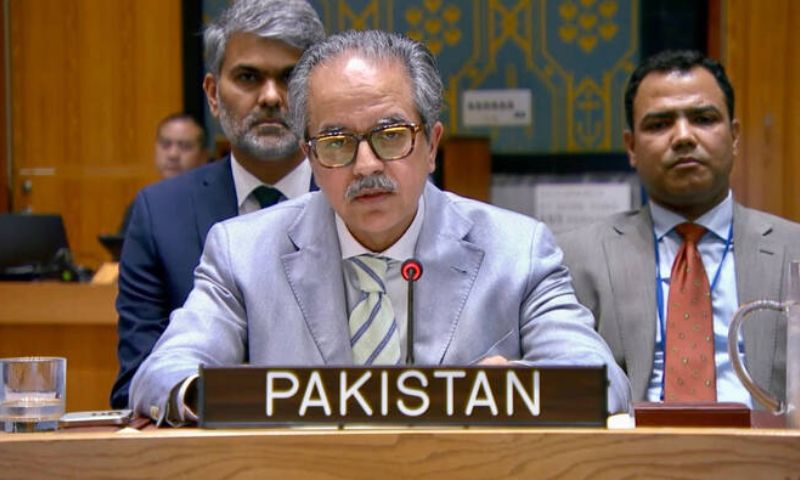
United Nations, New York: At the United Nations Security Council, Pakistan’s Permanent Representative, Asim Iftikhar Ahmad, delivered a strong statement condemning recent drone attacks targeting the Barakah Nuclear Power Plant in the United Arab Emirates (UAE) as well as separate attacks directed at Saudi Arabia.
Speaking in the UN forum, Pakistan expressed complete solidarity with the governments and peoples of the UAE and Saudi Arabia, describing them as “brotherly nations” and reaffirming its support for their sovereignty, territorial integrity, and security in the wake of what it termed “heinous attacks.”
In the Security Council today, Pakistan strongly condemned the drone attacks on the Barakah Nuclear Power Plant in the United Arab Emirates on May 17 as well as against the Kingdom of Saudi Arabia. Pakistan stands in complete solidarity with the governments and the brotherly…
— Asim Iftikhar Ahmad, PR of Pakistan to the UN (@PakistanPR_UN) May 20, 2026
The statement underscored that any deliberate targeting of nuclear installations represents a serious violation of international law, including international humanitarian law, the principles of the United Nations Charter, and globally recognised standards governing nuclear safety and security.
Pakistan further referenced established frameworks and resolutions of the International Atomic Energy Agency (IAEA), stressing that such actions undermine global stability and nuclear safety norms.
The Pakistani envoy reiterated that attacks on sensitive infrastructure, particularly nuclear facilities, pose grave risks not only to the directly affected countries but also to regional and international peace.
He urged strict adherence to international legal obligations and reinforced the need for collective responsibility in preventing escalation in the region.