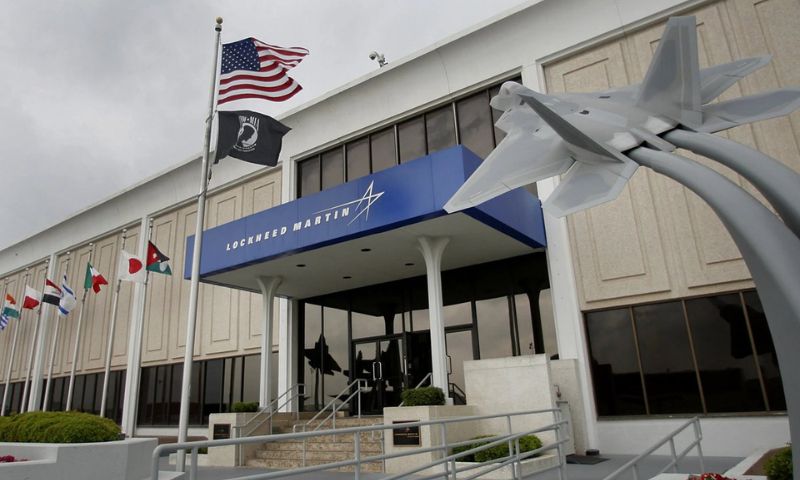



WASHINGTON, D.C, USA: Pentagon has awarded Lockheed Martin a landmark $35 billion contract to dramatically scale up production of the Terminal High Altitude Area Defence (THAAD) interceptor, America’s most advanced missile defence system, as the United States races to replenish depleted munitions stockpiles amid growing global threats.
The seven-year agreement, announced Wednesday by the U.S. Missile Defence Agency, will quadruple production of THAAD interceptors from 96 to 400 per year, marking one of the largest multiyear procurement contracts in recent defence history.
🇺🇸 The Pentagon just handed Lockheed Martin $35 BILLION to quadruple production of America’s most advanced missile interceptor.
The reason: the Iran war reportedly burned through up to 80% of the THAAD stockpile.
Lockheed will ramp output from 96 interceptors a year to 400,… https://t.co/NZsUHwO0XU pic.twitter.com/Oqir1GCYWF
— Mario Nawfal (@MarioNawfal) June 26, 2026
The move comes as policymakers warn that restoring the U.S. munitions stockpile to pre-conflict levels could take at least three years, creating what experts describe as a “window of vulnerability” for a potential Western Pacific confrontation.
“This new approach propels our efforts to strengthen the defense industrial base, expand production and deliver capabilities to the American warfighter at unprecedented speed and scale,” said Tim Cahill, Lockheed Martin Missiles and Fire Control president, in a company statement.
Depleted stockpiles and growing concerns
The contract follows years of intensive munitions consumption during the Iran war and other conflicts, which have significantly depleted U.S. weapons inventories. While the military had sufficient supplies to sustain combat operations, defence officials and analysts now warn that restocking will require sustained industrial investment.
Demand is rising. We’re accelerating.
We have been awarded a multiyear undefinitized contract by the @DeptofWar for up to $35B to increase THAAD production, supported by $9B+ in investments through 2030 and 20 U.S. expanding facilities. We are delivering the Arsenal of… pic.twitter.com/k13FlNzsey
— Lockheed Martin (@LockheedMartin) June 24, 2026
A new era of defence procurement
The Lockheed contract is among the first major multiyear procurement agreements under the Pentagon’s Acquisition Transformation Strategy, an initiative designed to reform the defence industrial base and accelerate product delivery at reduced costs.
Under the agreement, Lockheed will provide THAAD missile rounds under “fixed-priced contract line-item numbers,” according to Pentagon release. The contract runs from March 2026 through June 2032, with fiscal 2026 procurement funds of over $842 million already being obligated.
The contract moves forward a January framework agreement between the Defence Department and Lockheed Martin, which laid the groundwork for scaling interceptor production. The deal now formalizes the fourfold increase from 96 to 400 interceptors annually.
Major investment in manufacturing infrastructure
To support the ambitious production ramp-up, Lockheed Martin has broken ground on two new manufacturing facilities:
- Munitions Production Centre in Troy, Alabama (March 2026)
- Munitions Acceleration Centre in Camden, Arkansas (January 2026)
These facilities are part of a $9 million investment through 2030 aimed at expanding weapons production capacity across the country.
The contract work will be completed across four U.S. cities:
- Dallas, Texas
- Sunnyvale, California
- Troy, Alabama
- Camden, Arkansas
Beyond THAAD: A broader push for munitions production
The THAAD contract is not an isolated effort. Lockheed Martin has also established agreements with the Defence Department this year to increase production of:
- PAC-3 Missile Segment Enhancement (MSE) interceptors– used by the Patriot air-defense system
- Precision Strike Missiles (PrSM)– a next-generation long-range precision strike weapon
These concurrent efforts reflect a broader Pentagon strategy to rebuild and expand the industrial base for critical munitions, ensuring the U.S. military maintains a credible deterrent across multiple theaters.
Lockheed Wins New $35 Billion Contract for Most Dangerous Defense System in the World✈️@LockheedMartin has received a seven-year contract worth up to $35 billion from the U.S. government to quadruple production of Terminal High Altitude Area Defense (THAAD) interceptors.
The… pic.twitter.com/U7kMrY4AH2
— Aviation A2z (@Aviationa2z) June 25, 2026
What is THAAD?
The Terminal High Altitude Area Defense (THAAD) system is a U.S. Army air-defence system designed to intercept and destroy short- and medium-range ballistic missiles during their final phase of flight.
THAAD uses hit-to-kill technology, physically colliding with incoming warheads, rather than exploding near them. The system provides a high-altitude layer of defence, protecting critical assets, population centers, and military forces from ballistic missile threats.
The $35 billion investment signals a major shift in U.S. defence procurement strategy, moving from peacetime production rates to wartime-ready industrial capacity.