


MORBI, India: The ongoing Middle East conflict has severely disrupted India’s ceramic industry in Gujarat’s Morbi, exposing policy shortcomings as thousands of workers lose jobs and return to their hometowns amid a worsening fuel crisis.
Morbi, which produces around 80 percent of India’s ceramics and employs over 400,000 workers, has been hit hard by rising energy costs and supply disruptions linked to the Strait of Hormuz blockade.
With propane and natural gas in short supply, at least 450 of the region’s 600 factories have shut down, forcing widespread layoffs.
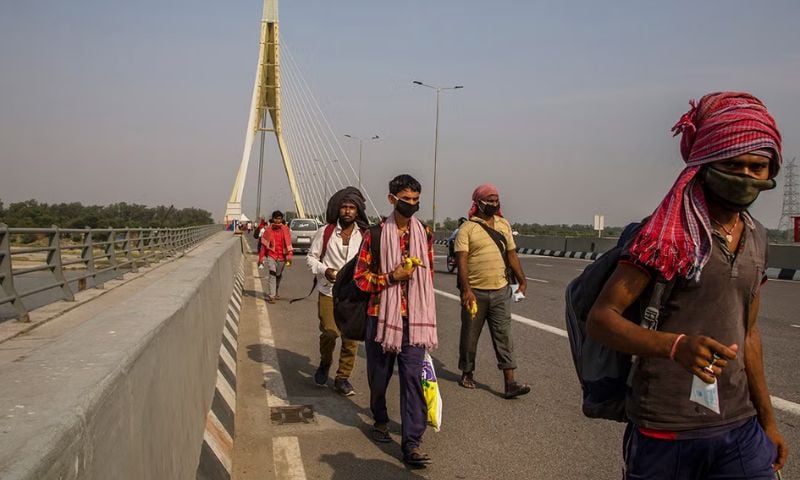
“It would be very challenging in the summers since the heat would be at its peak,” said factory worker Pradeep Kumar, who lost his job in March. “We don’t want to suffer like dogs, like we did during the COVID-19 pandemic,” he added, recalling the earlier migrant crisis.
Industry leaders say the government has failed to ensure energy security or provide timely support to manufacturers and workers. Siddharth Bopaliya, a ceramic trader, noted that most factories rely on propane because it is cheaper, leaving them vulnerable to supply shocks.
Weakening India’s global trade position
“All manufacturing units in Morbi rely on propane and natural gas to fire kilns at high temperatures,” he said.
The crisis has already affected around 200,000 workers, with many returning to states such as Uttar Pradesh and Bihar. Exports worth $1.5 billion have also been delayed or halted, weakening India’s global trade position.
Labour activists say the situation has further exposed poor workplace conditions and lack of enforcement of safety laws. “Even those not directly involved in moulding or kiln work often inhale the particles due to poor ventilation and prolonged exposure across factory spaces,” said Chirag Chavda, referring to widespread silicosis cases.
Workers allege they lack formal contracts, leaving them without legal protection or social security. “Every year, at least one labourer dies of silicosis in each company,” said Harish Zala, a former worker suffering from the disease.
The crisis underscores deeper structural weaknesses, as India’s manufacturing sector struggles to withstand global shocks without adequate policy safeguards.