


GAZA CITY: Friday marked 1,000 days since Israel launched its military offensive in Gaza, a conflict that has devastated the Palestinian territory, displaced most of its population and triggered a wider regional crisis.
Although a ceasefire took effect on October 10, fighting has not entirely stopped. Israeli strikes continue almost daily, while negotiations over the next phase of the truce remain deadlocked, leaving more than two million Palestinians facing an uncertain future.
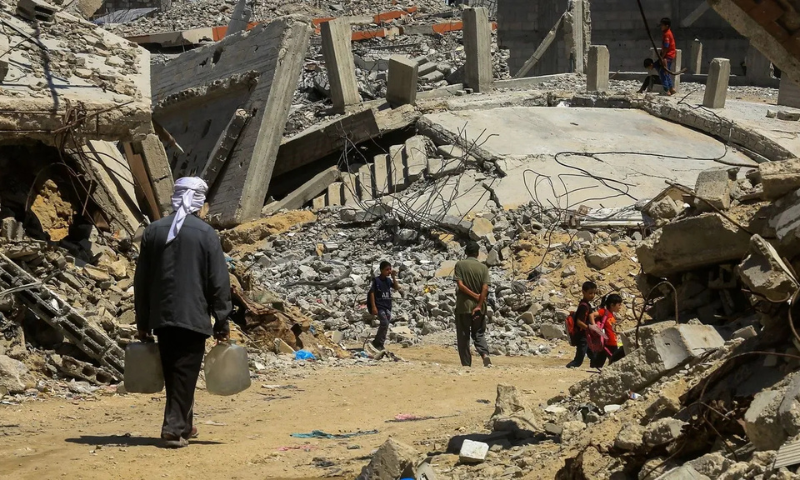
Large parts of Gaza remain in ruins, with hundreds of thousands of people living in temporary shelters or damaged buildings as reconstruction efforts remain largely stalled.
Palestinians Continue to Die Despite Ceasefire
According to Gaza’s Health Ministry, at least 1,053 Palestinians have been killed since the ceasefire came into effect, including more than 350 women and children. More than 3,400 others have been wounded.
Recent casualties include a teenage girl killed while travelling to school and a mother and her one-year-old daughter.
The United Nations has warned that Israel’s expanding military presence inside Gaza has increased risks for civilians, particularly in areas where military boundaries remain unclear.
The conflict began after Hamas-led fighters launched an unprecedented attack on southern Israel on October 7, 2023, killing around 1,200 Israelis and taking 251 hostages, according to Israeli authorities.
All of the hostages or their remains have since been returned.
Since then, Gaza’s Health Ministry says more than 73,000 Palestinians have been killed during Israel’s military campaign.
Ceasefire Process Faces Deadlock
Efforts to advance the next stage of the ceasefire have stalled over disagreements surrounding Hamas’s future role and demands for its disarmament.
The United States-backed Board of Peace, established earlier this year to oversee Gaza’s recovery and reconstruction, has made little visible progress despite receiving substantial international financial pledges.
Hamas has indicated it is not rejecting disarmament outright but insists Israel must first fulfil its commitments under the ceasefire agreement, including withdrawing its forces from Gaza, halting military operations and allowing reconstruction to begin.
The ceasefire framework also envisages the establishment of a new administration in Gaza alongside the deployment of an international stabilisation force to help restore security and oversee rebuilding efforts.
Regional Conflicts Continue
The Gaza war expanded into a wider regional confrontation involving Hezbollah in Lebanon, the Houthis in Yemen and Iran, all of whom launched attacks against Israel in support of Palestinians.
Military tensions have persisted despite separate ceasefire arrangements, while Israeli forces remain deployed in parts of southern Lebanon.
The prolonged conflict has become a major political issue inside Israel ahead of elections expected later this year.
Prime Minister Benjamin Netanyahu continues to face domestic criticism over the security failures preceding the October 7 attack, the absence of a formal state inquiry and controversial exemptions from military service granted to ultra-Orthodox coalition partners.
Recent opinion polls indicate a majority of Israelis believe Netanyahu should not seek another term.
Humanitarian Crisis
Conditions inside Gaza remain severe despite the ceasefire.
Aid agencies say humanitarian assistance has increased only modestly, with Israeli restrictions at border crossings continuing to limit the delivery of food, fuel, medical supplies and construction materials.
The United Nations says 17 hospitals across Gaza remain out of service, while humanitarian officials have criticised lengthy approval procedures that continue to delay essential relief items.
Although food security experts reported some improvement after the ceasefire compared with famine conditions declared last year, shortages remain widespread, and many families continue to struggle to obtain necessities.
Israel’s military coordination body, COGAT, says sufficient food is entering Gaza to meet civilian nutritional requirements, a claim disputed by humanitarian organisations operating in the territory.
For many Palestinians, daily life remains dominated by displacement, damaged infrastructure and uncertainty about the future.
One thousand days after the conflict began, hopes for lasting peace remain fragile as ceasefire implementation, reconstruction and political negotiations continue to face significant obstacles, leaving millions of Palestinians waiting for security, recovery and a return to normal life.