ISLAMABAD: Pakistan’s role as a mediator in the high-stakes US–Iran talks has drawn widespread appreciation from international journalists and analysts, many of whom took to social media to commend the country’s hospitality, organisation and diplomatic efforts.
As negotiations unfolded in Islamabad, visiting foreign correspondents shared first-hand experiences, portraying a positive image of Pakistan both as a host nation and as a facilitator of dialogue during a critical moment in global diplomacy.
Prominent journalist Nadia Bilbassy Charter praised the country’s hospitality, writing: “Good bye #Islamabad, and thank you for your hospitality… I will come back again as a tourist, amazing people.”
Good bye #Islamabad, and thank you for your hospitality, 48 hours across the other side of the world was worth it . I will come back again as a tourist , amazing people . #Pakistán #Iran talks . pic.twitter.com/hoECrrUmHf
— Nadia Bilbassy Charters ناديا البلبيسي (@nadia_bilbassy) April 13, 2026
Her remarks reflected a broader sentiment among visiting media professionals who experienced Pakistan beyond the headlines.
Caitlin Doornbos
Similarly, US journalist Caitlin Doornbos expressed admiration for the country, stating: “I have fallen in love with Pakistan!” In another post, she added: “Was never nervous to come to Pakistan! But I have been very impressed by the Pakistanis,” highlighting the welcoming environment encountered during her coverage of the talks.
Some behind-the-scenes from the Serena Hotel in Islamabad, Pakistan, earlier as we waited for the US-Iran talks to conclude. pic.twitter.com/tHIQeZ3UTC
— Caitlin Doornbos (@CaitlinDoornbos) April 12, 2026
Other commentators echoed similar views. Analyst Hassan Abbas noted that “Pakistan deserves credit for showing that measured diplomacy still matters,” adding that Islamabad had “opened space for dialogue where others saw only deadlock,” underlining the country’s constructive diplomatic role.
My new guilty pleasure. pic.twitter.com/1c77wITcgA
— Caitlin Doornbos (@CaitlinDoornbos) April 13, 2026
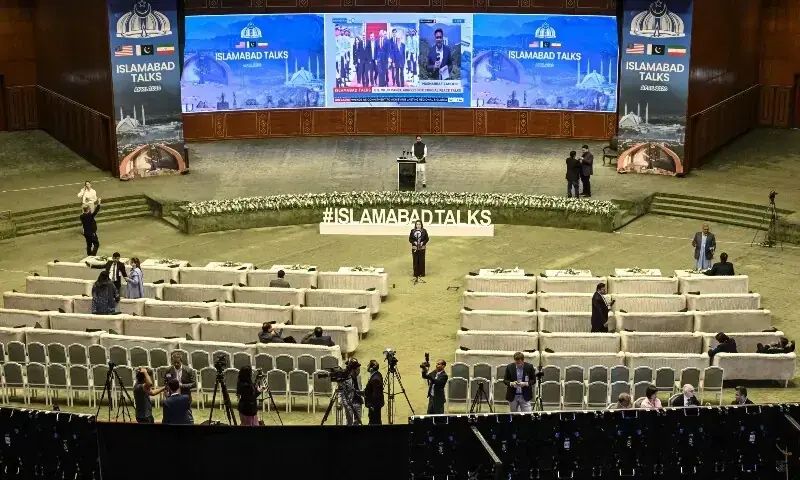
The Islamabad Talks, which brought together senior officials and expert-level teams from the United States and Iran, were widely seen as a significant diplomatic initiative aimed at sustaining a ceasefire and working towards a broader agreement.
While negotiations remain complex, Pakistan’s facilitation has been viewed as a key factor in bringing both sides to the table.
Pakistan’s cultural appeal
Iranian commentator Reza Amiri Moghadam described the talks as “not an event but a process,” emphasising that they had laid “the foundation for a diplomatic process” that could lead to a sustainable framework if mutual trust is strengthened.
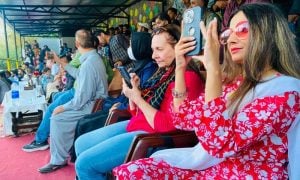
Beyond diplomacy, visiting journalists also highlighted Pakistan’s cultural appeal. Many shared experiences of local cuisine, traditional attire and scenic views of Islamabad, showcasing a softer, human dimension of the country to global audiences.
Sunday morning @BloombergTV from in front of the Faisal Mosque in Islamabad, recapping the frenzied pace of the past 24 hours and US-Iran negotiations.
With @C_Martlew producing pic.twitter.com/FHWJoS3hh9
— Eric Martin (@EMPosts) April 12, 2026
Reports from international media crews, including those stationed near landmarks such as the Faisal Mosque, further amplified Islamabad’s image as a calm and well-managed venue for sensitive negotiations.
Caitlin Doornbos, New York Post’s Pentagon reporter in Islamabad covered Islamabad Talks.
While covering the Islamabad talks,she beautifully embraced Pakistani traditional attire — truly graceful and stunning ❤️❤️❤️ @CaitlinDoornbos@javerias pic.twitter.com/b2mDFEUY56— Fouzia Ali (@fouziazaib) April 12, 2026
The overwhelmingly positive feedback from global journalists underscores Pakistan’s ability to project a balanced image — one rooted in hospitality, cultural richness and diplomatic engagement.