UNITED NATIONS: Pakistan has called for a stronger, more inclusive and adaptable global counterterrorism framework, warning that the United Nations’ latest review of its Global Counter-Terrorism Strategy (GCTS) failed to adequately address emerging threats and the concerns of countries most affected by terrorism.
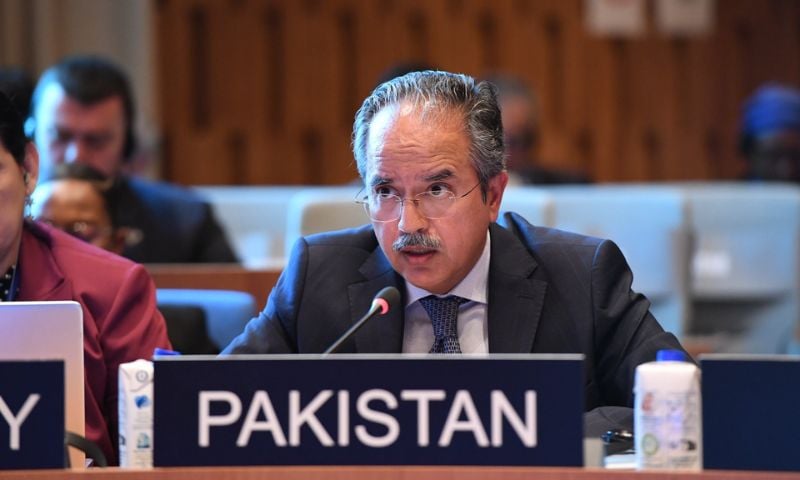
Addressing the UN General Assembly’s 96th plenary meeting during the ninth review of the Global Counter-Terrorism Strategy, Pakistan’s Permanent Representative to the UN, Ambassador Asim Iftikhar Ahmad, reaffirmed Pakistan’s support for the adoption of Resolution A/80/L.82, which retains the existing consensus text of the strategy.
Ambassador Ahmed expressed hope that the resolution would reinforce international counterterrorism efforts through stronger multilateral cooperation and thanked Finland and Morocco for facilitating the review process.
The ambassador said Pakistan has remained at the forefront of global counterterrorism efforts, playing a key role in combating Al Qaeda and other militant groups while making enormous sacrifices as one of the countries most affected by terrorism.
Statement by Ambassador Asim Iftikhar Ahmad,
Permanent Representative of Pakistan to the UN,
At the UN General Assembly’s 96th Plenary Meeting of the 80th Session Under Agenda Item 118 on the 9th Review of the UN Global Counter Terrorism Strategy (GCTS)*
*****Thank you Mr.… pic.twitter.com/Oynf3wm2KK
— Permanent Mission of Pakistan to the UN (@PakistanUN_NY) July 2, 2026
He said more than 1,200 Pakistanis lost their lives in terrorist attacks over the past year alone, adding that terrorist groups, including the Tehreek-i-Taliban Pakistan (TTP), Balochistan Liberation Army (BLA), Majeed Brigade and ISIL-K, continue to pose serious security challenges.
Highlighting the evolving nature of terrorism, Ahmad said terrorist threats now transcend national borders and operate through increasingly decentralised networks, requiring the UN strategy to evolve in response to changing realities.
He regretted that the ninth review failed to address key gaps in the existing framework despite efforts by Pakistan and the Organisation of Islamic Cooperation (OIC) to incorporate the concerns of countries most severely affected by terrorism.
Calling for a more effective global strategy, the ambassador proposed a series of measures, including a comprehensive assessment of emerging threats in both physical and digital spaces, renewed efforts to resolve protracted conflicts, an end to foreign occupation, and greater respect for human rights and the rule of law.
He also urged the international community to reaffirm the right to self-determination in accordance with international law, reject attempts to equate legitimate struggles against foreign occupation with terrorism, and condemn state-sponsored terrorism.
Among Pakistan’s other recommendations were stronger action against xenophobia, racism, violent extremism, far-right and neo-fascist groups, as well as measures to combat Islamophobia and eliminate terms such as “Islamic terrorism” and “radical Islam,” which he said stigmatise Muslims.
The envoy further called for reforms to the UN’s counterterrorism architecture and sanctions regime, greater regulation of social media and digital platforms to curb online radicalisation, terrorist propaganda and hate speech, and enhanced oversight of digital financial systems, including cryptocurrencies, to prevent terrorist financing.
Ahmad also stressed the need for international bodies such as the Financial Action Task Force (FATF) to remain inclusive, transparent and free from political influence, saying no country should be allowed to use such mechanisms to pursue domestic or geopolitical objectives.
He said Pakistan and the OIC had demonstrated considerable flexibility during the negotiations, but consensus remained elusive, leaving the ninth review with “zero value addition” after three years of discussions.
Describing the outcome as disappointing, the ambassador said the impasse should serve as a wake-up call for the international community, adding that Pakistan remains committed to working with all UN member states to strengthen collective efforts against terrorism.