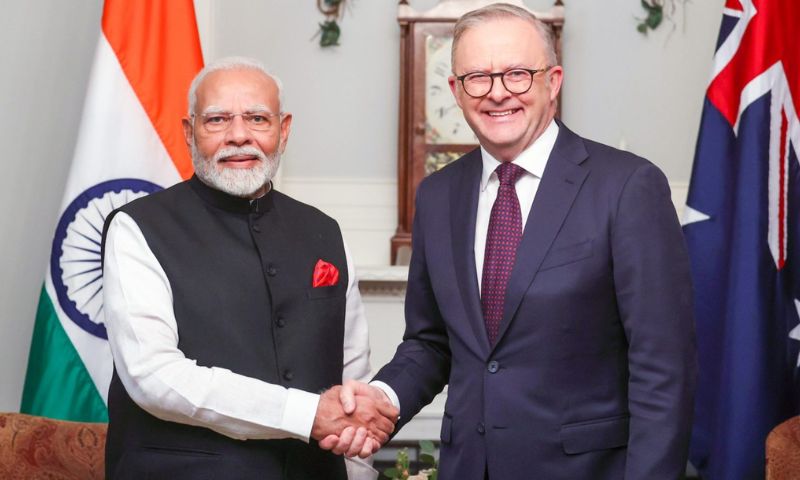



MELBOURNE: As Indian Prime Minister Narendra Modi concludes his three-day official visit to Australia on Friday, Amnesty International Australia has called on Canberra to place human rights at the forefront of bilateral engagement, urging the government to reaffirm its commitment to democratic values, the rule of law, and fundamental freedoms.
In a statement, the rights organisation said Australia should capitalise on its close relationship with India to engage in what it described as principled and constructive dialogue on a range of human rights concerns, while encouraging New Delhi to uphold international human rights standards.
Amnesty International Australia urged the Australian government to raise concerns over what it described as the continuing deterioration of the human rights situation in India and to press for greater protection of freedom of expression, civil liberties and the rights of vulnerable communities.
Among its recommendations, the organisation called on India to ensure that journalists, academics, human rights defenders and civil society organisations can carry out their work without fear of intimidation, arbitrary detention or criminal prosecution.
It also urged a review of anti-terrorism and national security legislation, arguing that such laws should comply with international human rights standards and should not be used to silence peaceful dissent or restrict legitimate democratic activity.
The organisation further appealed to the Indian government to address allegations of discrimination, violence and forced evictions affecting religious and ethnic minorities, while taking effective measures to guarantee equality before the law and protect all communities from discrimination and hate-driven violence.
Amnesty also called on India to engage more actively with United Nations human rights mechanisms by facilitating long-pending requests from UN Special Rapporteurs seeking access to the country.
It stressed that independent human rights organisations and an active civil society play an essential role in strengthening democratic institutions, transparency and public accountability.
Providing context for its appeal, Amnesty International referred to findings contained in its State of the World’s Human Rights 2025/26 report, which it said documented a significant decline in India’s human rights environment.
According to the organisation, the report highlights increasing restrictions on fundamental freedoms and a shrinking civic space, with journalists, students, academics, peaceful protesters and human rights advocates facing legal action under sedition and anti-terrorism laws.
The rights group said that since Prime Minister Modi began his third consecutive term in June 2024, it has continued to document policies and practices that it believes have disproportionately affected marginalised communities, particularly Muslims, Christians and other religious minorities.
It expressed concern over what it described as the discriminatory application of legislation, including the Citizenship Amendment Act, as well as the demolition of homes, businesses and places of worship belonging to Muslims following episodes of communal unrest or public protests, often without due legal process.
Amnesty also reiterated its concerns regarding the situation in Jammu and Kashmir, citing restrictions on civic space, freedom of expression and peaceful assembly, prolonged detention of activists and human rights defenders under the Unlawful Activities (Prevention) Act (UAPA), and limited access for United Nations human rights experts.
The organisation said Australia has consistently championed universal human rights and should ensure those principles remain an integral part of its expanding bilateral relationship with India.
It argued that raising human rights issues through respectful but candid dialogue would reinforce shared democratic values while strengthening long-term cooperation between the two countries.