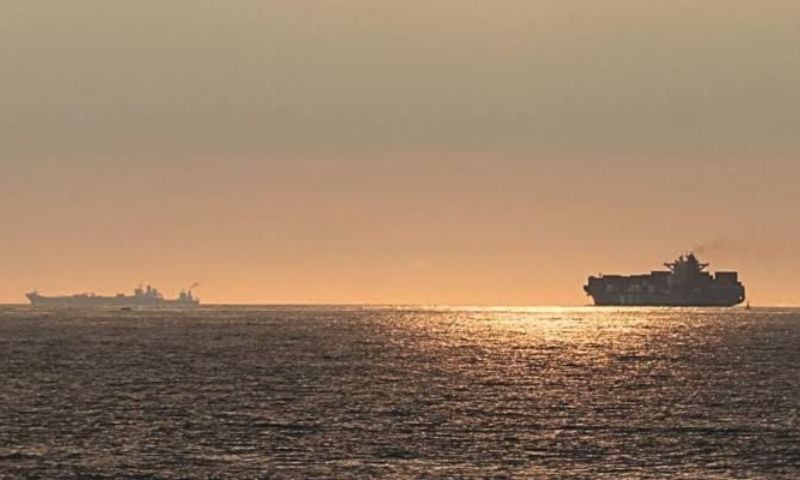



WASHINGTON: US President Donald Trump announced on Monday that the United States would reinstate a naval blockade of Iranian ports in the Strait of Hormuz, saying the strategic waterway would remain open to international shipping while Iranian vessels and their customers would be prevented from using it.
“The Hormuz Strait is open, and will remain open, with or without Iran,” the US President wrote on his Truth Social platform.
“We are reinstating the Iranian blockade, so named because it is only stopping Iran’s ships or customers from entering or leaving. All other countries will have fair and open use of the Strait,” Trump added.
Trump further said the US will be known as “the guardian of the Hormuz Strait” and that “as a matter of fairness, will be reimbursed, at the rate of 20 percent on all cargo shipped, for any and all costs necessary to do the job of providing safety and security to this very volatile section of the world”.
“The process and formation will begin immediately,” he concluded.
— Rapid Response 47 (@RapidResponse47) July 13, 2026
Meanwhile, Iran’s Islamic Revolutionary Guard Corps (IRGC) has accused the US of jeopardising global oil and gas supplies by interfering in the strategic Strait of Hormuz, as renewed hostilities flare.
IRGC spokesman Hossein Mohebi said Washington has “seriously endangered the security of the world’s oil and gas supply and must be held accountable”, adding in a post on X that Tehran “will continue to exercise sovereignty over and management of the Strait of Hormuz”.
US military to resume Iran port blockade Tuesday
Later, the US military said that the United States will begin enforcing its renewed blockade of Iran’s ports on Tuesday at 2000 GMT.
US forces “will resume blockading maritime traffic entering and exiting Iranian ports on July 14 at 4 pm ET,” US Central Command said in a statement on Monday.
— U.S. Central Command (@CENTCOM) July 13, 2026
Earlier, in an interview with Fox News, Trump said that the US would probably take control of the Strait of Hormuz and should be reimbursed for protecting the strategically important waterway.
“We’re going to keep the strait, and we’ll probably run it. We’ll become the guardian of the Strait. Maybe we’ll call it the guardian angel of the strait. And we should be reimbursed for that,” the US President said.
“We’re going to guard it. We’re going to get paid for guarding it – a lot of money,” Trump said.
“We’re going to be reimbursed, because the other nations are very wealthy. They’re on our side, and we can’t be expected to do that for nothing,” the US President said.
.@POTUS on Iran: “It was a done deal, and then they broke it. They always break it. We’ve had 10 deals with these people — and so we’re just going to hit them very hard… They’re a bad group of people. They’ve been this way for a long time.” pic.twitter.com/7Ye70MrxN8
— Rapid Response 47 (@RapidResponse47) July 13, 2026
Trump accused Iran of violating the agreement with the United States, affirming that his country would “hit them very hard”.
“Most of their equipment is gone … we hit them very hard last night,” Trump told Fox News. “Every time they send a drone, we hit them very hard.”
“But we had a deal … And then they broke it. They always break it … so we’re just going to hit them very hard and we’re going to keep the Strait and we’ll probably run it,” he added.
ALSO READ: US Will Probably Take Control of Strait of Hormuz and Charge for Protecting It: Trump
Meanwhile, Iran’s Khatam al-Anbiya military command said that it will not allow the US to “interfere” in the management of the Strait of Hormuz, Iranian state broadcaster Press TV reported.
“We will not allow the US to interfere in the management of the Strait of Hormuz under any circumstances,” the broadcaster reported, quoting Khatam al-Anbiya spokesperson Ebrahim Zolfghari.
“The US and the countries cooperating with its military bear full responsibility for all insecurity and the escalation of the war in the region.”
🔴 Spokesperson of the Khatam al-Anbiya Central Headquarters:
🔺 We will not allow the US to interfere in the management of the Strait of Hormuz under any circumstances. pic.twitter.com/GdXZGXwSMi
— Press TV 🔻 (@PressTV) July 13, 2026
US military strikes Iranian ship and submarine facility
Meanwhile, US Central Command (CENTCOM) said that it struck a submarine and a ship maintenance facility in Iran yesterday with one-way surface drones.
“Three Corsair unmanned surface vessels hit the port at Bandar Abbas Naval Base, marking the first time American forces have employed sea drones in combat operations,” Centcom said in a post on X.
“Last night’s strikes degraded Iran’s ability to continue attacking commercial shipping.”
Yesterday, using multiple one-way attack surface drones, CENTCOM forces successfully struck a submarine and ship maintenance facility in Iran. Three Corsair unmanned surface vessels hit the port at Bandar Abbas Naval Base, marking the first time American forces have employed sea… pic.twitter.com/bOM2kmgRxz
— U.S. Central Command (@CENTCOM) July 13, 2026
Strait of Hormuz traffic slows to two-month low
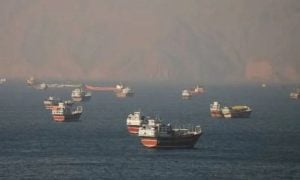
The number of tankers transiting the Strait of Hormuz fell in the past day to the lowest level in two months, shipping data shows.
Shipping industry sources, cited by Reuters, said vessels were increasingly switching off their public AIS tracking transponders, making it difficult to determine the full number of ships crossing the waterway.
Based on available data, oil and gas tanker traffic fell to its lowest level since May 25, according to analysis from Kpler.
“Should the renewed escalation in the strait lead to another prolonged closure of Hormuz, the world will find itself in a much tougher spot,” ship broker Gibson said in a report.
“With global inventories rapidly depleted in recent months, this is a recipe for much tighter supply, higher prices and significant downside risk for tanker markets.”
Strait of Hormuz traffic turns defensive
Vessel activity through the Strait of Hormuz declined sharply over 10–12 July, with confirmed crossings down by around 52% week on week, according to #MarineTraffic data.
Traffic also shifted back toward more defensive routing patterns.… pic.twitter.com/PZjbCt4Uf1
— MarineTraffic (@MarineTraffic) July 13, 2026
US, Iran exchange strikes
The US and Iran exchanged fresh waves of military strikes on Sunday, dramatically escalating tensions around the Strait of Hormuz.
The latest exchange marks one of the most serious flare-ups since the Islamabad memorandum of understanding was signed between the US and Iran.
The Islamabad MoU was signed on June 18 by US President Donald Trump, Iranian President Masoud Pezeshkian and Prime Minister Shehbaz Sharif after Pakistan brokered a ceasefire between Washington and Tehran.
Under the Islamabad MoU, the US and Iran committed to halt military operations, reopen the Strait of Hormuz to commercial shipping and negotiate a comprehensive agreement covering Iran’s nuclear programme, US sanctions and a permanent ceasefire within 60 days.
The US military said its latest operation began at 2100 GMT on Sunday, following around 140 strikes carried out the previous night.
At 5 p.m. ET today, U.S. Central Command forces began launching more strikes against Iran to continue degrading their ability to attack civilian mariners and commercial ships freely transiting the Strait of Hormuz. The Commander in Chief has directed the strikes to hold Iranian…
— U.S. Central Command (@CENTCOM) July 12, 2026
Iran responded within hours, claiming attacks on US military installations in Jordan, Bahrain and Kuwait, while explosions and air raid sirens were reported in several Gulf states.
Iranian attacks on commercial vessels in Hormuz
The latest fighting followed an Iranian attack early Sunday on a commercial vessel transiting the Strait of Hormuz, forcing its crew to abandon the burning ship.
Following the incident, Iran’s Revolutionary Guards announced that the strategic waterway would remain closed “until further notice and until the end of American interventions in this region.”
CENTCOM disputed the claim, saying the Strait remained open to lawful maritime traffic.
“Iran does not control the strait. Traffic is flowing,” the command said, adding that US forces remained deployed to ensure freedom of navigation.
India said one of its nationals remained missing after a Cyprus-flagged container ship caught fire following an attack.
Oman confirmed it rescued 23 crew members from another commercial vessel after they abandoned ship approximately 17 kilometres east of the Omani coast.
The UK Maritime Trade Operations (UKMTO) said the crew had escaped aboard lifeboats before being rescued.
The incidents have renewed fears over the safety of commercial shipping through the world’s most strategically important oil transit route.
Iran attacks regional countries
Iran’s Revolutionary Guards said they carried out strikes against US military targets across the region.
According to statements carried by the official IRNA news agency, the Guards targeted Prince Hassan Air Base in Jordan, a US military drone command centre in Bahrain and Ali Al Salem Air Base in Kuwait.
Iran also claimed to have targeted military facilities in Oman.
Authorities in Qatar, Bahrain, and the United Arab Emirates reported explosions and air raid sirens, while Kuwait stated that it was intercepting incoming threats.
Jordan said three Iranian missiles landed inside its territory without providing immediate details on casualties.
Oman later summoned the Iranian ambassador and lodged a formal diplomatic protest, an uncommon step for the Gulf sultanate, which has served as a key intermediary between Washington and Tehran.
Oil prices climb
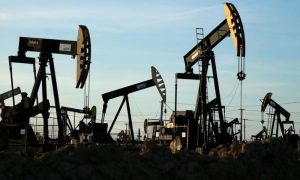
The renewed military confrontation sent oil prices higher when Asian markets opened on Monday.
US benchmark West Texas Intermediate (WTI) crude rose more than 3.5 percent, climbing above $74 a barrel after earlier declines prompted by diplomatic efforts to reduce tensions.
Meanwhile, Brent crude futures gained 3.08 percent, rising by $2.34 to $78.35 per barrel.
Analysts warned that any prolonged disruption to shipping through the Strait of Hormuz could have significant consequences for global energy markets.
Pakistan urges adherence to Islamabad MoU
Mediator Pakistan on Sunday urged the US and Iran to take immediate steps towards de-escalation following their latest exchange of military strikes.
Pakistan called on all sides to exercise restraint and uphold their respective commitments under the Islamabad Memorandum of Understanding (MoU) to end the conflict.
In a statement, the Foreign Office said Pakistan was following the recent incidents with deep concern and reiterated its strong support for the sovereignty and territorial integrity of all brotherly countries in the region.
Pakistan, which has been mediating between Washington and Tehran, said it remained committed to providing all support towards achieving lasting peace and stability in the region through dialogue and diplomacy.
🔈 PR No. 1️⃣7️⃣0️⃣/2️⃣0️⃣2️⃣6️⃣
Pakistan expresses deep concern at escalation in regional tensions
🔗⬇️ pic.twitter.com/yr27qSYQ9E
— Ministry of Foreign Affairs – Pakistan (@ForeignOfficePk) July 12, 2026
Islamabad MoU framework
The Islamabad MoU was signed on June 18 by US President Donald Trump, Iranian President Masoud Pezeshkian and Prime Minister Shehbaz Sharif after Pakistan brokered a ceasefire between Washington and Tehran.
Under the Islamabad MoU, the US and Iran committed to halt military operations, reopen the Strait of Hormuz to commercial shipping and negotiate a comprehensive agreement covering Iran’s nuclear programme, US sanctions and a permanent ceasefire within 60 days.
Pakistan and Qatar subsequently co-mediated the first round of high-level negotiations in Lucerne, Switzerland, on June 21.
The talks were attended by US Vice President JD Vance and Iranian Parliament Speaker Mohammad Bagher Ghalibaf.
The next round of negotiations is intended to advance the Islamabad MoU framework. The technical talks were delayed because of the state funeral ceremonies for Iran’s late Supreme Leader, Ayatollah Ali Khamenei.
The planned meeting follows indirect technical discussions held in Doha earlier this week.
Pakistan’s diplomatic efforts
Pakistan is the principal mediator between the US and Iran after it secured a ceasefire on April 08 and hosted the highest level of talks between the two nations on April 12 and 13 in Islamabad.
Pakistan, which brokered the ceasefire and has continued to mediate between Washington and Tehran, has urged all parties to honour the agreement.
Pakistan’s Deputy Prime Minister and Foreign Minister Ishaq Dar last week stressed the need for all parties to the Middle East conflict to uphold the ceasefire agreement.
On June 18, Prime Minister Shehbaz Sharif, President Donald Trump and Iranian President Masoud Pezeshkian signed the Islamabad Memorandum of Understanding to end hostilities and launch further negotiations.
On June 21, Pakistan and Qatar mediated the high-level US-Iran talks in Switzerland.
The first round of Pakistan and Qatar mediated US-Iran talks, led by US Vice President JD Vance and Iran’s Parliament Speaker Mohammad Baqer Ghalibaf, was held in Switzerland a week ago, and Washington waived sanctions on Tehran.
After the talks, Pakistan and Qatar announced significant progress in diplomatic efforts between the US and Iran following the conclusion of the first round of high-level talks in Switzerland.