


WASHINGTON/TEHRAN: The United States and Iran exchanged fresh waves of military strikes on Sunday, dramatically escalating tensions around the Strait of Hormuz as Washington targeted Iranian military infrastructure and Tehran retaliated with attacks on US military sites and regional allies.
The latest exchange marks one of the most serious flare-ups since an interim ceasefire collapsed, threatening regional stability, disrupting one of the world’s busiest energy corridors and raising fresh concerns over global oil supplies.
The US military said its latest operation began at 2100 GMT on Sunday, following around 140 strikes carried out the previous night.
At 5 p.m. ET today, U.S. Central Command forces began launching more strikes against Iran to continue degrading their ability to attack civilian mariners and commercial ships freely transiting the Strait of Hormuz. The Commander in Chief has directed the strikes to hold Iranian…
— U.S. Central Command (@CENTCOM) July 12, 2026
Iran responded within hours, claiming attacks on US military installations in Jordan, Bahrain and Kuwait, while explosions and air raid sirens were reported in several Gulf states.
US Says Strikes Targeted Iranian Military Capabilities
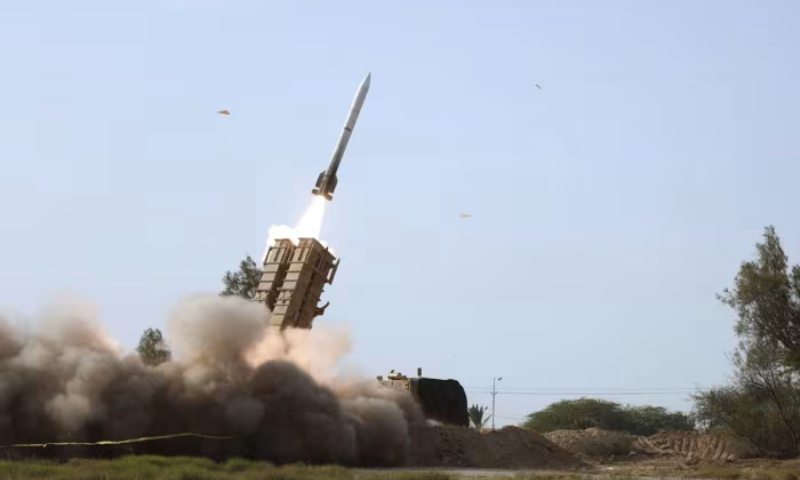
US Central Command (CENTCOM) said American forces struck Iranian military air-defence systems, coastal radar installations, missile and drone capabilities and fast attack boats involved in operations around the Strait of Hormuz.
The operation involved fighter aircraft, naval vessels, one-way attack aerial drones and, for the first time, one-way attack sea drones.
Iranian state media reported strikes across southern and western Iran, including Qeshm Island, Bandar Abbas, Sirik, Jask and parts of Khuzestan province bordering Iraq.
IRGC CLAIMS MAJOR HITS ACROSS GULF
DESTROYED fuel tanks & missile depots at Jordan AIR BASE, while striking a US DRONE COMMAND CENTER in Bahrain
Says attacks are RETALIATION for US strikes on Iran overnight — WITH MORE TO COME pic.twitter.com/zaxJ4ssBpW
— RT (@RT_com) July 13, 2026
According to Iranian reports, at least one soldier was killed during the attacks. In contrast, separate strikes on Mahshahr reportedly killed one civilian and injured four others at a water pumping station.
Strait of Hormuz at the Centre of Escalation
The latest fighting followed an Iranian attack early Sunday on a commercial vessel transiting the Strait of Hormuz, forcing its crew to abandon the burning ship.
Following the incident, Iran’s Revolutionary Guards announced that the strategic waterway would remain closed “until further notice and until the end of American interventions in this region.”
CENTCOM disputed the claim, saying the Strait remained open to lawful maritime traffic.
“Iran does not control the strait. Traffic is flowing,” the command said, adding that US forces remained deployed to ensure freedom of navigation.
An adviser to Iran’s Supreme Leader described control of the Strait of Hormuz as more valuable than “dozens of atomic bombs”, underlining its strategic importance.
Iran Launches Regional Retaliation
Iran’s Revolutionary Guards said they carried out retaliatory strikes against US military targets across the region.
According to statements carried by the official IRNA news agency, the Guards targeted Prince Hassan Air Base in Jordan, a US military drone command centre in Bahrain and Ali Al Salem Air Base in Kuwait.
Iran also claimed to have targeted military facilities in Oman.
Authorities in Qatar, Bahrain, and the United Arab Emirates reported explosions and air raid sirens, while Kuwait stated that it was intercepting incoming threats.
Jordan said three Iranian missiles landed inside its territory without providing immediate details on casualties.
Oman later summoned the Iranian ambassador and lodged a formal diplomatic protest, an uncommon step for the Gulf sultanate, which has served as a key intermediary between Washington and Tehran.
Civilian Areas Also Affected
Iranian media reported that around 10 projectiles struck Qeshm Island on Sunday evening.
Additional strikes hit Farur Island, where authorities said a telecommunications worker was killed and two others were injured.
Kuwait said three northern border posts were damaged in attacks and that an offshore oil platform was struck by a hostile drone, leaving one person injured.
The widening conflict has increasingly affected civilian infrastructure alongside military targets.
Commercial Shipping Comes Under Fire
Maritime security concerns intensified after separate attacks on commercial vessels in the Strait of Hormuz.
India said one of its nationals remained missing after a Cyprus-flagged container ship caught fire following an attack.
Oman confirmed it rescued 23 crew members from another commercial vessel after they abandoned ship approximately 17 kilometres east of the Omani coast.
The UK Maritime Trade Operations (UKMTO) said the crew had escaped aboard lifeboats before being rescued.
The incidents have renewed fears over the safety of commercial shipping through the world’s most strategically important oil transit route.
Oil Prices Climb
The renewed military confrontation sent oil prices higher when Asian markets opened on Monday.
US benchmark West Texas Intermediate (WTI) crude rose more than 3.5 percent, climbing above $74 a barrel after earlier declines prompted by diplomatic efforts to reduce tensions.
Analysts warned that any prolonged disruption to shipping through the Strait of Hormuz could have significant consequences for global energy markets.
Diplomatic Efforts Face Fresh Setback
Iran’s Foreign Ministry accused the United States of reigniting instability in the Strait of Hormuz, saying Sunday’s attacks had undermined ongoing peace efforts.
Pakistan, which has continued diplomatic engagement with both sides, urged restraint.
Deputy Prime Minister and Foreign Minister Ishaq Dar spoke by telephone with his Iranian counterpart on Sunday, stressing that dialogue remained the only path towards lasting peace.
“Dialogue and diplomacy remain the only viable path to resolving disputes and achieving lasting peace,” Pakistan’s Foreign Ministry quoted Dar as saying.
United Nations Secretary-General Antonio Guterres also appealed for an immediate halt to the fighting, warning that further escalation could destabilise the wider Middle East.
Escalating Rhetoric
The military confrontation has been accompanied by increasingly sharp rhetoric from both capitals.
Iran’s Supreme Leader, Mojtaba Khamenei, vowed retaliation for the killing of his father and predecessor at the outset of the conflict, saying Iran had identified individuals it intended to target.
President Donald Trump warned on Saturday that any attempt on his life would result in the United States “completely decimating” Iran.
With both countries continuing military operations and diplomatic efforts struggling to gain momentum, fears are growing that the conflict could expand well beyond the Strait of Hormuz.