


WASHINGTON, United States: The United States and Iran exchanged military strikes late Friday, escalating tensions and placing fresh strain on a ceasefire as diplomatic efforts continue to prevent a wider conflict in the Middle East.
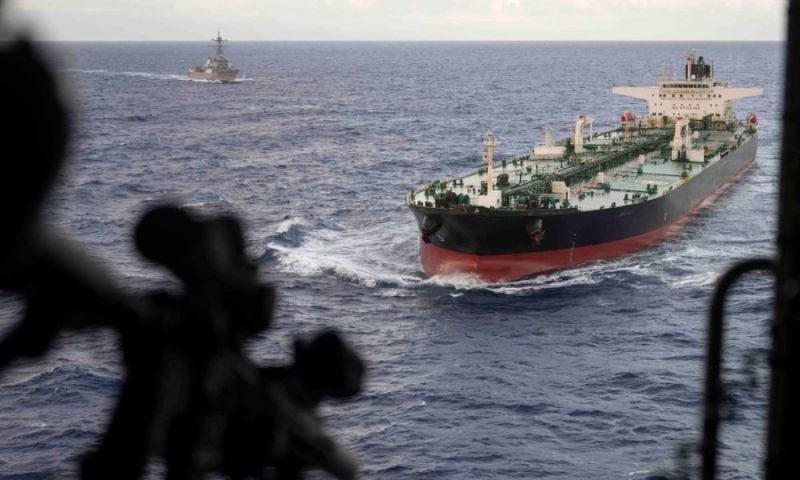
The latest confrontation followed a US accusation that Iran had attacked a commercial cargo vessel transiting the Strait of Hormuz, an incident Washington said breached the ceasefire agreement reached after months of fighting.
US Launches Retaliatory Strikes
US Central Command said American forces targeted Iranian missile and drone storage facilities, along with coastal radar installations, in response to what it described as an “unwarranted aggression against commercial shipping.”
According to the US military, the operation was intended as a direct response to the reported attack on the commercial vessel in the strategic Strait of Hormuz.
https://t.co/CckXLJSpah pic.twitter.com/NoMQ7cNtN5
— U.S. Central Command (@CENTCOM) June 27, 2026
President Donald Trump condemned the attack, calling it “a foolish violation of our ceasefire agreement.”
Vice President JD Vance also warned Tehran against further military action, saying any additional attacks would be met with force.
Iran Responds
Hours later, Iranian state television reported that the Islamic Revolutionary Guard Corps had launched retaliatory strikes against US positions in the Gulf region.
The Guards said the operation was carried out in response to the American attacks and warned that any further military action by the United States would trigger a broader response.
🚨 BREAKING
In response to the U.S. aggression, the IRGC Navy targeted several positions of the terrorist U.S. military in the region.— IRIB (Islamic Republic of Iran Broadcasting) (@iribnews_irib) June 26, 2026
Iranian media also reported an explosion at Taherouyeh pier near the southern port city of Sirik, citing local military sources who said the blast resulted from a projectile striking the area.
Strait of Hormuz Remains a Flashpoint
The exchange has renewed concerns over security in the Strait of Hormuz, one of the world’s most strategically important shipping routes, through which around one-fifth of global oil and gas exports normally pass.
The latest violence comes as Washington and Tehran continue negotiations aimed at securing a permanent settlement to the conflict that began on February 28.
Iran has warned vessels against entering or leaving the Gulf without its authorisation, although commercial traffic has continued.
Shipping data showed that many vessels have altered their routes, with a significant number sailing closer to Oman’s coastline instead of using Tehran’s preferred navigation corridor.
The UN’s maritime agency said an evacuation operation had previously helped more than 2,500 seafarers and 115 vessels leave the affected area before the latest hostilities forced the operation to be suspended.
Despite renewed tensions, international oil prices declined on Friday amid market expectations that shipping through the Strait of Hormuz would continue.
Israel, Lebanon Sign US-Backed Framework
Separately, Israel and Lebanon welcomed a US-backed framework agreement aimed at reducing tensions along their shared border.
At a signing ceremony in Washington, Secretary of State Marco Rubio described the agreement as an initial step toward achieving lasting peace and security.
Israeli Prime Minister Benjamin Netanyahu said the arrangement represented progress in addressing security concerns along the Lebanese border and would allow the Lebanese army to return to two designated pilot areas in southern Lebanon while Israeli forces remained in a security zone.
Lebanese President Joseph Aoun described the framework as a first step toward enabling displaced civilians to return home under the authority of the Lebanese state.
However, supporters of Hezbollah staged protests in Beirut, while senior Hezbollah official Hassan Fadlallah criticised the agreement, arguing that Lebanon’s future should be addressed within the broader US-Iran peace negotiations.
IAEA Calls for Robust Nuclear Oversight
Meanwhile, International Atomic Energy Agency Director General Rafael Grossi said any permanent agreement between Washington and Tehran would require a comprehensive verification mechanism to ensure Iran does not develop nuclear weapons.
Grossi noted that although Iran has repeatedly stated it has no intention of building nuclear weapons, international inspectors would still need robust monitoring arrangements.
Under the interim agreement, Iran’s stockpile of uranium enriched to 60 percent is expected to be diluted under IAEA supervision as part of confidence-building measures.