Key Points
- UN Secretary-General supports Pakistan’s role in promoting regional peace
- Meeting highlights economic risks from Middle East tensions
- Islamabad’s ceasefire efforts gain international recognition
ISLAMABAD: The Secretary-General of the United Nations, António Guterres, has backed Pakistan’s role in facilitating a temporary ceasefire, hosting direct talks, and ongoing intensified efforts to make the truce permanent between Iran and the US.
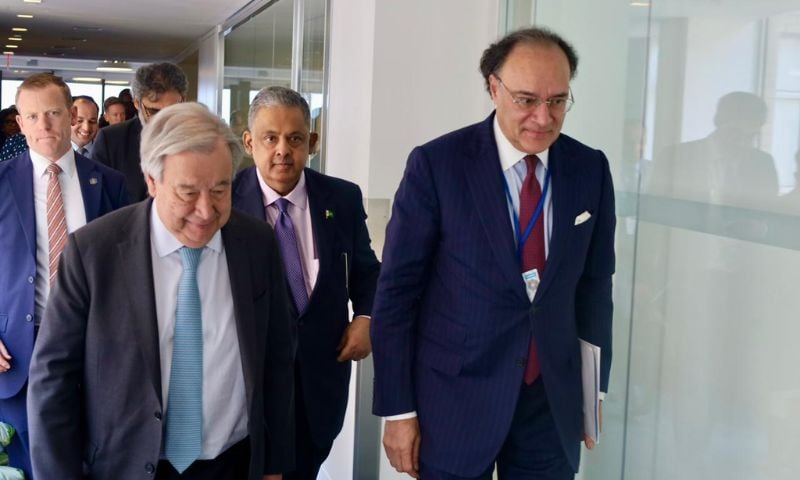
The endorsement came during the Secretary General’s meeting with Finance Minister Muhammad Aurangzeb in Washington on the sidelines of the launch of the Borrowers’ Platform. Global leaders convened to discuss financial cooperation among developing countries.
Recognition of Pakistan’s mediation efforts
Guterres lauded Pakistan’s constructive engagement in facilitating dialogue and fostering stability in the region, expressing confidence in its continued role on the global stage.
The acknowledgement comes as Islamabad accelerates diplomatic outreach to secure a durable ceasefire between Iran and the United States. positioning itself as a bridge between the two sides at a time of heightened tensions.
Officials say Pakistan’s efforts are focused on de-escalation and preventing further instability in a region critical to global energy supplies and trade routes.
Economic risks at the forefront
During the meeting, both sides discussed the broader economic implications of the Middle East situation, particularly its impact on food and energy security in developing countries.
For economies like Pakistan, which rely heavily on energy imports, any disruption in the region can lead to higher oil prices, increased import bills, and added pressure on foreign exchange reserves.
These risks necessitate Islamabad’s diplomatic endeavour, which is closely linked to its economic priorities, with stability in the Middle East seen as essential for managing inflation and external balances.
Linking diplomacy with global cooperation
Aurangzeb appreciated the UN chief’s participation in the launch of the Borrowers’ Platform and thanked him for supporting the initiative, which aims to strengthen coordination among developing countries on debt and financing challenges.
The meeting highlighted the intersection of diplomacy and economic policy, as Pakistan seeks to leverage multilateral platforms to advance both peace and financial stability.
Analysts note that recognition from the United Nations reinforces Pakistan’s positioning as an active diplomatic player, particularly in efforts to ease tensions between longstanding adversaries.
As global uncertainty persists, Islamabad’s engagement reflects a broader attempt to align regional peace initiatives with the economic interests of developing nations.