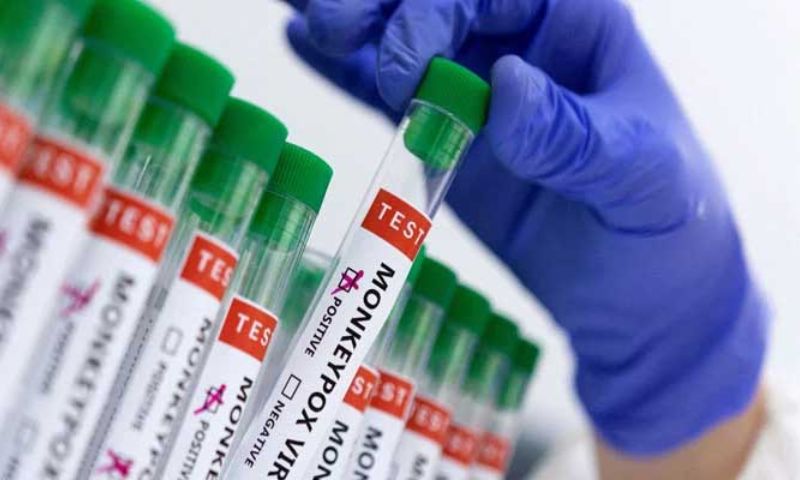
ISLAMABAD: Health authorities in Pakistan’s southern Sindh province on Wednesday confirmed nine deaths from monkeypox disease, as infections continue to rise across the province.
The Sindh Health Department said a total of 122 suspected mpox cases have been reported across the province as of April 14, 2026.
Out of these, 25 cases have been confirmed through laboratory testing, while nine deaths have so far been recorded.
Officials described the situation as closely monitored, with surveillance and response systems being strengthened.
In the past 24 hours alone, two new suspected cases were identified—one in Karachi and another in Khairpur—prompting further screening and contact tracing efforts.
District-wise data shows that Khairpur has reported the highest number of confirmed cases at 18, followed by Karachi with four and Sukkur with three.
Health officials said targeted interventions are underway in the most affected districts to contain further spread.
Authorities stated that immediate preventive measures have been implemented, including awareness campaigns and enhanced monitoring at healthcare facilities.
They urged the public and healthcare workers to strictly follow precautionary guidelines, report symptoms early, and avoid unnecessary exposure.
People experiencing symptoms were advised to seek medical attention at the nearest hospital without delay and to take extra care when handling newborns or vulnerable individuals.
Monkeypox, caused by the Mpox virus, is a viral zoonotic disease with an unclear natural reservoir.
While the precise origins remain unidentified, it is believed that African rodents and non-human primates, including monkeys, may carry and transmit the virus to humans.
The disease typically presents with a rash that emerges 1 to 3 days after the initial fever, beginning on the face before spreading to other parts of the body.
The rash progresses through several stages, transitioning from macules to papules, then vesicles, pustules, and finally scabs.
Additional symptoms of monkeypox may include headaches, muscle aches, fatigue, and swollen lymph nodes.
The incubation period for the disease ranges from 7 to 14 days, although it can vary from 5 to 21 days, with the illness generally lasting between 2 and 4 weeks.