ISLAMABAD: Diplomats moved closer on Wednesday to extending the ceasefire between the United States and Iran, as efforts intensified to restart negotiations and preserve a truce set to expire next week.
Regional officials told the Associated Press that both sides had given an “in principle agreement” to extend the ceasefire beyond April 22 to allow more time for diplomacy.
The push comes despite mounting tensions, including a US blockade of Iranian ports.
Diplomats are now working to bridge differences on three key issues that stalled talks in Islamabad last weekend — Iran’s nuclear programme, the Strait of Hormuz, and compensation for wartime damages, officials said.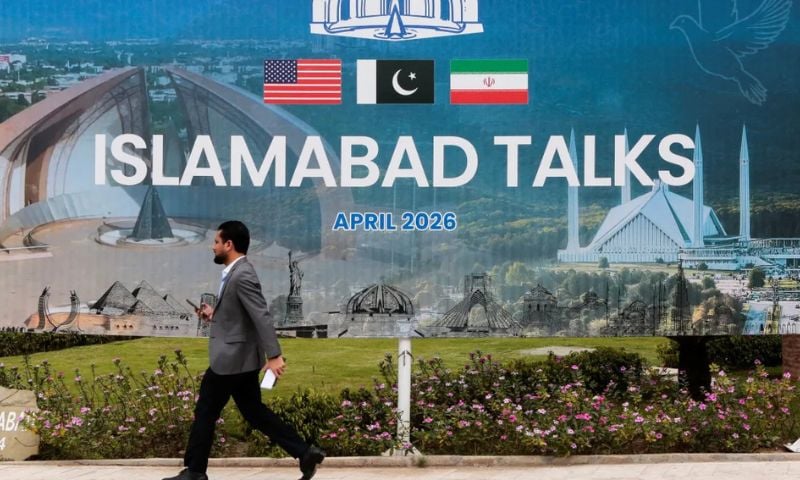
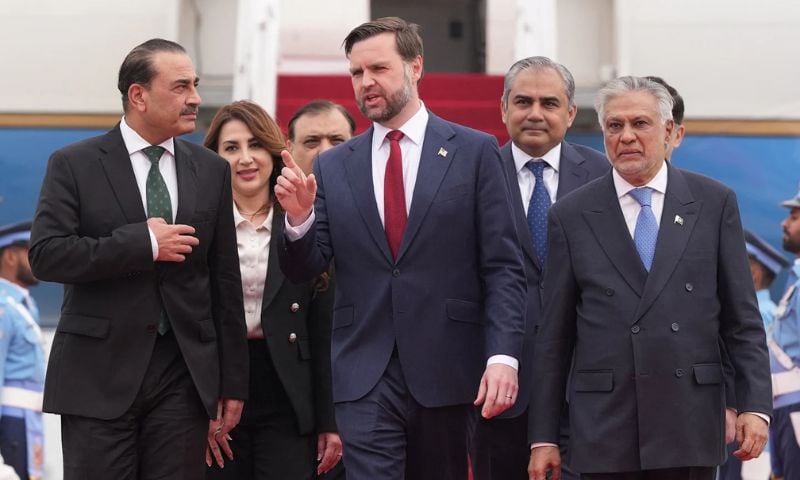
The initial round of negotiations, held in Islamabad, marked a rare direct engagement between Washington and Tehran after decades of hostility. While no deal was reached, both sides agreed to continue discussions.
Pakistan, which facilitated the talks, has since stepped up diplomatic efforts to sustain momentum and prevent further escalation.
US President Donald Trump said the conflict was “close to over”, expressing confidence that ongoing diplomacy could yield results.
U.S. President Donald J. Trump spoke about ending the Iran War in a currently unreleased interview filmed Tuesday with Fox News.
Trump: “I had to divert because if I didn’t do that, right now, you would have Iran with a nuclear weapon. And if they had a nuclear weapon, you would… pic.twitter.com/HkN2Slsxlz
— OSINTdefender (@sentdefender) April 15, 2026
“I think it’s close to over, yeah. I mean, I view it as very close to over,” he said in an interview with Fox Business.
He added that Iran appeared willing to reach an agreement, but cautioned that the situation remains fluid.
“You know what, if I pulled up stakes right now, it would take them 20 years to rebuild that country, and we’re not finished. We’ll see what happens. I think they want to make a deal very badly,” he said.
Trump also suggested that talks could resume soon, possibly again in Pakistan, praising the role of Syed Asim Munir in facilitating dialogue.
“Something could be happening over the next two days,” he said, adding that progress was “a little bit slow”.
Meanwhile, US Vice President JD Vance acknowledged deep mistrust between the two sides but said negotiations were advancing.
“There is a lot of mistrust between Iran and the United States of America. You are not going to solve that problem overnight,” he said, adding, “we are negotiating with Iran” and expressing confidence in the process.
Separately, ABC News correspondent Jonathan Karl reported that Trump did not expect the ceasefire to be extended, suggesting it might not be necessary.
“I think you’re going to be watching an amazing two days ahead,” Trump said.
Asked whether the conflict would end through a deal or military outcome, he said:
“It could end either way, but I think a deal is preferable because then they can rebuild… No matter what, we took out the radicals. They’re gone, no longer with us.”
He also added: “If I weren’t president, the world would be torn to pieces.”
The conflict, which began on February 28, has killed thousands across the region, including in Iran, Lebanon, and Israel, and displaced large numbers of civilians.
Despite the uncertainty, diplomatic activity has intensified, with officials indicating that a second round of talks could take place within days, keeping the ceasefire — brokered by Pakistan on April 8 — in place as a foundation for further negotiations.