
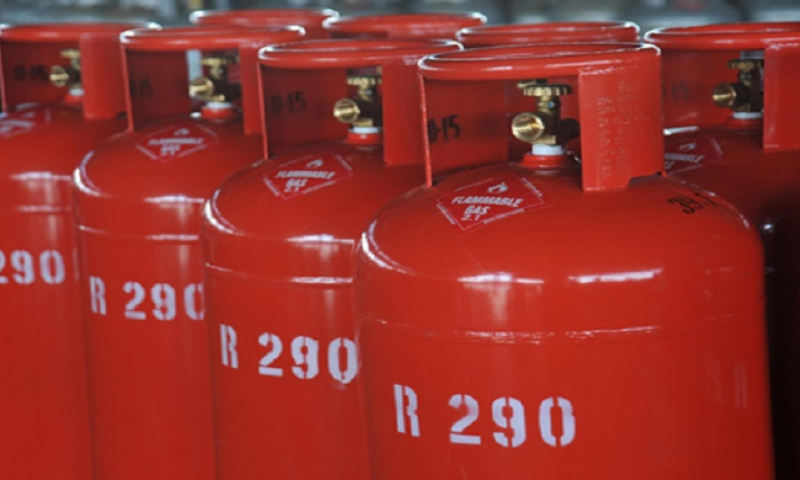
ISLAMABAD: Pakistan’s Oil and Gas Regulatory Authority (Ogra) on Tuesday announced a 35 percent increase in Liquefied Petroleum Gas (LPG) prices for April, raising the cost of an 11.8kg domestic cylinder by Rs 924 due to a surge in global LPG rates.
The price of LPG has been set at Rs 304.15 per kg for April, up from Rs 225.84 per kg in March, according to the notification. Consequently, the price of an 11.8kg domestic cylinder now stands at Rs 3, 588.60, compared to Rs 2,664.88 last month.
Ogra’s calculations show the producer price of LPG—which consists of 40 percent propane and 60 percent butane—has been fixed at Rs 262,817.53 per tonne for April, up from Rs 184,537 per tonne in March.
This figure includes an excise duty of Rs 85 per tonne. For an 11.8kg cylinder, the producer price amounts to Rs 3,101.25, compared to Rs 2,177.54 last month, inclusive of a petroleum levy of Rs 4,669 per tonne and 18 percent general sales tax (GST) of Rs 40,091.
At the consumer level, additional charges of Rs 35,000 per tonne—covering marketing (Rs 17,000), distribution (Rs 10,000), and transportation (Rs 8,000)—along with an additional 18 percent GST of Rs 6,300 per tonne on these margins, were added to arrive at the final price.
As a result, the consumer-end maximum LPG price has been set at Rs 304,117.53 per tonne, translating to Rs 3,588.59 for an 11.8kg cylinder in April, up from Rs 225,837 per tonne or Rs 2,664.88 in March. The new prices will remain effective until April 30.
Earlier, Pakistan’s federal and provincial governments held consultations on petroleum pricing reforms and the redesign of subsidy mechanisms, aimed at improving targeting efficiency and fiscal sustainability.
Meanwhile, Oil prices sank, and most stocks rose on Tuesday, following a report that indicated Donald Trump was willing to end the Iran war even if the key Strait of Hormuz remained closed.
But investors remain wary as the Wall Street Journal story came on the same day the US president threatened to destroy Iran’s key oil export hub and desalination plants unless it accepts a deal, while also suggesting diplomacy was making headway.
The news comes as governments around the world scramble to implement measures to ease the burden of surging fuel prices while also looking to conserve energy, with one-fifth of global crude and gas passing through the waterway.