
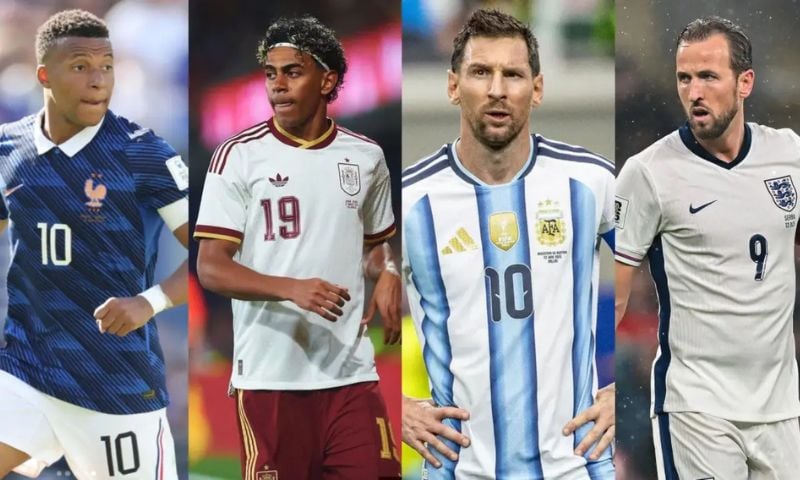
ISLAMABAD: In an unprecedented experiment, nine of the world’s leading AI models went head-to-head not on the pitch, but in the realm of data-driven prediction, each crunching mountains of statistics to forecast the 2026 FIFA Men’s World Cup champion.
The result? A razor-thin margin between two footballing superpowers that reflects the tournament’s breathtaking unpredictability.
The analysis, released on July 14, 2026, tasked AI systems including Gemini, Grok, DeepSeek, Le Chat, Qwen, ChatGPT, Claude, Copilot, and Meta AI with forecasting the World Cup’s final podium.
Drawing from comprehensive datasets, team strength, squad quality, coaching expertise, historical performance, and real-time tournament form, the models delivered a split decision that has fans and pundits alike debating the machines’ collective wisdom.
According to the Opta supercomputer’s latest simulations, here is how the remaining four teams stack up to lift the 2026 World Cup trophy:
* France 🇫🇷 (34.05%) — The clear tournament favorites to win it all.
* Spain 🇪🇸 (23.45%) — Sitting in second place despite a grueling… pic.twitter.com/UNWXPAY4ZO
— O-O-P (@okiTwits) July 14, 2026
France emerged as the slight favourite, securing champion votes from five of the nine models: Gemini, Grok, DeepSeek, Le Chat, and Qwen. The defending champions Argentina claimed the remaining four nods from ChatGPT, Claude, Copilot, and Meta AI, setting the stage for what could be a blockbuster final showdown, provided the humans on the field follow the script the algorithms have written.
Read Also: Spain Stun Belgium Late to Set Up France Semi-Final Clash
Divided predictions for runner-up position
While the champion predictions showed remarkable consensus around two teams, the runner-up forecasts revealed greater diversity. France and Argentina each received three votes for second place, demonstrating the AI models’ confidence that the eventual champion would likely come from these two powerhouses.
🔴 Nine AI models split on 2026 World Cup winner: France favored, Argentina defending title
Nine leading AI models predicted the 2026 FIFA Men’s World Cup final podium based on team strength, squad quality, coaching, historical performance, and current tournament data.
France… pic.twitter.com/EZhV1bDama— NewsTongue (@NewsTongueX) July 14, 2026
England received two runner-up votes, signaling growing belief in the Three Lions’ tournament credentials, while Spain secured one prediction for second place. The distribution reflects the competitive balance among the semifinalists, with all four remaining teams featuring prominently in the medal predictions.
Spain dominates third-place forecasts
Perhaps the most decisive prediction emerged for the bronze medal position, with Spain receiving an overwhelming six of nine third-place votes. This suggests broad AI consensus that Luis de la Fuente’s young Spanish squad possesses the quality to reach the podium, even if they fall short of the ultimate prize.
Read Also: Argentina Beat Switzerland After Extra Time to Reach World Cup Semi-Finals
The third-place predictions also included two votes for England and one for France, though the French squad’s lower third-place tally likely reflects the AI models’ binary thinking—either France wins the tournament or they don’t feature in the bronze medal match.
🤖 For France 🇫🇷 vs 🇪🇸 Spain , all six leading AI models reached the exact same verdict on the match result:
✅ 1X2: France Win
✅ Handicap (+0): France WinBut when it comes to Goals, the AIs are split:
🔹 Claude / DeepSeek / Qwen / Grok → Under 2.5
🔹 ChatGPT → Under 3.5… pic.twitter.com/sPrRI3V9Gf— SpadeNuts (@Spade_Nuts) July 14, 2026
Semifinal showdowns set stage for historic final
The AI predictions arrive at a pivotal moment as the tournament enters its knockout crescendo. France will face Spain on July 14 at AT&T Stadium in Arlington, Texas, a colossal matchup featuring Kylian Mbappé’s experienced squad against Spain’s emerging generation led by teenage sensation Lamine Yamal.
The following day, England will meet Argentina on July 15 at Mercedes-Benz Stadium in Atlanta, Georgia, in what promises to be an emotionally charged encounter. The semifinal winners will advance to the World Cup final on July 19 at MetLife Stadium in East Rutherford, New Jersey, while the losers will contest the third-place playoff on July 18.
Read Also: World Cup 2026: Lionel Messi Returns to Top of Golden Boot Race
AI methodology reveals differing analytical approaches
The study highlights how different language models weigh variables differently when making sports predictions. According to AJLabs, the predictions “reflect a broad AI consensus around the four remaining contenders, France, Argentina, Spain and England, but also highlight differences in how leading language models weigh recent performances, squad depth and tournament momentum.”
The narrow split between France and Argentina suggests the models found little statistical separation between the two powerhouses, with tactical considerations and form fluctuations potentially tipping the balance in individual AI analyses. France’s five-vote edge indicates a slight preference for Didier Deschamps’ experienced squad, possibly influenced by their quarterfinal victory over Morocco and consistent tournament pedigree.
FIFA World Cup 2026
The FIFA Club World Cup enters its most exciting phase as the race for the title reaches the semi-finals. France and Spain are set for a blockbuster showdown in the first semi-final, while Argentina will take on England a day later.
Spain is one team that is… pic.twitter.com/kW4Lew0Sgp
— TIMES NOW (@TimesNow) July 14, 2026
Mbappé and Yamal represent generational shift
The tournament has already delivered compelling narratives, with France’s Kylian Mbappé continuing to cement his legacy as one of football’s all-time greats while Spain’s Lamine Yamal represents the sport’s exciting future. The teenager’s performances have been instrumental in Spain’s semifinal run, drawing praise from pundits worldwide.
Read Also: World Cup Semifinal: A Final Before the Final – Can Spain Pull Off a Miracle Against France?
As the AI predictions generate debate among football fans globally, the actual outcomes will ultimately be decided on the pitch. The models’ collective wisdom suggests the world’s top football nations remain clustered at the sport’s summit, with marginal gains likely to separate champions from runners-up in what promises to be an unforgettable conclusion to the 2026 World Cup.
Supercomputer Predicts World Cup 2026 Winners? ⚽🏆
1. 🇫🇷 France — 34.1%
2. 🇪🇸 Spain — 23.4%
3. 🏴 England — 21.9%
4. 🇦🇷 Argentina — 20.5%Who is your pick? Drop your prediction in the comments! 👀 pic.twitter.com/r4sMapbWWP
— Data Of Statistics (@DataOfStats) July 12, 2026
The 2026 FIFA Men’s World Cup final will be played on July 19 at MetLife Stadium in East Rutherford, New Jersey, with the third-place playoff scheduled for July 18.