
Key points
- Two-ton shipment is first Pakistani mango consignment to Xinjiang
- Mangoes reached Kashgar and Korla through a land port
- China is a growing market for Pakistani mango exports
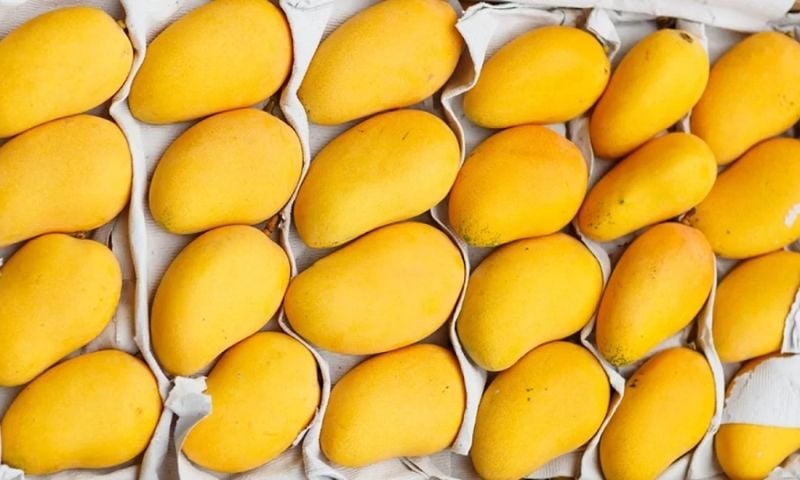
KASHGAR: Pakistan’s “king of fruits” has taken the road to China, with a two-ton shipment of Pakistani mangoes making its first appearance in Xinjiang this year.
The consignment crossed into China through a China-Pakistan land port before clearing customs and reaching markets in Kashgar and Korla, opening another route for one of Pakistan’s best-known agricultural exports.
Chinese customs authorities used a dedicated clearance process for the perishable fruit. They ensured advance coordination with exporters, guidance on customs declaration documents and communication with Pakistani customs on transport arrangements.
The measures were designed to speed up clearance and help preserve the quality of the mangoes during their journey.
The shipment complements Pakistan’s quest to expand its mango export markets beyond its traditional destinations.
READ ALSO: Pakistan Pavilion to Exhibit Mangoes at Eurasia Festival in China
Pakistan has already exported 44,882 tonnes of mangoes during the 2026 season as of Aug. 10, with Iran, the United Arab Emirates and Oman among the leading destinations.
The Gulf region remains particularly important for Pakistan’s mango trade, accounting for about 35 per cent of exports, according to a report published in June.
Other established markets include the United Kingdom, Saudi Arabia, Afghanistan and Central Asian countries.
Pakistan yet to explore China potential
Chinese market, however, remains with substantial room for expansion.
Although Pakistani mangoes have already gained access to China, exports to the country have not reached the scale of Pakistan’s leading Gulf and regional markets.
The latest land shipment is significant because it demonstrates a direct overland route into western China and could help exporters reach consumers beyond the country’s established coastal markets.
Pakistan is one of the world’s major mango-producing countries, with Punjab and Sindh accounting for most of its production.
The country exports mangoes to dozens of international markets, but exporters have long sought to increase the share of premium markets where Pakistani varieties can command better returns.
The latest entry to the Chinese market has received fresh attention this year. Pakistani agricultural authorities and industry representatives held discussions in May on the 2026 mango export season.
The participants focussed on export channels and ways to reach more international buyers.
In July, the Pakistan-China Silk Road Mango Festival 2026 was held in Beijing, bringing together Pakistani and Chinese companies involved in mango trade and logistics.
Enterprises signed cooperation documents aimed at creating new market opportunities for Pakistani mango products along to tradtional silk route.
For Pakistan, the importance of the Xinjiang shipment goes beyond its modest two-tonne volume.
The consignment shows how the land corridor can be used for fresh agricultural produce with minimal shelf live, potentially giving exporters another option for reaching Chinese consumers.
For the “king of fruits”, the journey from Pakistan to Xinjiang is therefore more than a seasonal delivery. It could be the beginning of a new road into one of the world’s largest consumer markets.
Pakistani mango varities
Pakistan’s export appeal rests on varieties such as Chaunsa, Sindhri and Anwar Ratol.
Chaunsa is prized in overseas markets for its rich aroma, sweetness and almost fibreless flesh, while Sindhri is known for its large size, distinctive fragrance and juicy pulp.
Anwar Ratol, smaller in size but exceptionally sweet, also has a loyal following among Pakistani communities abroad.
Recent coverage from the United States highlights strong demand for Sindhri, Chaunsa and Anwar Ratol among consumers familiar with Pakistani varieties.
Exporters, however, face a difficult race against time and cost. Lower yields linked to climate conditions, higher freight charges, transport disruptions and the fruit’s short shelf life can all reduce export volumes and margins. Maintaining temperature, grading, packaging and phytosanitary standards during long journeys is another challenge, particularly when exporters seek distant markets such as North America and Europe.