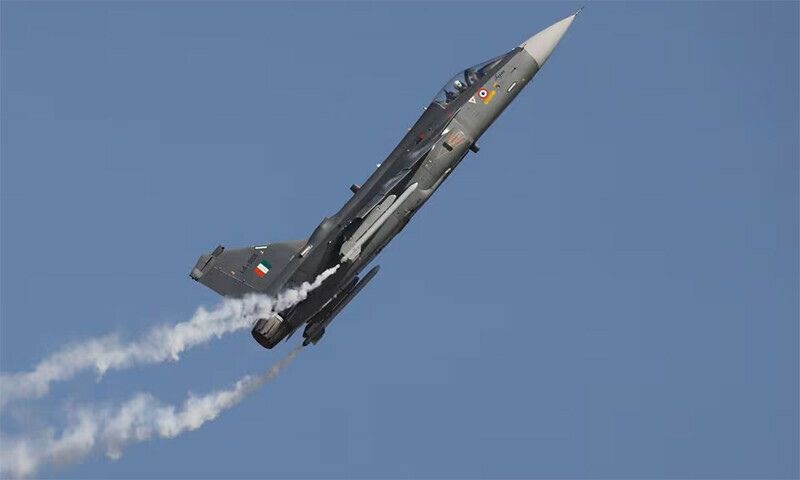
NEW DELHI: A domestically developed Tejas fighter jet of the Indian Air Force (IAF) crashed while landing after a routine training sortie, officials confirmed on Sunday, marking the third major accident involving the Light Combat Aircraft (LCA) programme in less than two years.
The pilot ejected safely moments before crash and did not sustain serious injuries, according to initial reports. However, the aircraft, a single-seat variant of the Tejas, suffered extensive damage upon crashing and is expected to be declared unserviceable by investigating authorities.
The IAF has promptly ordered a high-level court of inquiry to determine the precise cause of the accident, with a preliminary report expected in the coming weeks.
The aircraft involved in Sunday’s incident was among the 32 single-seat Tejas jets delivered to the Air Force by Hindustan Aeronautics Limited (HAL), the state-run aerospace giant responsible for manufacturing the indigenous platform.
Timing and Context
The crash comes at a particularly sensitive juncture for the Indian Air Force, which is already grappling with significant delays in the delivery of the more advanced Tejas Mark 1A variant. The IAF has placed firm orders for 180 Tejas aircraft across various configurations as part of a broader strategic effort to bolster its dwindling combat fleet and reverse a critical shortage of fighter squadrons.
However, production timelines at HAL have faced repeated setbacks due to supply chain issues, technical challenges, and now, heightened scrutiny following successive accidents.
Troubling Pattern
This latest incident adds to a troubling pattern of accidents involving the Tejas programme. In March 2024, a Tejas jet crashed near Jaisalmer in Rajasthan, though the pilot survived. In November 2025, an aircraft was lost during an aerial display at the Dubai Air Show, an incident that resulted in the pilot’s death and drew international attention to the platform’s safety record.
The series of accidents has intensified scrutiny from both defence analysts and parliamentary oversight committees regarding India’s flagship indigenous fighter programme and its maintenance protocols. Questions are being raised about whether accelerated production targets and operational pressures are impacting quality control and safety standards.
Defence analysts note that the IAF finds itself in a precarious position: it urgently requires new aircraft to address squadron shortages that have fallen to critical levels, yet ensuring operational safety and reliability remains equally paramount. The Tejas programme, envisioned as the cornerstone of India’s self-reliance in defence manufacturing, now faces a credibility test.