ISLAMABAD: Pakistan and the United Kingdom have formalised a comprehensive climate partnership with the launch of the £35m Green Compact.
The initiative is designed to enhance climate resilience, accelerate the transition to clean energy, and expand nature-based solutions, with a particular focus on mangrove conservation.
Mohammad Saleem Shaikh, media spokesperson and climate change policy advocacy expert at the Ministry of Climate Change and Environmental Coordination, described the launch on Sunday as a “decisive move towards action-oriented climate cooperation,” highlighting the initiative’s focus on practical and impactful climate solutions.
The UK continues to be one of Pakistan’s largest development partners, collaborating across education, health, climate resilience, and governance.
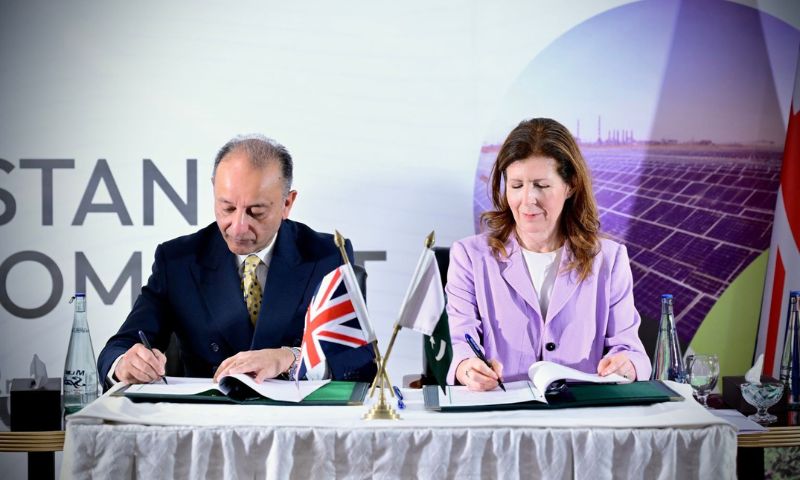
The agreement, recently signed in Islamabad by Federal Minister for Climate Change and Environmental Coordination Dr. Musadik Malik and UK Minister for International Development Jennifer Chapman, provides £35 million in support for green development and long-term climate action.
Officials from both countries described the Green Compact as a move from policy dialogue to concrete implementation, noting its significance as climate risks intensify across South Asia, with Pakistan among the region’s most climate-vulnerable nations.
According to Saleem Shaikh, the Compact is built around five core pillars: climate finance and investment, clean energy transition, nature-based solutions, innovation and youth empowerment, and adaptation and resilience.
Clean energy is a central pillar of the Pakistan–UK Green Compact. Pakistan plans to expand its solar and wind power capacity to reduce dependence on fossil fuels, strengthen energy security, and stabilise electricity costs.
Saleem Shaikh highlighted that global market trends have made renewable energy increasingly competitive. “Solar power is now considerably cheaper than fossil fuels, while wind energy is even more cost-effective. This presents a strong economic case for accelerating Pakistan’s renewable energy transition,” he said.
Nature-based solutions are another major focus of the partnership. Large-scale mangrove restoration projects are planned to safeguard coastal communities against storm surges and erosion, while simultaneously enhancing biodiversity and increasing carbon sequestration.
“Mangroves act as natural shields against climate shocks. Their restoration strengthens coastal resilience while delivering environmental and economic benefits,” the ministry official said.
During her first official visit to Pakistan, UK Minister Jennifer Chapman emphasised the shared urgency of tackling climate change, noting its widespread impacts globally.
“From melting glaciers to drying rivers, the scale of the challenge here is striking,” she said at the Green Compact launch event, warning that the cost of inaction would far exceed the investments needed today.
Minister Chapman highlighted UK support in key areas, including expanding renewable energy, restoring mangroves and ecosystems, strengthening early-warning systems, implementing climate-conscious budgeting, and boosting international investment flows into Pakistan.