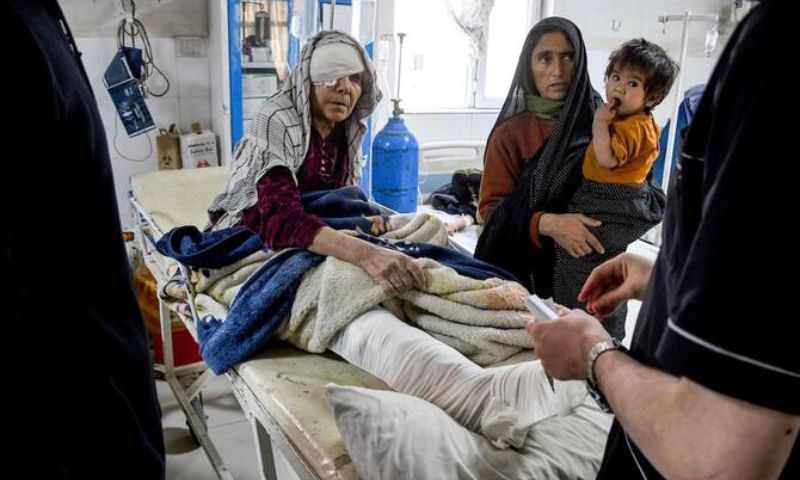
Kabul: A 6.3-magnitude earthquake struck near the northern Afghan city of Mazar-e-Sharif early Monday, killing at least 10 people and injuring around 260. The disaster comes just months after a series of powerful tremors in August killed more than 2,200 people, once again exposing the country’s deep vulnerability to seismic shocks.
Are Earthquakes Common in Afghanistan?

According to news agency Reuters, Afghanistan is among the most seismically active countries in South Asia. Surrounded by rugged mountain ranges, it faces frequent natural disasters, with earthquakes being the deadliest. On average, around 560 Afghans lose their lives to earthquakes every year, causing an estimated $80 million in annual damage.
Since 1990, at least 355 earthquakes with magnitudes above 5.0 have struck the country, according to seismic studies.
Why Is Afghanistan So Prone to Tremors?

Afghanistan lies at the convergence of three tectonic plates — the Eurasian, Indian, and Arabian plates — making it one of the world’s most active seismic zones. The northward thrust of the Indian plate beneath the Eurasian plate generates immense geological stress, triggering frequent quakes.
Which Areas Are Most Vulnerable?

Eastern and northeastern Afghanistan — including Kabul and border regions near Pakistan, Tajikistan, and Uzbekistan — face the highest risk. Kabul alone suffers an average of $17 million in annual earthquake damage. In mountainous regions, tremors often unleash deadly landslides, compounding destruction and loss of life.
Afghanistan’s Worst Earthquakes

The country has recorded roughly 100 “damaging” earthquakes since 1900. A magnitude 6.0 quake in 2022 killed around 1,000 people, while multiple quakes in 2023 claimed a similar toll and flattened entire villages.
In 2015, a 7.5-magnitude quake devastated parts of Afghanistan, Pakistan, and India, killing 399 people. Two back-to-back quakes in 1998 were among the deadliest — the first killed 2,300 people and the second nearly 4,700.
Building Resilience
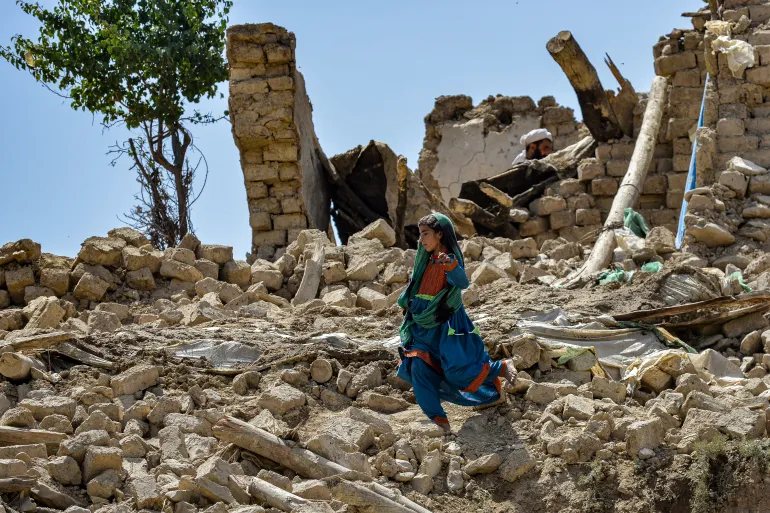
Experts recommend that Afghanistan adopt earthquake-resistant construction methods and retrofit existing buildings to minimize collapse risk. Improved seismic monitoring, early warning systems, and mapping of fault lines through geospatial and remote-sensing technologies are also critical.
Such efforts, they say, could allow vulnerable communities to relocate and help mitigate future devastation in one of the world’s most fragile seismic hotspots.