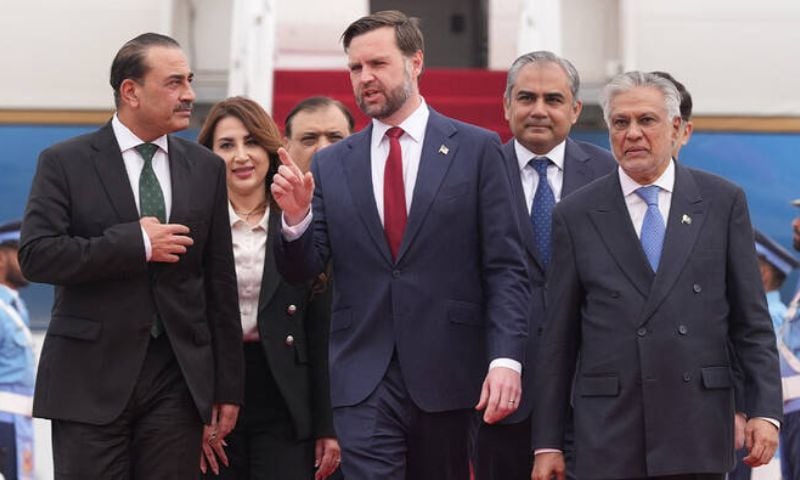



ISLAMABAD: World leaders have urged the United States and Iran to continue dialogue and preserve the ceasefire after Pakistan-mediated talks in Islamabad concluded on Sunday, describing the Islamabad Talks as an important step in an ongoing diplomatic process.
The marathon talks brought senior officials from Washington and Tehran together for more than 20 hours, marking a rare direct engagement in decades after weeks of war.
While no breakthrough was achieved, both sides signalled that talks and diplomacy would continue, reinforcing optimism that diplomacy remains on track.
Pakistan urges continued dialogue
Pakistan, which hosted and facilitated the talks, emphasised the need to maintain momentum and stability on the ground.
“It is imperative that the parties continue to uphold their commitment to the ceasefire,” said Pakistan’s Deputy Prime Minister and Foreign Minister Ishaq Dar.
He reaffirmed Islamabad’s commitment to mediation, adding: “Pakistan has been and will continue to play its role to facilitate engagement and dialogue between the Islamic Republic of Iran and the United States of America in the days to come.”
Officials in Islamabad have described the talks as an “important first step” in a broader process, stressing that issues of such complexity cannot be resolved in a single round.
US, Iran acknowledge progress
On the US side, Vice President JD Vance said the discussions were substantive but fell short of a breakthrough, noting that Washington had presented what it called a “final and best offer”.
He said the core issue remained Iran’s nuclear programme, adding that the United States had not yet seen a firm commitment from Tehran to forgo nuclear weapons ambitions.
US President Donald Trump also described the talks as productive overall, saying “most points were agreed to” but that the nuclear issue remained unresolved.
He warned of possible naval measures in the Strait of Hormuz while maintaining that diplomacy had covered significant ground.
From Tehran, Parliament Speaker Mohammad Bagher Ghalibaf struck a cautious tone, saying Iran had engaged in good faith but deep mistrust remained due to past experiences.
He added that the process had yet to build sufficient confidence, while signalling openness to continued diplomacy.
Europe urges diplomacy, praises Pakistan
The European Union stressed that diplomacy remains the only viable path forward.
“Diplomacy is essential,” EU foreign affairs spokesman Anouar El Anouni said, noting the outcome of the Islamabad talks.
He praised Pakistan’s role, saying “we salute Pakistan for its mediation efforts,” and added that the bloc stands ready to support further efforts in coordination with partners.
Russia offers mediation
Russia also signalled readiness to support the diplomatic track.
President Vladimir Putin told his Iranian counterpart Masoud Pezeshkian that Moscow was prepared to facilitate a political and diplomatic settlement, according to a Kremlin readout.
Putin emphasised efforts to achieve a “just and lasting peace” in the Middle East.
UK, Australia call for continuity of talks
In London, UK Health Secretary Wes Streeting said stressed that continued diplomatic efforts were essential to achieve peace.
“As ever in diplomacy, you’re failing, until you succeed,” he told Sky News, adding that the lack of immediate success did not diminish the value of continued negotiations.
Australian Foreign Minister Penny Wong said the priority was to maintain the ceasefire and “return to negotiations” without delay.
She warned that escalating tensions could have serious humanitarian and economic consequences, with potential global repercussions.
The Islamabad talks were held during a two-week ceasefire brokered earlier with Pakistan’s facilitation, following a period of intense conflict that disrupted regional stability and global energy markets.