QUETTA: Behind the long-running narrative of missing persons in Balochistan, Pakistani authorities and security officials say, lies a far more complex and troubling reality.
According to officials, several individuals publicly portrayed as victims of enforced disappearance were later found to have links with militant organisations involved in some of the deadliest attacks in the province.
One such example is that of Salim Baloch — a missing person case in Balochistan that later took a dramatic turn.
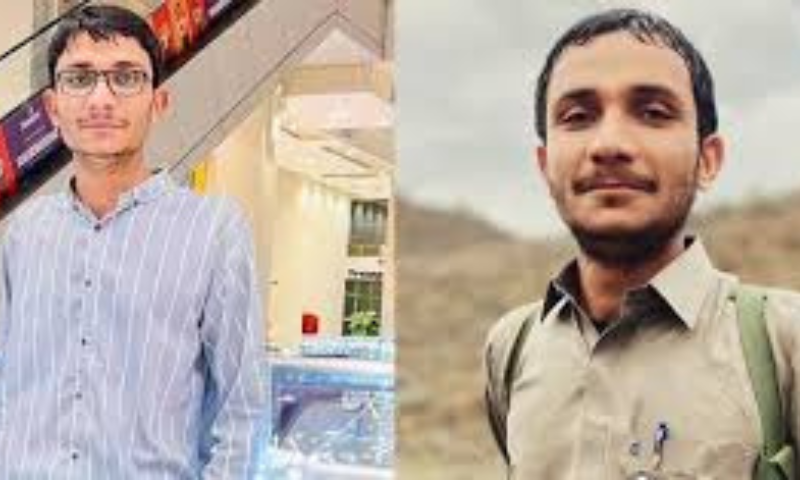
Salim Baloch, son of Abdul Sattar, was a resident of Turbat and a graduate of Punjab University. He was pursuing his MA at Punjab University on a government scholarship and later started working at the Turbat Municipal Corporation when he suddenly went missing in 2023.
For months, no one knew where he had gone.
Mahrang Baloch and the Human Rights Commission of Pakistan began protests, claiming that Salim Baloch had been forcibly disappeared by state institutions.
In August 2023, Mahrang Baloch shared an emotional video of Salim Baloch on social media in an effort to mobilise public attention around the missing person case.
She claimed that Salim Baloch had been dragged away in front of his mother and abducted, and that he was being held in custody.
Following the campaign, lawyer and activist Iman Mazari also questioned the state over Salim Baloch’s whereabouts in a social media post on August 4.
However, on February 22, the banned Baloch Liberation Army (BLA) itself stated that Salim Baloch had not been forcibly disappeared but had instead been undergoing militant training since November 2023.
According to the group, Salim Baloch later took part in a BLA attack on January 31 in which 37 innocent civilians were killed, including three children, their mother and a mosque imam.
The BLA later released a photograph of Salim Baloch, identified by the alias “Maulim”, and described him as a participant in the failed “Operation Herof 2.0”.
Authorities presented the case as evidence that the individual initially portrayed as a missing person had, in fact, been receiving militant training in the mountains.
Officials say Salim Baloch is not the first such case.
According to security sources, several militants killed in operations linked to the BLA had previously appeared on lists of missing persons circulated by rights groups and activists.
Authorities said that during the Mastung operation, militants Burhan Baloch and Hafeez Baloch were included in the list of missing persons maintained by the Baloch Human Rights Commission.
Similarly, Abdul Hameed and Rashid Baloch, who were later killed in security operations, had also appeared on those lists.
In 2025, during an operation in Kalat, militant Suheb Lango was killed, while Karim Jan — who was killed in the Gwadar attack in March 2024 — had also been listed among missing persons and used in anti-state narratives.
Authorities further said that Abdul Wadood Sattakzai, who was killed in the Naval Base attack and identified as the brother of BYC leader Gulzadi, had also been included in the list of so-called missing persons.
For years, the issue of missing persons in Balochistan has remained a major political and human rights debate.
According to security and state officials, organised campaigns by groups including the Baloch Human Rights Committee, Iman Mazari, and the Human Rights Commission of Pakistan have been used to influence and mislead young people.
Officials said that feelings of deprivation are exploited to recruit youth into militant organisations such as the BLA and BLF.
The case of University of Lahore student Sufian Kurd was also cited by authorities, who said that he, too, was influenced by BYC propaganda before later becoming involved with the BLA.
Security officials argue that narratives surrounding so-called missing persons are increasingly being used to justify militant activities.
Authorities further told that organisations such as the Baloch Human Rights Committee and Paank are functioning as soft fronts for the BLA.
Officials maintain that Pakistan’s fight against militancy in Balochistan is not only a security battle but also a struggle against what they describe as coordinated propaganda aimed at misleading the youth and distorting facts on the ground.
Authorities say the state remains committed to protecting innocent civilians, countering militancy and ensuring peace and stability in the province while exposing networks that allegedly exploit the issue of missing persons to advance extremist narratives.