Key Points
- Reverse migration is increasing as migrant labourers leave cities after job losses and affordability pressures
- Inflationary pressure linked to global energy disruptions has intensified labour unrest
- Government wage adjustments have not fully met worker expectations, sustaining discontent
ISLAMABAD: India is witnessing simultaneous labour disruptions across its major industrial corridors, where factory workers are demanding higher wages and improved working conditions, even as growing numbers of migrant labourers are leaving urban centres after job losses and rising living costs.
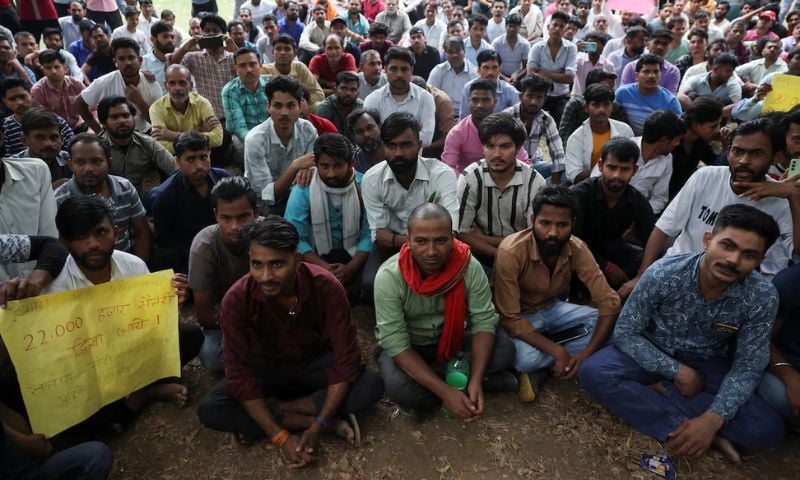
Across states such as Uttar Pradesh and Haryana, and surrounding manufacturing zones, thousands of workers have staged demonstrations over pay stagnation. In several cases, protests have escalated into clashes with law enforcement, highlighting deepening tensions between industrial labour and employers.
According to Reuters, protests in northern industrial regions intensified after workers argued that minimum wages had failed to keep pace with inflation, despite recent revisions by state governments.
In the industrial hub of Noida, demonstrations involving tens of thousands of factory workers led to shutdowns, arrests, and widespread disruption.
Workers said their monthly earnings—often around the equivalent of 10,000–11,000 Indian rupees (approximately $120 to $132)—were insufficient amid rising costs of housing, food, and energy, especially after the Middle East energy shock.
Al Jazeera reported that authorities used tear gas in some areas after protests turned violent, with vehicles torched and stone-pelting incidents recorded during sustained agitation.
A key driver of unrest has been the widening wage structure disparity across neighbouring states. Workers in Uttar Pradesh have demanded parity with the higher wage increases announced in Haryana following earlier demonstrations.
Economic analysts note that inflationary pressures linked to global energy disruptions have added to worker distress. Rising fuel costs have contributed to higher transport, food, and household expenses, further eroding real incomes.
Alongside wage protests, a parallel and quieter trend is emerging: reverse migration from cities to rural areas.
According to reporting by The Guardian, migrant labourers in urban centres such as Delhi have begun returning to their home villages as food prices and cooking fuel costs surge beyond affordability.
Workers interviewed by journalists described difficulties accessing basic meals and rising dependence on informal or unstable employment, prompting many to abandon city-based work opportunities altogether.
Labour experts say this dual pressure—urban wage unrest and rural return migration—signals a structural stress point in India’s informal and contract labour economy.
Many migrant workers, who form the backbone of manufacturing, construction, and services sectors, are now facing both job insecurity and declining real wages.
While governments in affected states have announced wage adjustments and worker welfare measures, unions argue these steps remain insufficient to offset the impact of rising inflation, jacking up the cost of living.
The developments underline a broader challenge for India’s industrial growth model: balancing competitiveness with adequate wage protection in a labour market increasingly shaped by contract work, cost pressures, and global economic shocks.