
Key Points
- Temporary ceasefire underpins improved investor sentiment
- Strait of Hormuz disruption remains a key risk factor
- Weekend talks seen as decisive for market direction
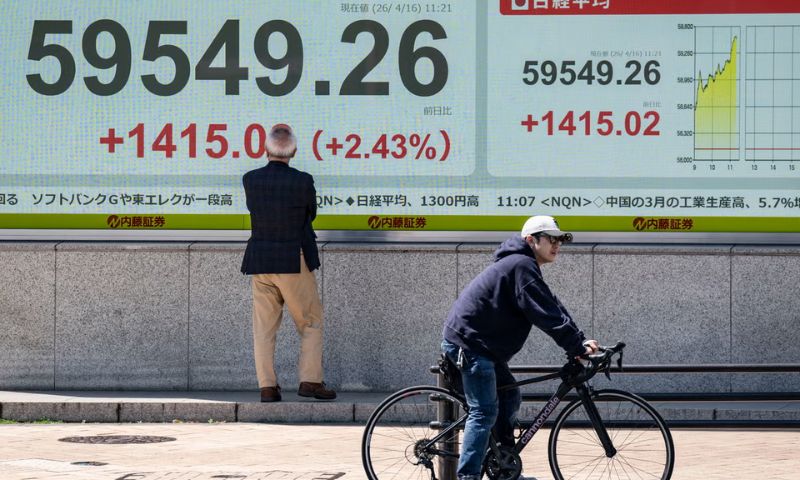
ISLAMABAD: Asian stock markets moved toward a second consecutive weekly gain on Friday, supported by expectations that ongoing Pakistan-led diplomatic efforts between the United States and Iran could produce a breakthrough, with oil prices slipping below the mark of a $100/barrel mark as geopolitical risk premiums eased.
Regional equities advanced across major markets, reflecting a shift in investor sentiment after weeks of volatility triggered by the conflict in the Middle East.
The improvement follows a temporary ceasefire agreed earlier this month, which has allowed space for renewed diplomatic engagement and raised expectations of a broader settlement.
The ceasefire, reached after weeks of escalation, has been central to stabilising global financial markets.
It marked a pause in hostilities that had disrupted energy flows and shaken investor confidence, particularly due to the closure of the Strait of Hormuz, a critical artery for global oil shipments.
Roughly one-fifth of the world’s oil supply passes through the route, making it a focal point for market sensitivity.
Oil prices, which had surged well above $100 earlier in the conflict, retreated as diplomatic signals strengthened.
Brent crude traded near $98 per barrel, and US West Texas Intermediate hovered in the low $90s, reflecting expectations that a potential agreement could ease supply disruptions and restore some stability to global energy markets.
The decline in oil prices has played a key role in lifting equity markets, particularly in Asia, where many economies are heavily dependent on imported energy.
Lower crude prices tend to reduce inflationary pressures and improve corporate margins, factors that have contributed to the recent rally in regional stocks.
The MSCI Asia-Pacific index has rebounded sharply in April, gaining more than 14 per cent after suffering steep losses in March at the height of the conflict.
The recovery highlights how quickly market sentiment has shifted in response to changing geopolitical expectations.
However, the rally has not been uniform. Energy-related shares have lagged behind broader market gains, reflecting the inverse relationship between oil prices and oil producers’ profitability.
In contrast, sectors such as manufacturing, transport, and consumer goods have benefited from easing input costs and improved outlooks.
Investors are also responding to signals from Washington and Tehran that talks could resume or intensify over the weekend, with Pakistan playing a facilitating role in hosting and mediating discussions.
The prospect of negotiations taking place in Islamabad has added a new dimension to the diplomatic landscape, positioning the city as a potential venue for a formal agreement.
Despite the improved tone, market participants remain cautious. Analysts note that the current optimism is largely contingent on the durability of the ceasefire and the outcome of upcoming talks. Any disruption in negotiations or renewed escalation could quickly reverse recent gains.
Global markets have already experienced sharp swings during the conflict, with equities falling and oil prices surging after supply disruptions. At one point, physical oil prices spiked significantly against the futures market level, reflecting uncertainty over actual supply conditions and expectations of future stability.
Currency markets have also responded to shifting risk sentiment. The US dollar, which had strengthened at the peak of the crisis tensions as a safe-haven asset, has softened as investors move back into riskier assets, including equities and emerging market instruments.
Meanwhile, policymakers continue to warn of broader economic risks. The International Monetary Fund has flagged the potential for slower global growth if the conflict persists and energy disruptions intensify, underscoring the high stakes associated with ongoing diplomatic efforts.
The coming weekend is widely seen as a critical moment for markets. A credible agreement or even a framework for continued negotiations could reinforce the current rally in equities and keep downward pressure on oil prices.
Conversely, a breakdown in talks could reignite volatility across asset classes.
For now, financial markets are reflecting cautious optimism, balancing the immediate relief provided by the ceasefire with the uncertainty surrounding a longer-term resolution.