The war between the United States, Israel, and Iran is no longer a contained conflict. It is evolving into a wider regional crisis — one that is reshaping military strategy, energy flows, and control over the Strait of Hormuz.
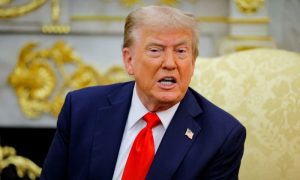
The US president has coupled talk of a deal “soon” with a threat to “obliterate” Iran’s electric plants, oil wells, and Kharg Island if the Strait of Hormuz is not reopened.
Iran, for its part, has dismissed US peace proposals as “unrealistic, illogical, and excessive”.
These positions reflect coercive diplomacy unfolding within an escalatory war.
The military picture has also worsened. Thousands of troops from the US 82nd Airborne Division have begun arriving in the region, expanding Washington’s operational options inside Iranian territory. Missile attacks on Israel have continued, including debris from an intercepted missile that struck facilities at Haifa’s oil refineries.
The conflict has also edged closer to NATO’s periphery. Türkiye says a ballistic missile from Iran entered its airspace and was shot down by NATO defences — the fourth such incident since the war began. In practical terms, this is no longer a contained Iran-Israel confrontation, but a widening regional conflict with broader security implications.
A Selectively Controlled Strait
The Strait of Hormuz is no longer simply open or closed — it is becoming a selectively administered chokepoint.
Iran informed the United Nations and the International Maritime Organization on March 24 that “non-hostile vessels” could transit if they coordinated with Iranian authorities. Since then, Tehran has allowed selected shipments to pass, including Pakistani-flagged vessels, Chinese container ships, Indian LPG tankers, and a Greek-operated tanker carrying Saudi crude.
At the same time, US officials have noted that maritime traffic continues, albeit unevenly.
The implication is clear: a politically filtered passage has emerged, controlled at Iran’s discretion.
This changes the meaning of Washington’s warnings. While the United States frames the issue as reopening the Strait, Iran appears to be redefining the terms — focusing on who transits, under what conditions, and with whose approval.
Diplomacy And Emerging Maritime Order
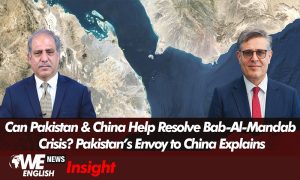
Pakistan’s recent diplomatic engagement reflects this shift.
Islamabad hosted talks with Saudi Arabia, Türkiye, and Egypt, where discussions reportedly included proposals to reopen Hormuz, including fee-based mechanisms and potential multilateral arrangements.
The conflict is therefore not only military — it is also a contest over the governance of a critical global waterway.
Energy Markets Under Strain
The energy impact remains severe despite signs of limited maritime passage.
Markets are not pricing in a near-term normalisation. Brent crude has surged above $116 per barrel and is on track for its largest monthly increase on record, while longer-term contracts remain elevated — signalling expectations of prolonged disruption.
The International Monetary Fund has described the situation as the largest disruption to global oil markets in history, citing estimates that roughly a quarter of global oil and a significant share of liquefied natural gas transit through the Strait.
G7 finance leaders have said they stand ready to take “all necessary measures” to stabilise markets, while the International Energy Agency has agreed to release record volumes from strategic reserves.
These responses underscore the scale of strain in the global energy system.
Shifting Energy Routes
Saudi Arabia has increased reliance on its East-West pipeline, now operating at full capacity, with exports redirected through the Red Sea.
This reduces Riyadh’s dependence on Hormuz, but does not eliminate broader risks. While some producers can reroute supplies, the wider Gulf energy system remains exposed, and global markets continue to feel the impact.
Pakistan’s Rising Diplomatic Role
Pakistan’s strategic importance has grown alongside the crisis.
Islamabad has been facilitating communication between Washington and Tehran, conveying proposals and positioning itself — alongside Türkiye — as a potential venue for negotiations.
Its engagement with Saudi Arabia, Türkiye, and Egypt has placed Pakistan at the centre of regional diplomacy, with international actors, including European leadership, seeking its assessment of developments.
This diplomatic activity comes as Pakistan simultaneously manages security challenges along its western border, underscoring the complexity of its strategic environment.
A Hybrid Phase Of War And Diplomacy
The conflict has entered a hybrid phase.
The United States continues to describe a limited campaign, yet is reinforcing its military presence and signalling readiness to escalate if diplomacy fails.
Iran, meanwhile, is rejecting key elements of US proposals while maintaining selective maritime flexibility, allowing it to preserve leverage and manage pressure.
Regional powers are attempting to prevent a temporary crisis from evolving into a lasting transformation of trade routes, risk calculations and control over maritime access.
Possible Scenarios
Four main scenarios appear most likely.
First, coercive bargaining continues, with limited maritime access, elevated oil prices and incremental diplomatic progress without a decisive breakthrough.
Second, diplomacy falters, followed by escalation — including expanded US-Israeli strikes on Iranian infrastructure and efforts to force broader access to Hormuz.
Third, the conflict widens regionally, with increased activity by allied groups, further incidents affecting neighbouring states and growing pressure on global shipping and security frameworks.
A large-scale US ground intervention remains less likely in the near term, although the current military buildup expands that option.
A Dangerous Phase
The conflict has entered a more dangerous phase. Diplomacy continues but remains fragile and conditional.
Control over the Strait of Hormuz is shifting from a binary question of closure to one of selective access and authority.
Energy markets remain under strain despite partial workarounds, and the broader strategic challenge lies in translating military pressure into a stable and credible political outcome.