TEHRAN: Iran has left the door open to renewed diplomacy with the United States, saying negotiations can resume if Washington abandons its pressure campaign, six months into a conflict that has destabilised the Middle East.
Iranian Foreign Minister Abbas Araghchi said on Friday that diplomacy was still possible but depended on the United States recognising that pressure would not force Tehran to change its position.
“Putting diplomacy back on track isn’t impossible. It hinges on US understanding of one simple fact: pressure doesn’t work,” Iranian Foreign Minister Abbas Araghchi posted on X on Friday.
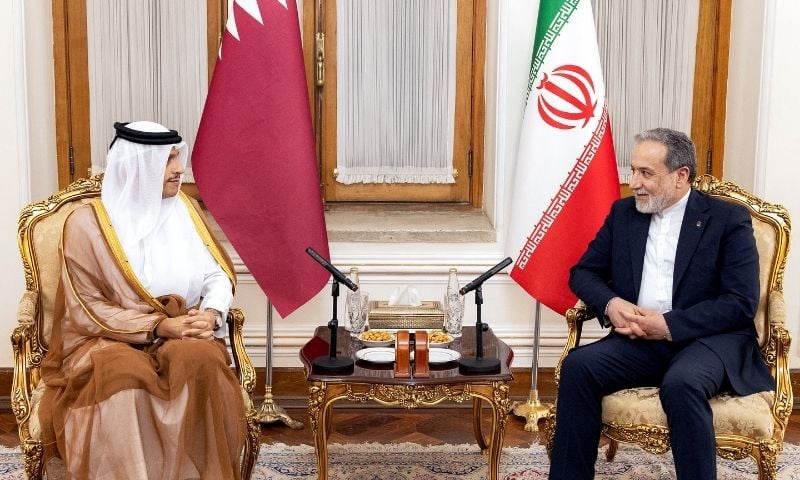
Araghchi said he “had creative discussions” with Qatari Foreign Minister Sheikh Mohammed bin Abdulrahman bin Jassim Al Thani.
Had creative discussions with H.E. the PM/FM of Qatar.
Putting diplomacy back on track isn’t impossible. It hinges on U.S. understanding of one simple fact: pressure doesn’t work. The U.S. should build trust, speak respectfully, acknowledge our rights, and uphold commitments. pic.twitter.com/9yQ2pOXe5R
— Seyed Abbas Araghchi (@araghchi) August 28, 2026
“The U.S. should build trust, speak respectfully, acknowledge our rights, and uphold commitments,” the Iranian foreign minister added.
Sheikh Mohammed visited Tehran on Thursday as Doha continued diplomatic efforts to de-escalate tensions between Iran and the US.
Diplomatic efforts involving mediators including Pakistan and Qatar have sought for months to end the conflict, which began with US and Israeli military action in late February.
A ceasefire was reached in April, followed by the signing of a memorandum of understanding in June aimed at paving the way for a final peace agreement. However, a comprehensive deal has yet to be reached.
Washington has since intensified economic pressure on Tehran, describing its campaign as “economic warfare”.
Efforts to revive diplomacy
Araghchi met his Qatari counterpart in Tehran on Thursday to discuss the Strait of Hormuz, which Iran closed at the start of the conflict.
ALSO READ: US ‘Punishing’ Iran Through Economic Pressure: Trump
The meeting followed a week of intensive diplomatic contacts between Iran, Oman and Pakistan aimed at addressing the dispute and creating conditions for renewed negotiations.
A US naval counter-blockade of Iranian ports has added pressure on Iran’s fuel supplies amid a shortfall in domestic production.
The April ceasefire ended the most intense phase of fighting, but sporadic attacks, particularly around the Strait of Hormuz, have continued to complicate efforts to reach a lasting settlement.
Iran demands US commitments
Iran has been holding talks with Oman over the future of the Strait of Hormuz, whose waters are shared by Iran and Oman.
Tehran has maintained that the strait will remain closed until Washington fulfils commitments under the June memorandum, including lifting the counter-blockade and removing sanctions.
“The US should build trust, speak respectfully, acknowledge our rights, and uphold commitments,” Araghchi said.
Iranian lawmaker Esmail Kowsari also warned on state television that if Washington failed to honour the memorandum, Iran would keep the Strait of Hormuz closed and could respond with offensive action.
China factor
The US campaign to isolate Iran economically could face difficulties because of China’s continuing trade relationship with Tehran.
China has defended its cooperation with Iran and said it would protect its interests.
Beijing remains an important buyer of Iranian crude, providing Tehran with a major source of revenue through trade routes that do not depend on the Strait of Hormuz.
US Treasury Secretary Scott Bessent has warned that “no one is above the reach of US sanctions”, including Chinese banks that conduct business with Iran.
The issue could become increasingly important ahead of an expected visit by Chinese President Xi Jinping to Washington in September.