Key Points
- Pakistan seeks a further sovereign credit rating upgrade
- Government aims to secure longer-term financing without increasing external debt
- OPEC Fund discussions cover motorway, railway and power infrastructure projects
ISLAMABAD: Pakistan has asked Moody’s to identify the steps needed for a further sovereign credit rating upgrade as the government seeks cheaper, longer-term financing and stronger economic fundamentals, the Finance Ministry said on Thursday.
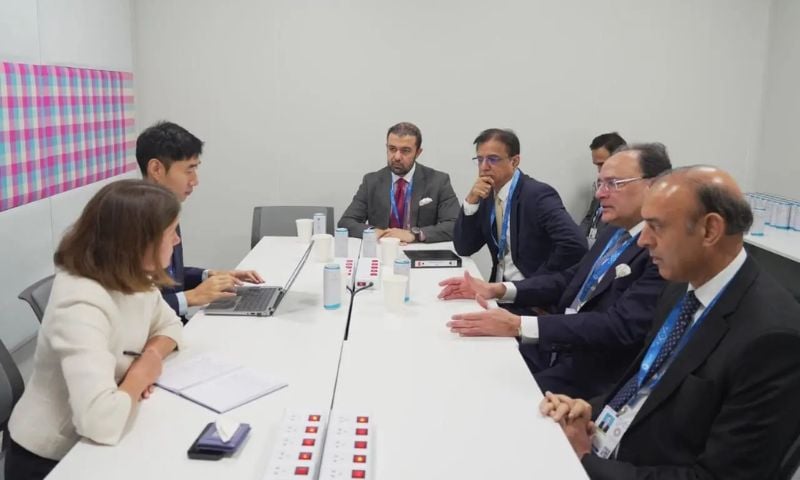
Finance Minister Muhammad Aurangzeb met Moody’s representatives on the sidelines of the International Monetary Fund (IMF) and World Bank annual meetings in Bangkok to discuss Pakistan’s economic outlook, recent rating improvements and renewed access to international capital markets.
The finance ministry said the discussions covered improvements in fiscal and external indicators, rising foreign exchange reserves, a contained current account deficit and reduced forward liabilities of the State Bank of Pakistan (SBP), the central bank.
Aurangzeb outlined the government’s efforts to replace costly, short-term borrowing with financing of longer maturities without increasing the country’s external debt stock.
He also reaffirmed the government’s commitment to structural reforms and sustainable, export-led growth beyond the IMF programme.
Pakistan seeks Moody’s review
The minister sought Moody’s views on the measures required to secure a stronger rating and the appropriate balance between political risks and economic performance in its assessments.
READ ALSO: Pakistan Eyes Cheaper Finance Without Adding to Debt
Earlier this month, Aurangzeb said Pakistan expected global credit rating agencies to upgrade its sovereign rating to B+ by the first quarter (July-September) of fiscal year 2027-28.
S&P Global Ratings has maintained Pakistan’s rating at B with a stable outlook since July 2026, while Moody’s upgraded the country to B3 from Caa1, also with a stable outlook, in August 2026.
A higher sovereign rating can improve Pakistan’s access to international capital markets and reduce borrowing costs, although actual financing terms would also depend on market conditions and investor confidence.
Pakistan is seeking to diversify its financing sources while managing debt-servicing pressures and maintaining external stability.
In a separate meeting in Bangkok, Aurangzeb discussed infrastructure financing with Dr Abdulhamid Alkhalifa, president of the OPEC Fund for International Development, an international development finance institution.
The minister highlighted his country’s economic stabilisation, progress under the IMF programme and renewed access to international capital markets.
He welcomed the fund’s willingness to expand trade and project financing support for the country.
Pakistan infrastructure financing
The two sides discussed financing for the M6 motorway, including the approved first tranche, the pending loan agreement and subsequent disbursements.
They also identified the modernisation of the Main Line-1 (ML-1) railway and power transmission infrastructure as priority areas for cooperation.
Both sides stressed the need to accelerate approvals and improve coordination to ensure timely project implementation. Regional peace and stability also featured in the discussions.
Aurangzeb thanked Alkhalifa for inviting him to visit the OPEC Fund, with the possibility of signing the project agreement during the visit.
Pakistan seeks financing for major infrastructure projects while limiting additional debt pressures.
The pace of project approvals, the finalisation of loan agreements and the availability of longer-term funding will be important to translating the discussions into concrete investment.
Islamabad, which has relied on international financial support to meet external financing needs, is pursuing economic reforms across fiscal discipline, strengthening foreign exchange reserves and supporting export-led growth.
Sovereign credit ratings assess a government’s capacity to meet its debt obligations and influence the terms on which it can borrow from international investors.
However, sustained improvements in economic performance, external stability and public finances will be essential for Pakistan to secure further upgrades.