
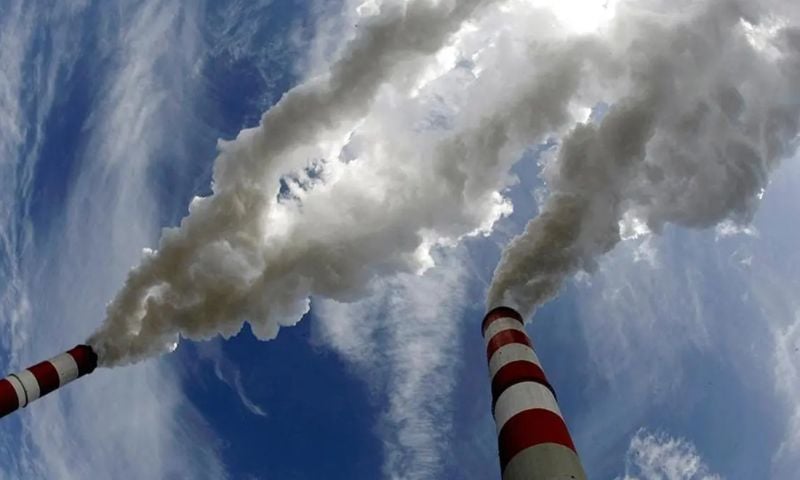
LONDON: The United States accounted for roughly one-third of the increase in global carbon dioxide (CO₂) emissions in 2025, according to a new international energy report, highlighting a significant setback in efforts to reduce greenhouse gas emissions.
The report, produced by the Energy Institute in partnership with Ember, Kearney and KPMG, found that higher natural gas prices prompted many US electricity producers to switch back to coal-fired power generation, resulting in a sharp rise in coal consumption and emissions.
US coal consumption increased by 10 per cent during 2025, reversing recent progress towards cleaner energy sources and making the country the single largest contributor to the global rise in carbon emissions.
Globally, energy-related carbon emissions increased by 1.1 per cent to 35,806 million metric tonnes of CO₂. More than one-third of this overall increase originated from the United States, despite continued growth in renewable energy generation worldwide.
The report also noted that North America broke a decade-long trend of declining emissions, with regional carbon output increasing instead of continuing the average annual fall of 0.7 per cent recorded over the previous ten years.
Global energy demand continued to expand during 2025, with total energy supply rising by 1.7 per cent compared with the previous year.
Renewable energy accounted for the largest share of this growth, with renewable electricity generation increasing by 9.1 per cent. Solar power recorded the strongest performance, surging by 30 per cent year-on-year.
Despite the rapid expansion of renewable energy, worldwide electricity demand grew even faster, rising by 3 per cent.
The increase was driven by the accelerating adoption of electric vehicles, expanding data centres and the growing energy requirements of artificial intelligence technologies.
The report also highlighted regional differences in emissions trends. Europe’s energy-related carbon emissions increased by 0.5 per cent, while China recorded a comparatively modest rise of 0.7 per cent during the year.
Global oil consumption climbed by 1.3 per cent to reach 103 million barrels per day in 2025, compared with growth of 1.1 per cent in the previous year. Oil production expanded at an even faster pace, increasing by 3.5 per cent.
In China, demand for petrol and diesel continued to decline, extending a trend first observed in 2024 as the country accelerates its transition towards cleaner transport and energy systems.
Meanwhile, natural gas demand growth was concentrated in Europe, North America and the Middle East.
The report found that Europe and India depended on imports for nearly half of their gas supplies, underlining their continued reliance on international energy markets.
The findings underscore the challenges facing governments in balancing energy security, affordability and climate commitments, even as investment in renewable energy continues to reach new highs.