


Key Points
- Turkish Vice President Cevdet Yilmaz says US–Iran negotiations are complex and will take time to conclude.
- Yilmaz stresses that a comprehensive settlement is needed to ensure free navigation through the Strait of Hormuz.
- Iran confirms it is reviewing new US proposals delivered via Pakistan’s army chief acting as an intermediary.
- Tehran insists it will not respond until Washington softens “excessive demands” and aligns with regional realities.
- Iran warns it will maintain control over the Strait of Hormuz until the conflict fully ends and lasting peace is achieved.
- US President Donald Trump says talks with Iran are progressing well and “good conversations” are ongoing.
- Trump accuses Iran of attempting to escalate tensions over the Strait of Hormuz, while asserting the US will not be “blackmailed.”
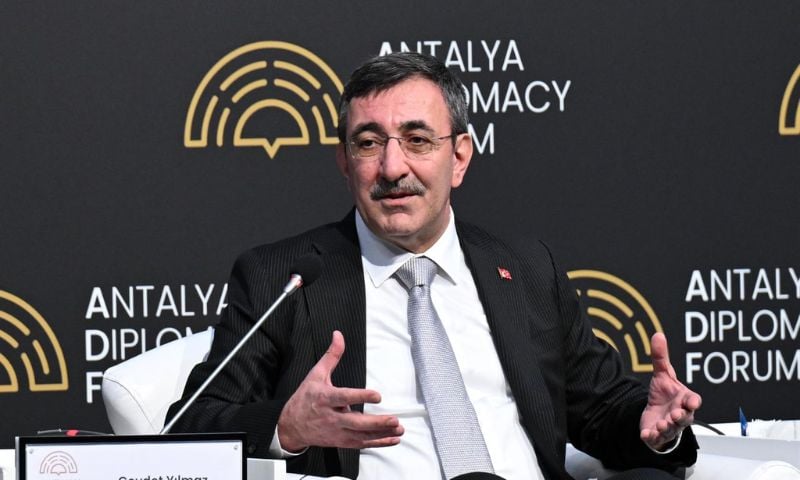
ISTANBUL: US–Iran negotiations are expected to continue over an extended period due to the complexity of outstanding issues, according to Turkey’s vice president Cevdet Yilmaz, who has played a supporting diplomatic role in regional mediation efforts.
Speaking to The Associated Press, Yilmaz said that while there is international desire for rapid progress, a comprehensive settlement between Washington and Tehran cannot be achieved quickly given the scale and sensitivity of the matters under discussion.
“We would all like these talks to end all at once, in a very short time. But we need to be realistic. These comprehensive negotiations will take some time,” he said, emphasising that multiple “complex issues” remain unresolved.
Yilmaz also indicated that a durable agreement between Iran and the United States would be essential to guarantee free maritime navigation through the Strait of Hormuz, one of the world’s most critical energy shipping routes.
He suggested that lasting peace and an end to ongoing hostilities would be the key factor in ensuring maritime security. “What is the root cause here? The ongoing war. Therefore, the end of this war will provide the greatest guarantee,” he added.
Iran reviewing US proposals
Meanwhile, Iran’s Supreme National Security Council said it is currently assessing new proposals put forward by the United States. According to the council, Pakistan’s Chief of Defence Forces Field Marshal Syed Asim Munir acted as an intermediary and delivered the proposals during a recent visit to Tehran.
The contents of the proposals have not been made public, and Iranian officials confirmed that no formal response has yet been issued. However, Tehran signalled that further engagement would depend on Washington abandoning what it called “excessive demands” and aligning its position with “realities on the ground”.
The council also stated that Iran would maintain control over maritime activity in the Strait of Hormuz until the conflict fully ends and a sustainable peace is achieved. It said it would monitor vessel movements, issue transit documentation and impose tolls on shipping passing through the waterway.
In addition, Iranian authorities accused the United States naval presence of violating the ceasefire arrangement, declaring that the strait would not be reopened until such actions ceased.
Trump says talks progressing
Separately, US President Donald Trump said discussions with Iran were “going well” and suggested that further clarity could emerge soon. “We have very good conversations going on,” Trump said during a White House event on Saturday, where he signed an executive order aimed at expediting the Food and Drug Administration’s review of psychedelic-based treatments for mental health conditions.
Although he did not respond to questions on Iran, Trump remarked that Tehran had attempted to escalate tensions regarding maritime access. “Iran got a little cute… they wanted to close up the strait again,” he said, referring to the Strait of Hormuz. He added, “They can’t blackmail us,” reinforcing Washington’s firm stance amid ongoing diplomatic engagement.