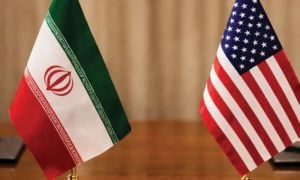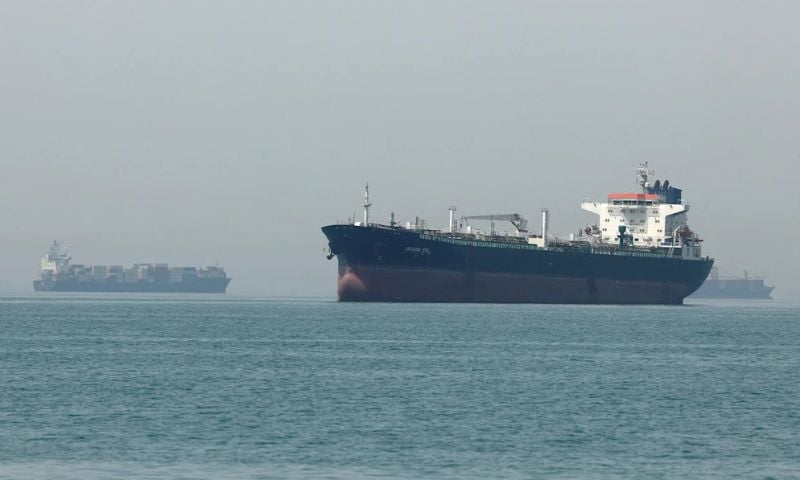



WASHINGTON: The United States and Iran have agreed in principle to a preliminary deal to reopen the Strait of Hormuz in exchange for Tehran’s commitment to dispose of its highly enriched uranium, according to a US official cited by The New York Times on Sunday.
The agreement has not yet been signed and remains subject to final approval by US President Donald Trump and Iran’s Supreme Leader Mojtaba Khamenei, the official said, as cited by The New York Times.
The method for disposing of Iran’s highly enriched uranium was still being negotiated, The New York Times reported, citing a US official.
The proposed deal does not address Iran’s missile stockpile nor include a moratorium on uranium enrichment, the US official said, adding that these issues were expected to be handled in future rounds of talks.
The U.S. and Iran have agreed in principle to a deal that would reopen the Strait of Hormuz with a commitment from Iran to dispose of their highly enriched uranium, a U.S. official said on Sunday. The official added that the deal has not yet been signed. https://t.co/qCxlKWLVrd
— The New York Times (@nytimes) May 24, 2026
According to a Fox News report on Sunday, the official suggested that the US could consider “significant accommodations” on sanctions relief if Iran agreed to make similar concessions regarding its enriched uranium stockpile.
“Our plan is to deal with all of their stockpile of the enriched material,” the official said, adding that Washington sees Tehran making “serious accommodations” not previously seen in earlier negotiations, according to the Fox News report.
According to a separate CBS News report, a US official stated that the administration viewed the new draft agreement as stronger than the 2015 nuclear deal reached under former US President Barack Obama.
US, Iran must take time to finalise deal
President Trump on Sunday said that the US and Iran negotiators must take their time to finalise a Pakistan-mediated agreement, stressing that negotiations are progressing in an “orderly and constructive manner”.
In a statement posted on his Truth Social platform, Trump said he had instructed his representatives not to rush into any deal, adding that “time is on our side” as Pakistan-mediated negotiations between Washington and Tehran continue.
The US President said that relations between the US and Iran were becoming “more professional and productive”.
Trump criticised the 2015 Iran nuclear deal, calling it “one of the worst deals ever made” and blaming the Obama administration for what he described as a “direct path” for Iran to develop a nuclear weapon.
The US President said current negotiations under his administration were proceeding in an “orderly and constructive manner” and stressed there was no rush to reach a final agreement.
Trump reiterated that Iran must not develop or acquire a nuclear weapon, while noting that US relations with Tehran were improving in tone.
— Rapid Response 47 (@RapidResponse47) May 24, 2026
Trump dismisses criticism of talks with Iran
In another post on Truth Social later on Sunday, Trump defended the ongoing negotiations with Iran and criticised the 2015 nuclear agreement reached under former president Barack Obama.
“If I make a deal with Iran, it will be a good and proper one, not like the one made by Obama,” Trump said, claiming the previous agreement had provided Iran with “massive amounts of cash” and “a clear and open path to a nuclear weapon”.
He said the proposed deal being negotiated by his administration was “the exact opposite”, but added that it had not yet been fully negotiated.
“It isn’t even fully negotiated yet,” Trump wrote, while dismissing criticism of the talks from political opponents.
“Unlike those before me who should have solved this problem many years ago, I don’t make bad deals,” he added.
— Rapid Response 47 (@RapidResponse47) May 24, 2026
US-Iran deal likely in next few hours
On Sunday, US Secretary of State Marco Rubio said the US and Iran could strike a deal as early as Sunday. Washington and Tehran are close to reaching a Pakistan-mediated agreement to end months of Middle East conflict.
Rubio said Washington and Tehran were nearing an agreement following weeks of indirect negotiations facilitated by Pakistan after an April 8 ceasefire brokered by Islamabad.
“I do think perhaps there is the possibility that in the next few hours the world will get some good news,” Rubio told reporters during a visit to India.
Rubio’s remarks came after US President Donald Trump said a major agreement involving Iran and several regional countries had been “largely negotiated”, with final discussions currently under way before a formal announcement.
Later, in an interview with The New York Times on Sunday, Rubio said that an agreement with Iran had garnered regional support but a nuclear deal couldn’t be achieved “in 72 hours.”
“We’re not kicking it till later. Nuclear talks are highly technical matters. You can’t do a nuclear thing in 72 hours on the back of a napkin,” Rubio told The New York Times in a brief interview.
“So right now, we have seven or eight countries in the region that are endorsing this approach, and we’re prepared to move forward on this approach,” he said.
Trump holds talks with Pakistan, Middle East leaders
Earlier, Trump said he held a high-level telephone conversation from the Oval Office with a number of Middle Eastern and regional leaders to discuss Iran and a broader memorandum of understanding aimed at promoting peace and stability in the region.
Trump said that held talks with Saudi Crown Prince and Prime Minister Mohammed bin Salman, UAE President Sheikh Mohammed bin Zayed Al Nahyan, Qatar’s Emir Sheikh Tamim bin Hamad Al Thani, Pakistan’s Chief of Army Staff and Chief of Defence Forces Field Marshal Syed Asim Munir, Turkish President Recep Tayyip Erdoğan, Egyptian President Abdel Fattah el-Sisi, Jordan’s King Abdullah II and Bahrain’s King Hamad bin Isa Al Khalifa.
The US President said the discussions focused on Iran and a wider regional peace framework involving multiple countries.
“An agreement has been largely negotiated, subject to finalisation between the United States of America, the Islamic Republic of Iran, and the various other countries,” he stated.
— Rapid Response 47 (@RapidResponse47) May 23, 2026
Pakistan ready to host next round of US-Iran talks
Meanwhile, Pakistan’s Prime Minister Shehbaz Sharif has reaffirmed Pakistan’s commitment to ongoing regional peace efforts following a high-level telephone conversation led by President Trump with several leaders from the Middle East and South Asia.
PM Sharif expressed hope that Pakistan would host the next round of Iran-US talks “very soon” as he praised President Donald Trump for his peace efforts and ongoing diplomatic engagement.
In a statement shared on X, Prime Minister Sharif described the discussions as “very useful and productive”, saying they provided an important platform for consultations on the evolving regional situation and possible pathways towards long-term stability.
I congratulate President Donald Trump on his extraordinary efforts to pursue peace and for holding a very useful and productive telephone call earlier today, with the leaders of Saudi Arabia, Qatar, Turkiye, Egypt, the UAE, Jordan and Pakistan. Field Marshal Syed Asim Munir…
— Shehbaz Sharif (@CMShehbaz) May 24, 2026
Prime Minister Sharif noted that Pakistan was represented during the discussions by Chief of Army Staff and Chief of Defence Forces Field Marshal Syed Asim Munir, whose role he praised for contributing to the wider diplomatic process.
The prime minister’s remarks came shortly after Trump stated that a broad understanding with Iran had largely been negotiated, while final details were still under discussion.
Pakistan’s mediation efforts
Pakistan is playing a crucial mediator role in the talks between Washington and Tehran.
US leaders have repeatedly acknowledged Islamabad’s involvement in facilitating negotiations between Washington and Tehran.
On Saturday Field Marshal Munir concluded a “highly productive” visit to Tehran after holding high-level meetings with Iranian leaders as part of ongoing mediation efforts.
During the visit, the Field Marshal held high-level engagements with Iranian leadership as part of Pakistan’s ongoing mediation efforts aimed at promoting de-escalation and constructive engagement, amidst the regional tensions that have simmered after the ceasefire on 8th April, 2026, ISPR said in a statement.
Field Marshal Munir held meeting with Iranian President Dr. Masoud Pezeshkian, Speaker of the Iranian Parliament Mohammad Bagher Ghalibaf, Iranian Foreign Minister Abbas Araghchi, and Iranian Interior Minister Eskandar Momeni, ISPR said.
The discussions remained focused upon expediting the consultative process underway to support peace and stability in the region and to reach to a conclusive agreement.
The engagements were held in a positive and constructive environment and contributed meaningfully towards the mediation process, ISPR said. The intensive negotiations over the last twenty four hours have resulted in encouraging progress towards a final understanding.
The Iranian leadership appreciated Pakistan’s sincere and constructive role in facilitating dialogue and promoting peaceful settlement of regional issues.