Key Points
- The US investment is being routed through the International Development Finance Corporation via TechMet, not directly by South Africa.
- The Phalaborwa project will extract rare earths from 35 million tonnes of mining waste (phosphogypsum) rather than traditional ore.
- Extraction is expected to begin in 2028, with construction of the processing plant set for early 2027.
- The project is projected to operate for around 16 years once production starts.
- Developers plan to power up to 90% of operations using renewable energy sources.
- The US is also funding other African critical mineral projects, including a feasibility study in Mozambique and the Lobito Corridor rail link.
PHALABORWA, South Africa: The United States has pledged a $50 million investment in South Africa’s Phalaborwa Rare Earths Project, moving ahead with strategic mineral cooperation despite a significant downturn in diplomatic relations between the two countries.
The investment is being channelled through the US government’s International Development Finance Corporation (DFC) and supports an ambitious initiative to extract rare earth elements from industrial mining waste at a disused chemical processing site in Phalaborwa.
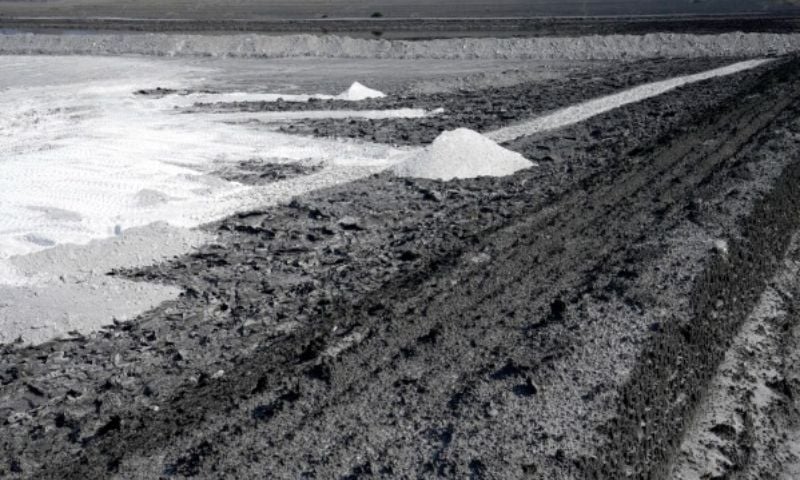
The project is focused on two massive sand-like dunes composed of approximately 35 million tonnes of phosphogypsum, a byproduct of phosphate rock processing used in fertiliser production, according to AP.
Rare earth elements, though relatively abundant in nature, are difficult and costly to extract due to their low concentration. They are essential components in a wide range of advanced technologies, including electronics, robotics, electric vehicles, wind turbines, and defence systems.
The Phalaborwa Rare Earths Project is being developed by Rainbow Rare Earths, with the DFC’s investment routed via TechMet, a company specialising in securing critical mineral supplies for Western economies. The South African government does not hold a direct stake in the project.
The funding commitment was originally made in 2023 during the administration of former US President Joe Biden. However, the current Trump administration has continued to support the initiative despite broader diplomatic tensions, including an executive order issued earlier this year halting most US financial assistance to South Africa following strained bilateral relations.
Even so, Washington has maintained that strategic economic interests take precedence in certain sectors. The DFC has described its involvement as part of a wider effort to unlock Africa’s mineral resources while reinforcing US strategic priorities and reducing dependence on China, which currently dominates global rare earth supply chains.
President Donald Trump has prioritised expanding US access to critical minerals, describing them as essential for national security and industrial competitiveness. The administration has also announced plans to deploy nearly $12 billion to develop a strategic reserve of such materials.
Rainbow Rare Earths chief executive George Bennett said the company expects its output to primarily serve US markets, particularly industries linked to defence manufacturing. The project aims to extract key rare earths such as neodymium, praseodymium, dysprosium and terbium, all of which are used in high-performance magnets and advanced engineering applications.
According to the company, extraction from the Phalaborwa site is scheduled to begin in 2028, with construction of the processing facility expected to commence in early 2027. The project is projected to operate for around 16 years.
Experts note that the project is unusual in its approach, as it focuses on extracting minerals from mining waste rather than traditional ore bodies. Neha Mukherjee, research manager at Benchmark Mineral Intelligence, described it as an experimental but potentially low-cost operation, though she cautioned that its long-term viability remains uncertain. She also highlighted the broader global supply challenge, noting the shortage of non-Chinese rare earth projects capable of meeting rising demand.
The project is also expected to incorporate up to 90 per cent renewable energy in its operations, a feature that developers say could significantly reduce production costs compared with conventional rare earth mining. Company officials argue that much of the expense in traditional processing comes from energy-intensive heating stages, which are reduced in this approach.
Industry observers say the United States is actively seeking to close the gap with China in the critical minerals sector. Patience Mususa, a mining specialist at the Nordic Africa Institute in Sweden, said Washington is “trying to catch up in terms of investment in mining” across Africa, where Chinese firms remain dominant.
The Phalaborwa initiative is part of a broader US strategy that includes investments in other African mining projects. In February, the US Trade and Development Agency agreed to fund a $1.8 million feasibility study for a rare earths project in Mozambique.
Additionally, Washington continues to support infrastructure-linked mineral access initiatives such as the Lobito Corridor, a major rail project intended to connect mineral-rich regions of the Democratic Republic of Congo and Zambia to Angola’s Atlantic coast, facilitating exports to global markets.
Beyond Africa, the Trump administration has also pursued critical minerals agreements in other regions, including Ukraine, and has shown strategic interest in rare earth deposits in Greenland as part of its broader resource security agenda.