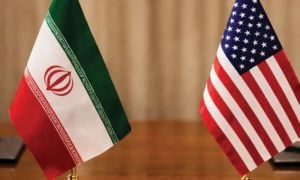



WASHINGTON: The US and Iranian negotiators have reached a tentative agreement to extend the ceasefire for 60 days and begin negotiations on Iran’s nuclear programme, the Associated Press reported citing a US official.
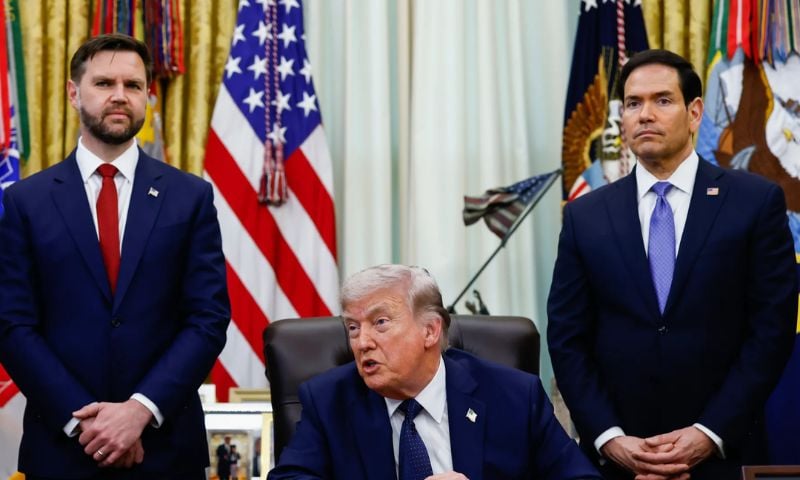
The official, told US media outlet on condition of anonymity that President Donald Trump has yet to approve the proposed memorandum of understanding.
The tentative agreement worked out by the two sides comes at a moment when the ceasefire between the US and Iran appeared to be wavering.
Axios first reported details of the tentative agreement.
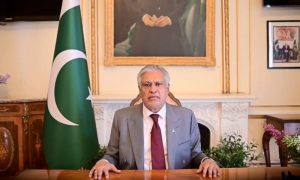
Meanwhile, Pakistan’s Deputy Prime Minister and Foreign Minister Ishaq Dar will visit Washington on Friday to meet US Secretary of State Marco Rubio for talks on regional and global developments, Pakistan’s Foreign Ministry said on Thursday.
Pakistan has emerged as a key intermediary in ongoing efforts to ease tensions between the United States and Iran.
On April 8, Pakistan brokered a ceasefire between the US and Iran and intensified mediation efforts to permanently end the conflict through negotiations.
Last month, Pakistan hosted direct talks between the US and Iranian negotiators in Islamabad.
The Islamabad Talks concluded without reaching a final agreement; however, they paved the way for diplomacy to permanently end the conflict.
Earlier on Thursday, the US military accused Iran of breaching the ceasefire after Kuwait reported coming under attack following an American strike on Iran The incident marked the latest escalation threatening efforts to secure a broader end to the conflict.
US Central Command said Kuwait intercepted missiles fired from Iran late Wednesday, and military officials called the attack on one of America’s top allies in the Persian Gulf an “egregious ceasefire violation.”
Kuwait had earlier announced an attack on its territory, and Iran said it had retaliated for strikes earlier in the week by firing on a US base in a Gulf state it did not name. The Kuwaiti Foreign Ministry condemned Iran for what it called “blatant aggression.”
The exchange came after US officials said late Wednesday that American forces had carried out additional strikes on Iran, including the downing of four one-way attack drones deemed a threat near the Strait of Hormuz.
According to the officials, US forces also struck an Iranian ground-control station in Bandar Abbas that was preparing to launch a fifth drone.
Washington and Tehran have repeatedly accused each other of breaching the seven-week ceasefire, exchanging strikes throughout the week while continuing diplomatic negotiations.
Despite the flare-ups, both sides have stopped short of returning to full-scale conflict. US President Donald Trump has maintained that his administration is making progress in the talks.
On Monday, the United States said it carried out “self-defence” strikes targeting missile launch sites and minelaying boats in southern Iran.
Following the latest American strikes, Iran’s paramilitary Revolutionary Guard confirmed an attack near Bandar Abbas International Airport. In a statement carried by the state-run IRNA news agency, the force said it had launched a retaliatory strike on the airbase used to carry out the assaults, though it did not identify the location of the base.
According to the Associated Press, Trump is seeking an agreement that would reopen the Strait of Hormuz, a critical waterway through which roughly one-fifth of the world’s traded oil and natural gas previously passed. He is also pushing for Iran to relinquish its stockpile of highly enriched uranium.
For its part, Iran is demanding the lifting of economic sanctions and the release of frozen assets to help revive its battered economy. Tehran has also insisted that any agreement must include an end to Israel’s military operations in Lebanon against Hezbollah.