


LONDON: The United Kingdom has deployed a new low-cost anti-drone weapon system on Royal Air Force (RAF) fighter jets operating in the Middle East, as regional tensions and drone threats continue to escalate.
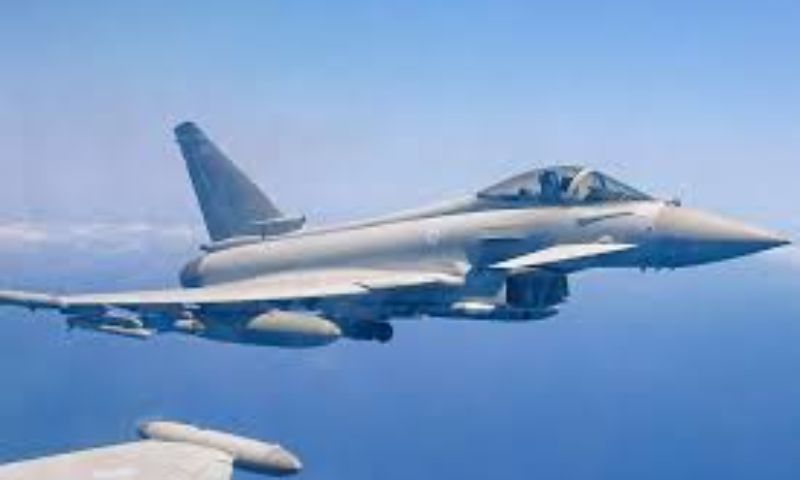
In a statement issued on Saturday, the UK Ministry of Defence announced that the Advanced Precision Kill Weapon System (APKWS) has been integrated into RAF Typhoon aircraft to improve the military’s ability to intercept hostile drones and aerial threats more economically.
The APKWS uses laser-guided technology to convert unguided rockets into precision weapons, enabling RAF jets to neutralise enemy drones at significantly lower costs than traditional air-to-air missiles.
British authorities said the system had already been deployed operationally in the Middle East, with RAF Typhoon jets from 9 Squadron carrying out missions aimed at protecting British citizens, military assets and regional allies.
The deployment follows months of heightened instability across the Middle East, including drone and missile attacks linked to the ongoing regional conflict involving Iran and several Gulf states. Energy infrastructure and military facilities have been among the key targets in recent attacks.
According to the Ministry of Defence, the new system moved from testing to active deployment in less than two months through rapid collaboration with defence firms BAE Systems and QinetiQ.
A successful strike against a ground target was conducted in March, followed by air-to-air trials in April carried out by RAF pilots from the 41 Test and Evaluation Squadron. Officials said the tests confirmed the system’s effectiveness against drone threats.
UK Defence Readiness and Industry Minister Luke Pollard described the rapid deployment as a major achievement, saying the system would enable the RAF to counter larger numbers of drones while reducing operational costs.
He added that RAF Typhoon jets remain central to Britain’s air defence strategy, supporting NATO operations in Europe and protecting partners in the Middle East.
BAE Systems Air sector Managing Director Simon Barnes said the new capability highlighted the versatility of the Typhoon aircraft and reinforced its role in regional security operations.
QinetiQ Chief Executive Steve Wadey said the company’s engineering and testing support had helped deliver urgent battlefield capabilities to UK forces and allied partners.
The Ministry of Defence said RAF aircraft have flown more than 2,500 operational hours in the Middle East since the regional conflict intensified, equivalent to over three months of continuous defensive missions.
Alongside the Typhoon deployment, Britain is also maintaining several ground-based and helicopter-based air defence systems across the Gulf region.
These include the Sky Sabre system in Saudi Arabia, the Lightweight Multirole Missile system in Bahrain, and the Rapid Sentry and ORCUS systems in Kuwait.
The announcement comes shortly after the UK signed a multi-million-pound contract for Skyhammer interceptor missiles designed to counter Shahed-style drones.
Earlier this year, London also committed more than £650 million to upgrade the RAF’s Typhoon fleet, extending its operational service into the 2040s while supporting more than 1,500 jobs nationwide.
The British government has pledged the largest sustained increase in defence spending since the end of the Cold War, aiming to raise military expenditure to 2.6 per cent of GDP from 2027.