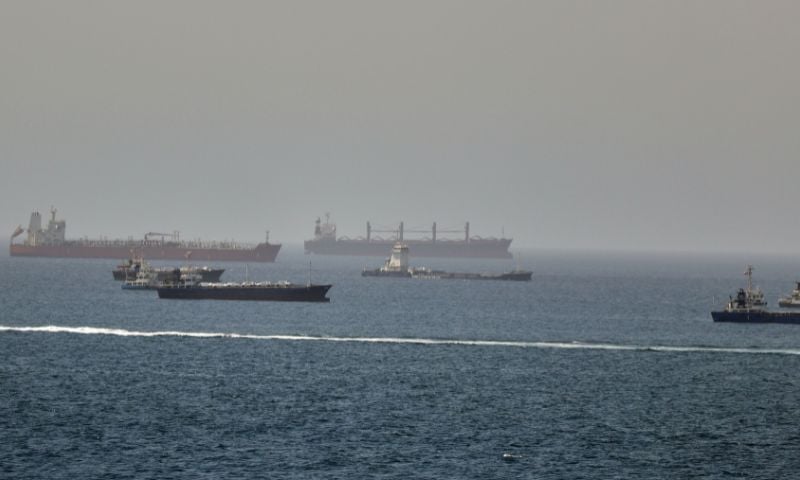
LONDON: The United Kingdom Maritime Trade Operations (UKMTO) has maintained its threat assessment for the Strait of Hormuz at the highest level, citing heightened regional tensions and an elevated risk to commercial shipping.
The warning comes amid the latest escalation between the United States and Iran, raising concerns over the safety of vessels transiting one of the world’s most strategically important maritime chokepoints.
The Strait of Hormuz serves as a vital gateway for global energy supplies, with a significant share of the world’s crude oil and liquefied natural gas exports passing through the narrow waterway each day.
Any disruption to shipping in the area could have far-reaching implications for international trade and global energy markets.
UKMTO has advised ship operators and maritime stakeholders to remain vigilant, closely monitor the security situation, and follow all recommended safety measures while operating in the region.
JMIC Advisory Note: 013-26
Click here to view the full advisory note⤵️https://t.co/mCeqf5ZFVr#MaritimeSecurity #MarSec pic.twitter.com/z3fKAMwjgJ
— UKMTO Operations Centre (@UK_MTO) July 10, 2026
US, Iran trade fresh strikes
Earlier, the United States and Iran exchanged fresh military strikes with Washington saying it hit 90 Iranian military targets and Tehran launching retaliatory attacks against US assets and regional allies, while commercial shipping through the Strait of Hormuz dropped dramatically amid escalating security fears.
The US Central Command (CENTCOM) said it carried out strikes on 90 Iranian military targets, including air defence systems and logistics infrastructure along Iran’s coastline, saying the operation was intended to further degrade Iran’s ability to threaten commercial shipping in the Strait of Hormuz.
Also Read: US Military Says 800 Vessels Safely Transited Strait of Hormuz Since May
Pakistan intensifies diplomatic efforts
Meanwhile, mediator Pakistan has intensified diplomatic efforts to de-escalate renewed military escalation between the United States and Iran and bring both sides back to negotiations under the Islamabad Memorandum of Understanding (MoU) framework to permanently end the conflict.
The Islamabad MoU was signed on June 18 by US President Donald Trump, Iranian President Masoud Pezeshkian and Prime Minister Shehbaz Sharif after Pakistan brokered a ceasefire between Washington and Tehran.
Under the Islamabad MoU, the US and Iran committed to halt military operations, reopen the Strait of Hormuz to commercial shipping and negotiate a comprehensive agreement covering Iran’s nuclear programme, US sanctions and a permanent ceasefire within 60 days.
Pakistan’s Chief of Defence Forces and Chief of Army Staff Field Marshal Syed Asim Munir held a telephone conversation with Iranian Foreign Minister Abbas Araghchi on Thursday evening, Iran’s state-run IRNA news agency reported.
During the telephone conversation, Field Marshal Munir and Araghchi discussed the latest regional developments and Pakistan-mediated Islamabad Memorandum of Understanding (MoU) between the US and Iran, according to the IRNA news agency.